Zero-Waste Coffee & Tea: How to Reuse Grounds and Leaves for Gardening, Skincare, and Deodorizing
Six million tons. That is how much spent coffee grounds end up in U.S. landfills every single year — and that figure does not even account for the billions of used tea bags discarded globally alongside them [1]. Most people toss these materials without a second thought, yet the science tells a very different story: those “spent” grounds and leaves are loaded with nitrogen, antioxidants, and bioactive compounds that still have enormous practical value.
Disclosure: This post contains affiliate links. As an Amazon Associate, we earn from qualifying purchases, and at no extra cost to you.
This guide to Zero-Waste Coffee & Tea: How to Reuse Grounds and Leaves for Gardening, Skincare, and Deodorizing is your complete, research-backed roadmap for turning daily brewing waste into a genuinely useful resource. Whether you drink two cups a day or brew a whole pot, what you do after the cup matters more than you might think.
Key Takeaways 📌
- Coffee grounds and tea leaves are nutrient-dense — rich in nitrogen, potassium, and antioxidants — making them powerful tools for gardening, skincare, and odor control long after brewing.
- Landfill diversion is significant: 6 million tons of coffee grounds are wasted annually in the U.S. alone; reusing them at home creates measurable environmental impact [1].
- Garden applications include composting, direct soil amendment, pest deterrence, and indoor plant fertilization.
- Skincare uses range from exfoliating body scrubs to scalp treatments and anti-inflammatory face masks.
- Deodorizing with dried grounds is a chemical-free, cost-free way to eliminate odors in fridges, shoes, cars, and closets.
- Interactive Tool: Find the Best Use for Your Coffee Grounds & Tea Leaves
Why Zero-Waste Coffee & Tea Matters More Than You Think
Most of us focus our sustainability efforts on plastic bags or food packaging. But the humble coffee filter and tea bag represent a surprisingly large waste stream. The problem is scale: with over 400 million cups of coffee consumed daily in the United States, even a small percentage of grounds diverted from landfills translates into thousands of tons of organic material saved.
“Used coffee grounds are not waste — they are a misplaced resource.”
Tea leaves face a similar fate. Loose-leaf teas and bagged teas alike are typically discarded immediately after steeping, despite retaining tannins, polyphenols, and trace minerals that benefit soil and skin.
The good news? Redirecting this waste requires almost no extra effort. It is simply a matter of knowing what to do with the material before it hits the bin.
The Nutritional Profile of Spent Grounds and Leaves
Understanding why these materials are useful starts with their chemistry:
| Component | Coffee Grounds | Tea Leaves |
|---|---|---|
| Nitrogen | High (approx. 2% by weight) | Moderate |
| Potassium | Present | Present |
| Magnesium | Present | Present |
| Antioxidants | High (chlorogenic acids) | High (catechins, tannins) |
| Texture | Coarse, abrasive | Fine to medium |
| pH | Mildly acidic (6–6.5) | Mildly acidic |
Coffee grounds contain high levels of nitrogen, potassium, and magnesium, making them effective as a slow-release natural fertilizer [4]. Tea leaves contribute tannins that improve soil structure and suppress certain fungal pathogens.
Gardening with Spent Grounds and Leaves: A Practical Deep Dive
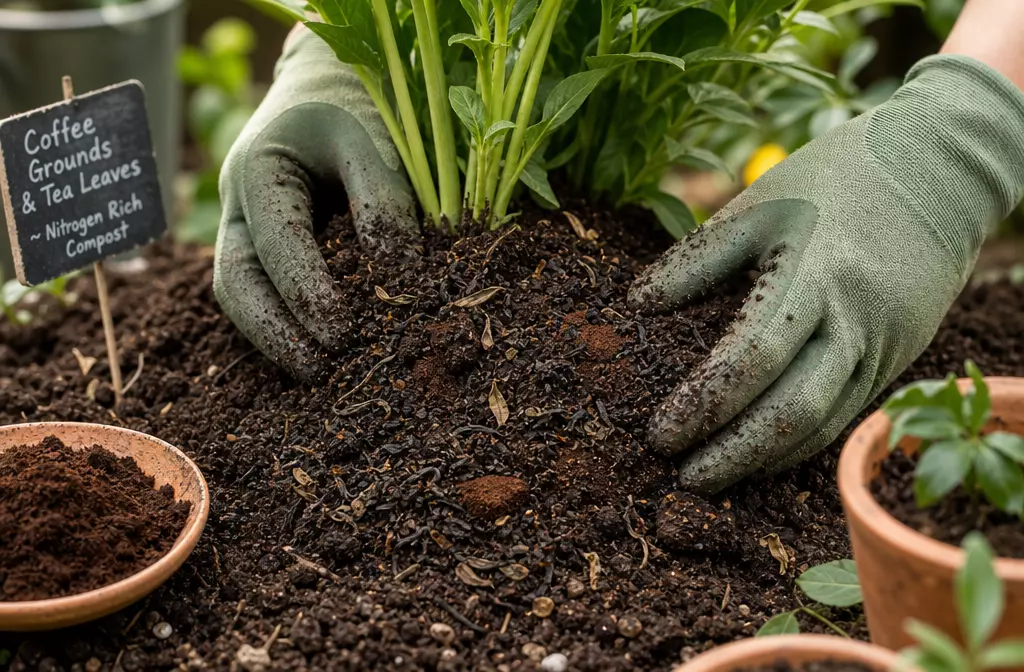
This is where the zero-waste coffee & tea approach delivers its most measurable impact. Both materials are genuinely excellent soil amendments — not just marketing claims.
Composting: The Easiest Starting Point
If you do nothing else, compost your grounds and tea leaves. Both materials are classified as “green” compost inputs (nitrogen-rich), which means they balance well with “brown” inputs like cardboard, dried leaves, and paper.
How to do it:
- Collect spent grounds in a small countertop bin daily.
- Add loose tea leaves or the contents of opened tea bags (remove synthetic mesh bags first).
- Mix into your compost pile at roughly a 1:3 ratio with carbon-rich browns.
- Turn the pile weekly to accelerate decomposition.
Ohio State University’s food blog notes that composting coffee grounds and tea leaves together provides rich nutritional fertilizer with multiple gardening benefits [6].
Direct Soil Amendment for Indoor Plants 🌿
Not everyone has an outdoor compost pile — and that is perfectly fine. You can mix used grounds directly into potting soil at a 1:3 ratio (one part grounds to three parts soil) to give indoor plants a mild, natural nutrient boost [1].
Best plants for this treatment:
- Ferns
- Snake plants
- Peace lilies
- Blueberry plants (love acidic soil)
- Azaleas and rhododendrons
⚠️ Caution: Avoid using large quantities of grounds around succulents or cacti, which prefer alkaline, well-draining soil.
Natural Pest Control — No Chemicals Needed 🐌
One of the most practical garden applications is using coffee grounds as a natural pest deterrent. The abrasive texture and strong scent repel slugs, snails, and ants without any synthetic chemicals [4].
Application method:
- Sprinkle a thin ring of dried grounds around the base of vulnerable plants.
- Reapply after rain.
- Combine with crushed eggshells for enhanced slug deterrence.
Tea leaves brewed from strong black tea can also be used as a foliar spray — the tannins create a mildly hostile environment for certain aphids and spider mites.
Tea Leaves as a Mulch Layer
Dried, spent tea leaves spread around the base of plants act as a light mulch layer. They:
- Retain soil moisture
- Suppress some weed growth
- Break down slowly, releasing tannins and trace minerals
- Improve soil structure over time
Skincare Applications: Zero-Waste Coffee & Tea for Your Beauty Routine
The beauty industry has quietly known about coffee’s skincare benefits for years. Scottish start-up Revive Eco is already repurposing used coffee grounds from cafes into commercial skincare ingredients — proof that this is not a fringe idea but a commercially validated application [3].
Here is how to replicate those benefits at home, for free.
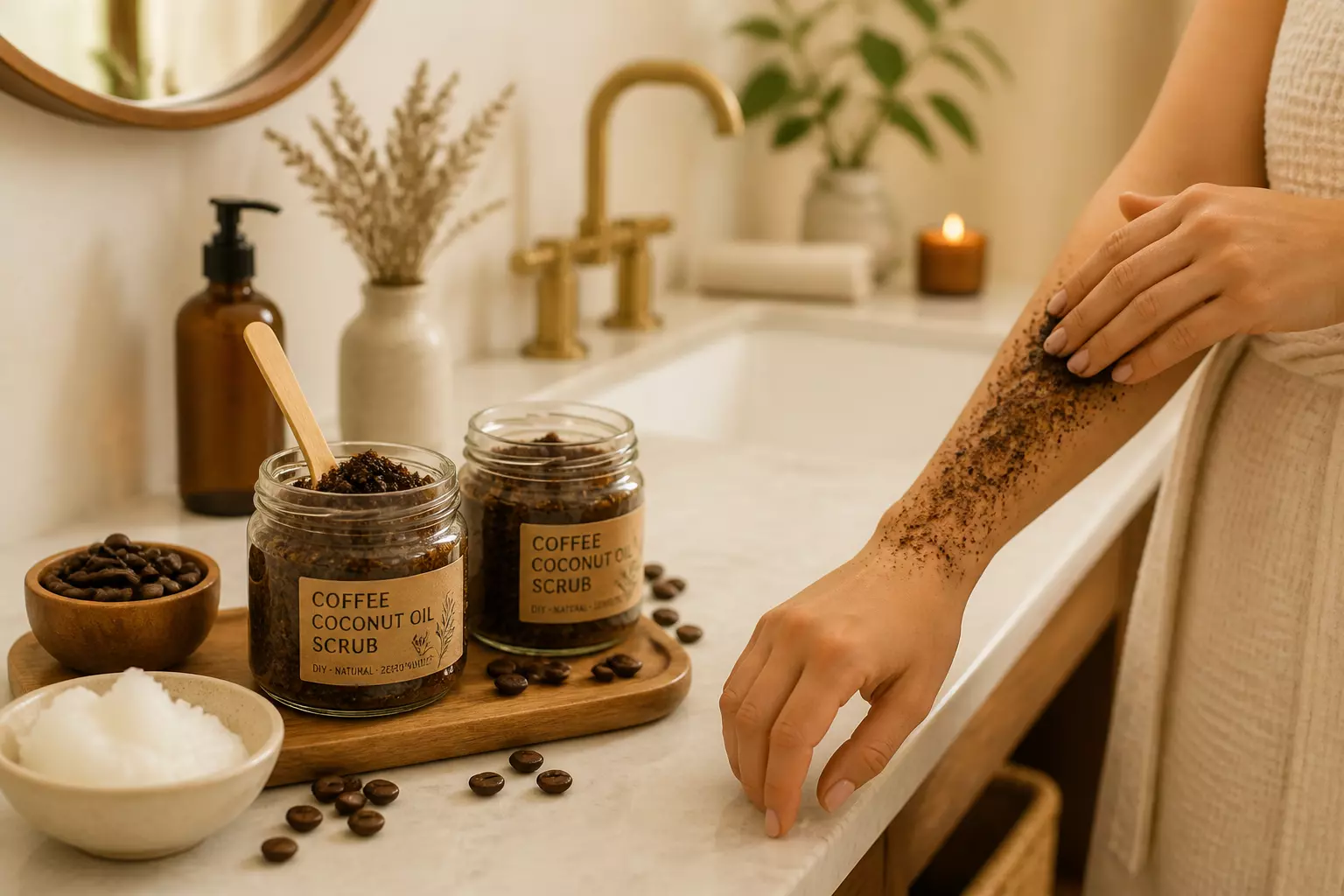
DIY Coffee Ground Exfoliating Scrub
Spent coffee grounds are naturally rich in antioxidants and have a coarse texture that is ideal for removing dead skin cells [1]. The caffeine in residual grounds also temporarily tightens skin and improves circulation.
Basic body scrub recipe:
| Ingredient | Amount | Purpose |
|---|---|---|
| Used coffee grounds | ½ cup | Exfoliation |
| Coconut oil (or olive oil) | 3 tablespoons | Moisturizing carrier |
| Vanilla extract | ½ teaspoon | Scent |
| Brown sugar (optional) | 2 tablespoons | Extra exfoliation |
Instructions:
- Mix all ingredients in a small glass jar.
- Apply to damp skin in circular motions.
- Rinse thoroughly with warm water.
- Use 2–3 times per week for best results.
💡 Pro tip: Store your scrub in a sealed glass jar in the refrigerator for up to two weeks. Always use a dry spoon to scoop — moisture introduces bacteria.
You can make exfoliating scrubs by mixing used grounds with carrier oils like coconut or olive oil, with the coarse particles gently removing dead skin cells [4].
Scalp and Hair Treatment ☕
Coffee grounds work surprisingly well as a scalp scrub. The granules physically remove product buildup — dry shampoo residue, styling gel, and mineral deposits — while the natural oils in coffee add shine and softness to hair [4].
How to use:
- Wet your hair thoroughly.
- Take a small handful of used grounds.
- Massage gently into the scalp for 60–90 seconds.
- Rinse well and shampoo as normal.
Do this once a week. People with color-treated hair should patch-test first, as coffee can slightly darken light hair over repeated use.
Green Tea Face Mask for Sensitive Skin 🍵
Used green tea leaves retain significant levels of catechins and polyphenols even after steeping. These compounds are well-documented anti-inflammatories and antioxidants.
Simple green tea mask:
- Squeeze excess liquid from used green tea bags.
- Open the bag and spread the leaves across clean skin.
- Leave for 10–15 minutes.
- Rinse with cool water.
This is particularly effective for calming redness and reducing the appearance of pores. It costs nothing and takes under 20 minutes.
Coffee as a Hand Deodorizer 🤲
After handling garlic, onions, fish, or strong spices, rubbing spent grounds between your hands with warm water removes the oils and odors without synthetic soap [1]. The grounds act as a mild abrasive that lifts odor-causing compounds from skin. Rinse clean and follow with a gentle hand wash.
Deodorizing Your Home with Coffee Grounds and Tea Leaves
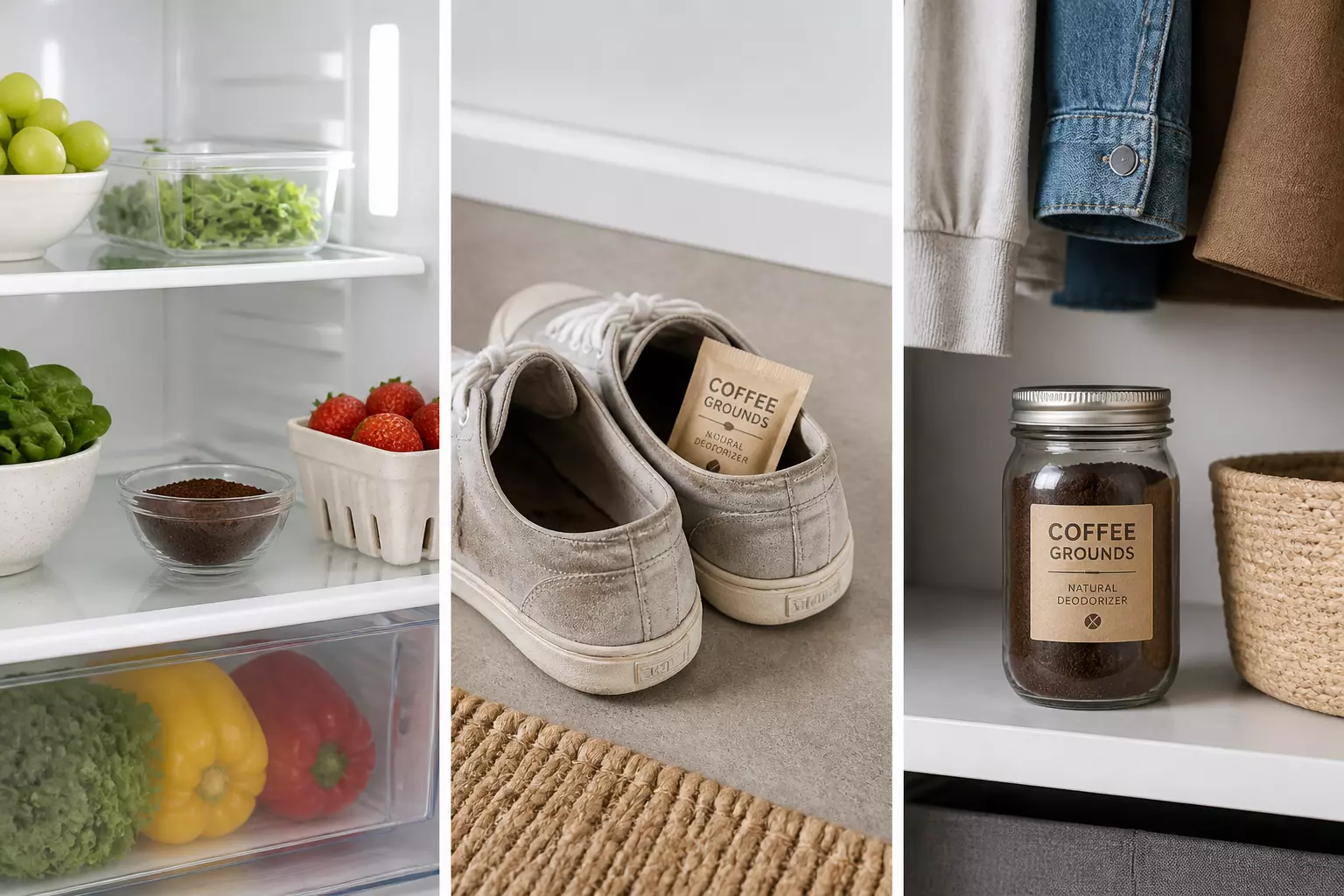
Chemical air fresheners often contain volatile organic compounds (VOCs) that contribute to indoor air pollution. Dried coffee grounds offer a completely natural, cost-free alternative with genuine odor-absorbing properties.
How Coffee Grounds Absorb Odors
Coffee grounds are highly porous and absorbent. Their structure traps odor molecules — particularly ammonia-based and sulfur-based compounds — rather than simply masking them with fragrance [4].
Room-by-Room Deodorizing Guide 🏠
Refrigerator & Freezer:
- Place 2–3 tablespoons of dried grounds in an open dish or mesh sachet.
- Position at the back of a shelf.
- Replace every 2–3 weeks.
- Works similarly to baking soda but with a pleasant, neutral coffee scent.
Shoes:
- Fill a small breathable cloth bag or old sock with dried grounds.
- Place inside shoes overnight.
- Grounds absorb moisture and neutralize bacterial odor.
Closets and Drawers:
- Use a small open jar of grounds as a passive deodorizer.
- Add a few drops of essential oil (lavender or cedar) for a pleasant scent boost.
Cars:
- Place a small mesh bag of grounds under the seat.
- Particularly effective at neutralizing food smells and pet odors.
Gym Bags:
- Tuck a sachet of grounds into the main compartment between uses.
⚠️ Key step: Always dry your grounds thoroughly before using them as deodorizers. Wet grounds will mold quickly. Spread them on a baking sheet and leave in a low oven (200°F / 93°C) for 20–30 minutes, or air-dry overnight.
Tea Leaves as Deodorizers
Dried black tea leaves work similarly. Their tannins have mild antibacterial properties, making them effective in enclosed spaces like gym lockers, shoe cabinets, and litter box areas. Simply fill a small cloth sachet and replace monthly.
Building a Zero-Waste Coffee & Tea System at Home
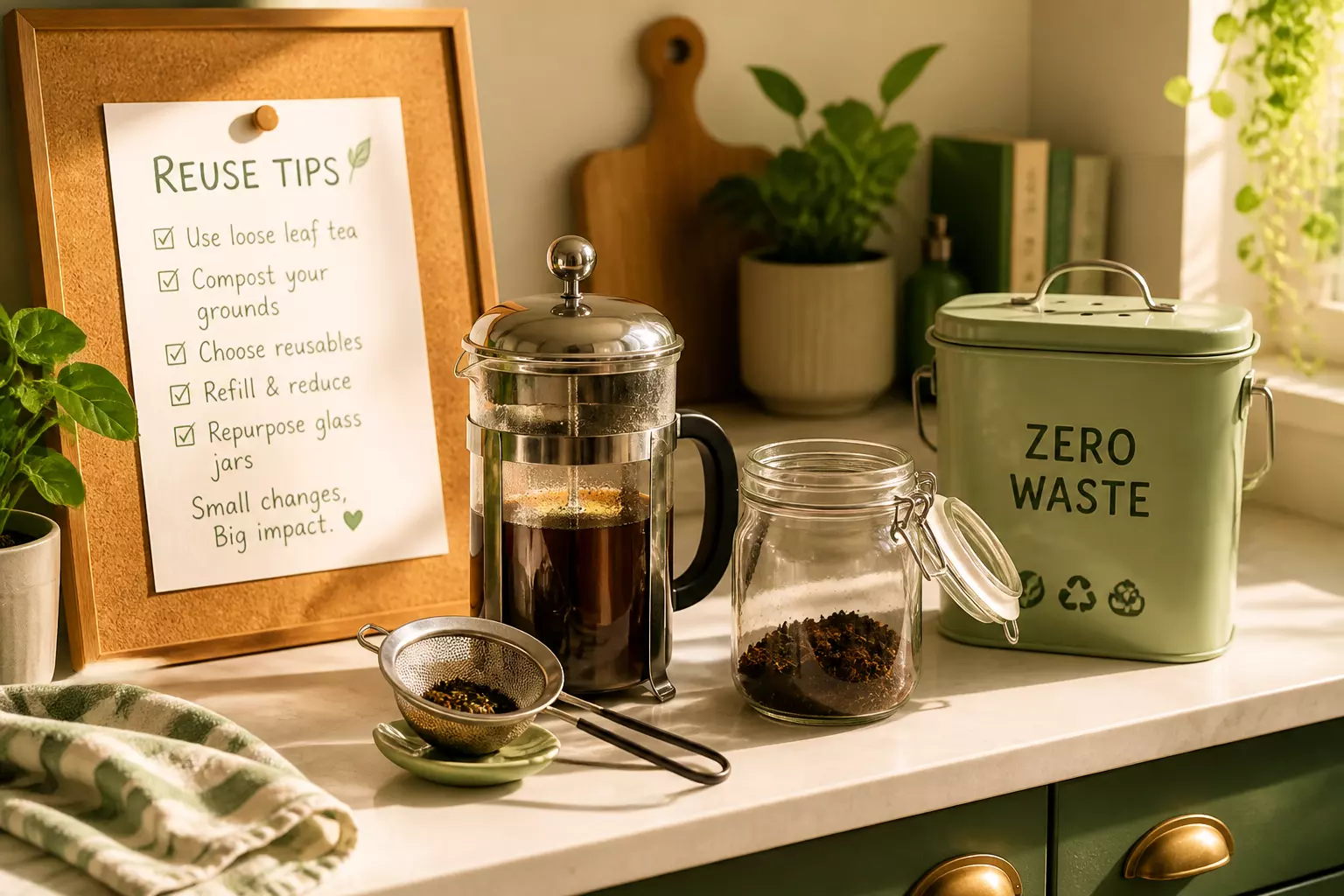
Knowing what to do with grounds and leaves is only half the equation. The other half is building a consistent, low-effort system that makes reuse automatic rather than aspirational.
Start with Sustainable Brewing Equipment
The most effortless and sustainable choice for zero-waste coffee consumption is brewing with reusable filters — stainless steel French presses, reusable K-cups, or metal mesh pour-over filters [2]. This eliminates paper filter waste entirely and makes grounds easier to collect.
Recommended zero-waste brewing tools:
| Method | Reusable Filter? | Ease of Grounds Collection |
|---|---|---|
| French Press | ✅ Built-in metal mesh | ⭐⭐⭐⭐⭐ Very easy |
| Pour-Over + Metal Filter | ✅ Stainless steel | ⭐⭐⭐⭐ Easy |
| Reusable K-Cup | ✅ Refillable pod | ⭐⭐⭐ Moderate |
| Moka Pot | ✅ No filter needed | ⭐⭐⭐⭐⭐ Very easy |
| Paper Filter Drip | ❌ Disposable | ⭐⭐ Requires composting filter too |
For tea, switch from single-use bags to loose-leaf tea with a reusable infuser. This eliminates microplastic contamination (many conventional tea bags contain polypropylene) and makes leaf collection trivial.
The Three-Container System 🗂️
Set up three small containers on your kitchen counter or under your sink:
- Skincare jar — Collect fresh, moist grounds here. Seal and refrigerate. Use within 5 days.
- Garden bin — For grounds and leaves destined for compost or soil amendment. Empty weekly.
- Deodorizer tray — Spread grounds to dry here. Once dry, transfer to sachets or small jars.
This system takes about 30 seconds per day and ensures nothing goes to waste.
Tracking Your Impact
If you brew one pot of coffee per day (roughly 2 oz / 56g of grounds), you generate approximately 20 lbs (9 kg) of spent grounds per year. Diverting all of that from landfill — through composting, skincare, and deodorizing — is a genuinely meaningful contribution at the household level.
Interactive Tool: Find the Best Use for Your Coffee Grounds & Tea Leaves
Below is an interactive selector tool to help you quickly identify the best reuse method based on your situation:
♻️ Find Your Best Reuse Method
Answer 3 quick questions to get a personalized, research-backed recipe.
1. What material do you have?
2. What’s your primary goal?
3. Where will you use it?
Common Mistakes to Avoid When Reusing Coffee Grounds and Tea Leaves
Even with the best intentions, a few missteps can undermine your zero-waste efforts. Here are the most common errors and how to sidestep them:
❌ Using wet grounds as deodorizers — Moisture causes rapid mold growth. Always dry thoroughly first.
❌ Over-applying grounds to garden soil — Too much nitrogen can burn plant roots. Stick to the 1:3 ratio guideline [1].
❌ Leaving grounds in the refrigerator too long — Replace every 2–3 weeks for effective odor absorption.
❌ Using coffee scrubs on broken or sunburned skin — The abrasive texture can irritate compromised skin. Wait until skin is healed.
❌ Composting synthetic tea bags — Many conventional tea bags contain polypropylene mesh. Always check before composting; switch to loose-leaf tea or paper-only bags where possible [2].
❌ Storing moist scrubs at room temperature — Refrigerate fresh ground scrubs and use within 5 days to prevent spoilage.
Conclusion: Small Habit, Significant Impact
The case for zero-waste coffee & tea: how to reuse grounds and leaves for gardening, skincare, and deodorizing is not built on sacrifice or inconvenience — it is built on the simple recognition that what we call “waste” is often a resource in the wrong place.
In 2026, with sustainability pressures mounting and household budgets tighter than ever, reusing spent grounds and tea leaves is one of the most practical, cost-free habits you can build. It requires no special equipment, no expensive products, and no significant time investment.
Your Action Plan: Start This Week
- Today: Set up a small collection container next to your coffee maker or kettle.
- This week: Try one skincare application — the body scrub or scalp treatment.
- This month: Integrate grounds into your compost pile or indoor plant soil.
- Ongoing: Place a dried grounds sachet in your refrigerator and replace monthly.
One cup at a time, one reuse at a time — the impact adds up faster than you might expect.
References
[1] Zero Waste Coffee Grounds – https://blog.cafecampesino.com/zero-waste-coffee-grounds/
[2] Zero Waste Coffee Tea – https://zerowastefamily.com/zero-waste-coffee-tea
[3] Scottish Scientists Upcycle Waste Coffee Grounds Skincare Products – https://resourcemedia.eco/article/scottish-scientists-upcycle-waste-coffee-grounds-skincare-products
[4] Creative And Eco Friendly Uses For Your Used Ground Coffee – https://sfbaycoffee.com/blogs/articles/creative-and-eco-friendly-uses-for-your-used-ground-coffee
[5] mryformosapublisher – https://mryformosapublisher.org/index.php/ijis/article/view/762/1511
[6] Coffee And Tea – https://u.osu.edu/newfoodblog/2021/03/29/coffee-and-tea/