Why Your Coffee Tastes Bitter (and How to Fix It in 3 Variables)
Roughly 80% of American adults drink coffee daily, yet most have never once adjusted their grind size, water temperature, or brew time — the three variables that determine whether your cup tastes balanced or like burnt rubber. If your morning brew consistently disappoints, the fix is almost certainly simpler than you think.
Disclosure: This post contains affiliate links. As an Amazon Associate, we earn from qualifying purchases, and at no extra cost to you.
Understanding why your coffee tastes bitter (and how to fix it in 3 variables) is not about buying expensive equipment or sourcing exotic beans. It is about controlling a small number of physical factors that most home brewers overlook entirely. This guide breaks down each variable with clear, actionable steps so you can start brewing better coffee today.
Key Takeaways 📌
- Over-extraction is the single most common cause of bitter coffee — water contacting grounds for too long pulls out harsh, unpleasant compounds [2]
- Grind size directly controls how fast flavors are extracted — a simple coarser adjustment often eliminates bitterness immediately [1][2]
- Water temperature above 205°F (96°C) scorches grounds and forces bitter compounds into your cup prematurely [3]
- Bean freshness and water quality are secondary but important factors that no brewing technique can fully compensate for [1][2]
- Small, incremental changes — 30 seconds less brew time, one step coarser grind — are more effective than dramatic overhauls
The Science of Bitter Coffee: What Is Actually Happening in Your Cup
Before diving into fixes, it helps to understand what bitterness actually is at a chemical level.
Coffee contains hundreds of flavor compounds. The desirable ones — fruity acids, caramel sweetness, chocolate notes — extract relatively quickly. The bitter compounds, primarily chlorogenic acid lactones and phenylindanes, extract more slowly and require more energy (heat, time, or surface area) to dissolve into water.
💡 Pull Quote: “Bitterness is not a sign of strong coffee — it is a sign of over-extracted coffee. Strength and bitterness are two completely different things.”
When your brewing process applies too much heat, too much contact time, or too much surface area (fine grind), you push past the sweet spot and begin dissolving these harsh compounds. The result is a cup that tastes sharp, astringent, and unpleasant — not bold or rich.
The good news? Each of these causes maps directly to one of three controllable variables: brew time, grind size, and water temperature. Fix the right variable and bitterness disappears.
Variable 1 — Brew Time: The Most Common Cause of Why Your Coffee Tastes Bitter (and How to Fix It in 3 Variables)
Over-extraction is the most frequently cited cause of bitter coffee, and it happens when water stays in contact with coffee grounds for too long, pulling out those harsh bitter compounds that should stay locked in the grounds [2].
Recommended Brew Times by Method
Different brewing methods have very different ideal contact times. Here is a quick reference:
| Brewing Method | Recommended Brew Time | Notes |
|---|---|---|
| ☕ Espresso | 25–30 seconds | Pull time, not total brew time |
| 🫖 AeroPress | ~2 minutes | Shorter than most assume [4] |
| ☕ Pour-Over | 3–4 minutes | Total drip time [4] |
| 🫖 French Press | 4 minutes | Do not let it steep longer [4] |
| 🧊 Cold Brew | 12–24 hours | Compensated by cold water |
| ☕ Drip Machine | 5–6 minutes | Depends on machine cycle |
How to Fix Over-Extraction
If your brew time is the culprit, the fix is straightforward:
- Measure your current brew time using a simple kitchen timer
- Reduce it incrementally — cut 30 seconds to 1 minute per test batch [2]
- Taste after each adjustment and note the difference
- Stop when bitterness fades and brightness or sweetness appears
⚠️ Important: Do not make multiple changes at once. If you adjust brew time AND grind size simultaneously, you will not know which fix actually worked.
For French press users specifically, one of the most common mistakes is walking away and forgetting about it. A four-minute steep is ideal — anything beyond that and you are actively extracting bitterness [4]. Set a timer every single time.
Variable 2 — Grind Size: The Lever Most Home Brewers Ignore
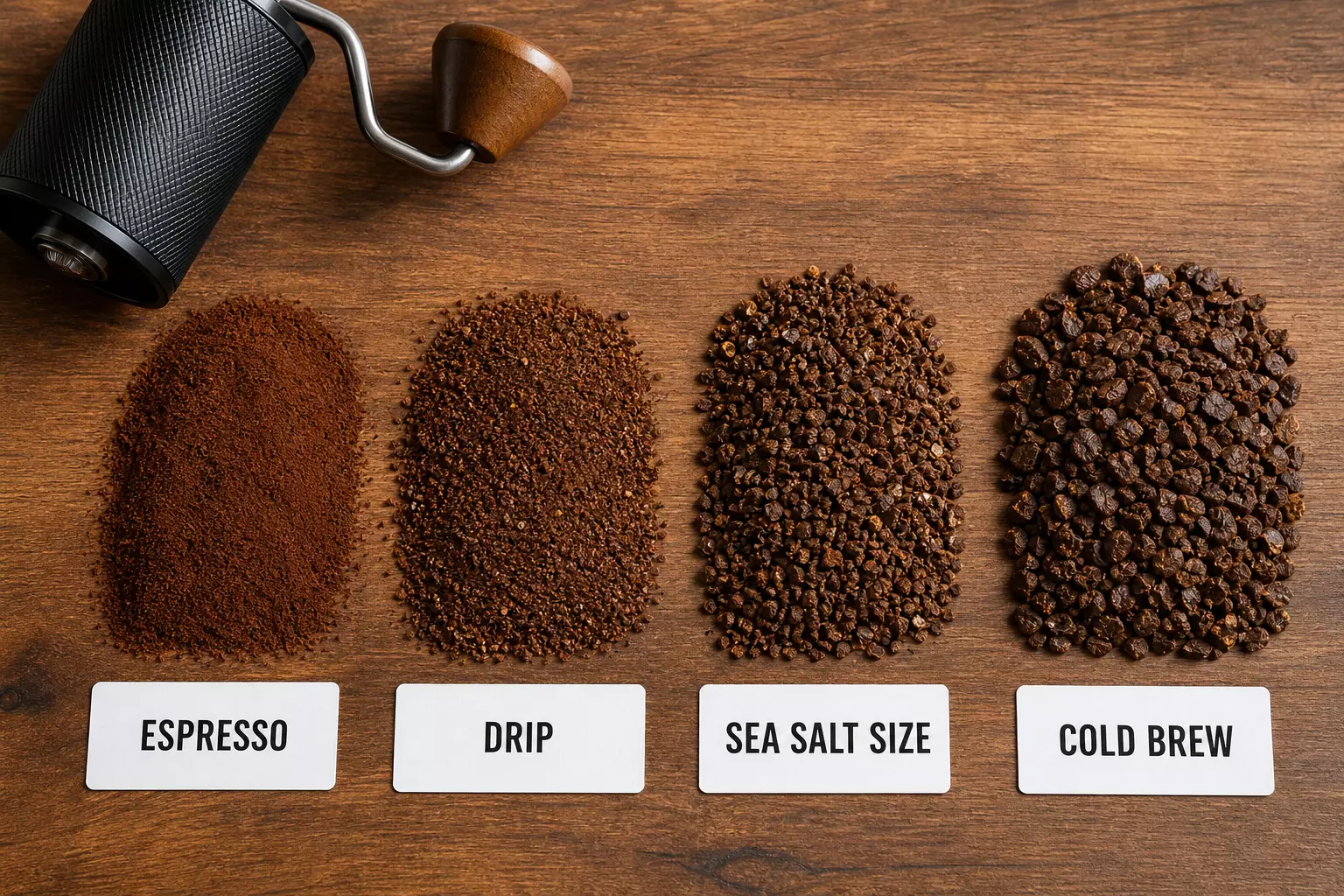
Grind size is arguably the most powerful variable in your control, yet it is the one most home brewers set once and never touch again. Here is why it matters so much.
Finer grinds have more surface area. More surface area means water can extract flavor compounds faster. This is great for espresso, which uses very short brew times — but disastrous for a four-minute French press steep, where a fine grind will over-extract badly and produce intense bitterness [1][2].
Coarser grinds have less surface area. They extract more slowly, which is why cold brew — which steeps for up to 24 hours — requires an extremely coarse grind to avoid becoming undrinkably bitter [4].
The General Rule of Grind Size
Longer contact time = Coarser grind. Shorter contact time = Finer grind.
This is the single most useful principle in coffee brewing. Memorize it.
Grind Size Quick Reference Guide
- Espresso: Very fine (like powdered sugar)
- AeroPress: Medium-fine
- Pour-Over / Drip: Medium (approximately sea salt size is a reliable benchmark) [4]
- French Press: Medium-coarse
- Cold Brew: Extra coarse (like rough breadcrumbs)
How to Fix Grind-Related Bitterness
If your brew time is already correct but your coffee still tastes bitter, grind size is almost certainly the issue. Here is the process:
- Identify your current grind setting on your grinder (or note the pre-ground coffee you are using)
- Adjust one step coarser — on a burr grinder, this is usually one or two clicks
- Brew a test batch using the same brew time and temperature
- Taste and evaluate — look for reduced bitterness and increased clarity of flavor
- Repeat until you find your sweet spot
🔑 Key Insight: Proper grind adjustment often solves bitterness entirely without needing to change anything else about your brewing process [2].
Blade Grinders vs. Burr Grinders
One important note: blade grinders (the spinning-blade type common in budget kitchens) produce inconsistent particle sizes. Some grounds end up very fine while others stay coarse. This uneven grind leads to simultaneous over- and under-extraction, contributing to both bitterness and sourness in the same cup.
If you are serious about fixing bitter coffee long-term, upgrading to a burr grinder — even an affordable hand burr grinder — is the single most impactful equipment change you can make.
Variable 3 — Water Temperature: The Silent Saboteur
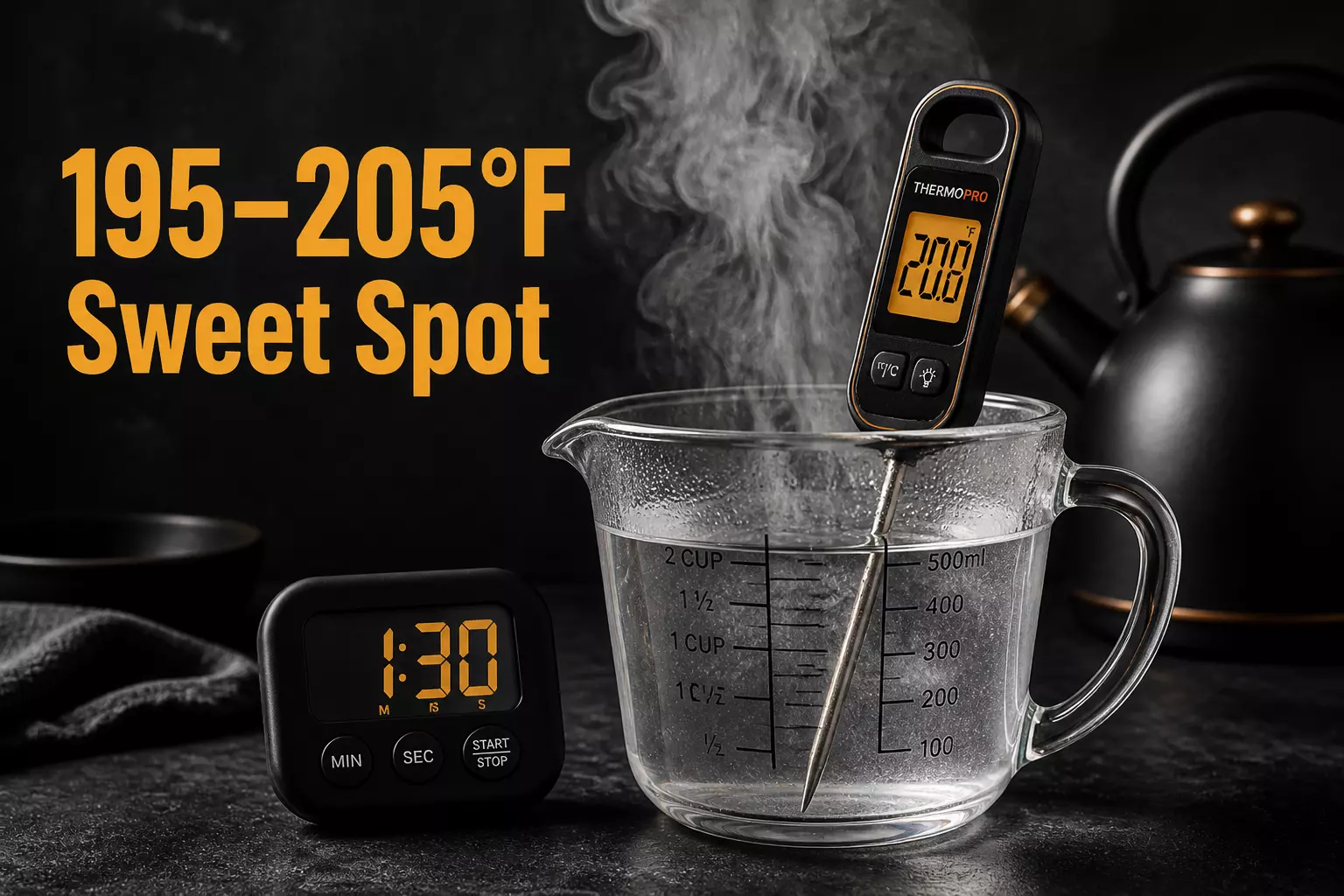
Water temperature is the variable that surprises most people when they learn how much it affects flavor. The ideal brewing range is 195–205°F (90–95°C) — just below boiling [1][2][3].
Water above 205°F is too aggressive. It essentially scorches the coffee grounds and forces bitter compounds into your cup faster than they would extract at the right temperature [3]. This is why pouring boiling water (212°F / 100°C) directly onto grounds is a common mistake that produces noticeably harsher coffee.
The Simple Fix for Temperature
You do not need a temperature-controlled kettle (though they are excellent tools). The easiest fix is this:
After your kettle boils, wait 1–2 minutes before pouring. [3][5]
That brief resting period drops the water temperature from 212°F to approximately 200–205°F — right in the ideal range. This single habit change costs nothing and takes almost no effort.
Temperature by Brewing Method
| Brewing Method | Ideal Water Temperature |
|---|---|
| Pour-Over | 200–205°F (93–96°C) |
| French Press | 195–205°F (90–96°C) |
| AeroPress | 175–205°F (79–96°C) — flexible |
| Drip Machine | Check if machine reaches 195°F+ |
| Espresso | 195–205°F (90–96°C) |
⚠️ Drip machine note: Many budget drip machines do not actually reach 195°F, which causes under-extraction (sour, weak coffee) rather than bitterness. If your drip coffee is bitter, the machine is likely running too hot, or your grind is too fine.
Beyond the 3 Variables: Secondary Factors That Cause Bitter Coffee
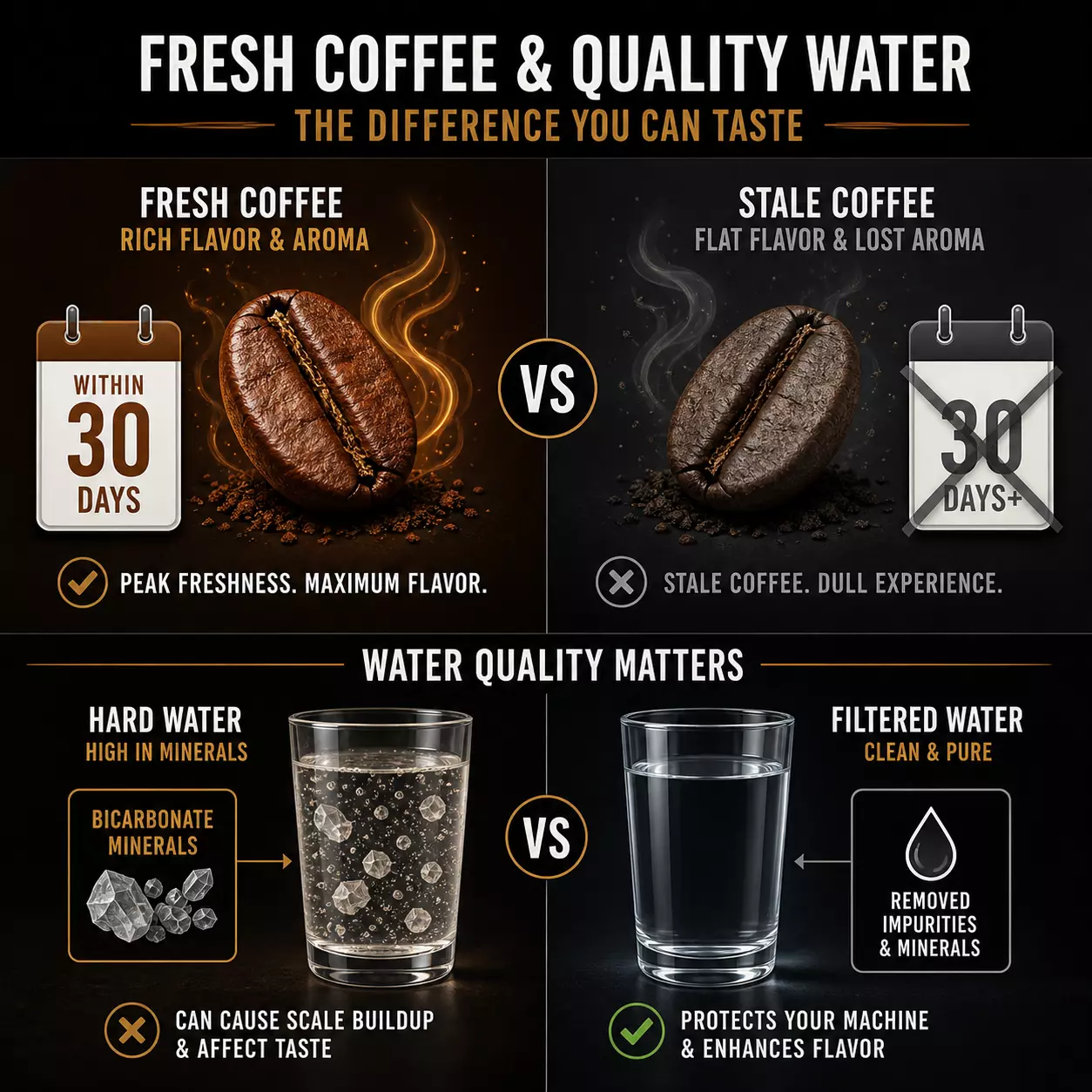
While brew time, grind size, and water temperature account for the vast majority of bitterness problems, two secondary factors are worth addressing.
Bean Quality and Freshness
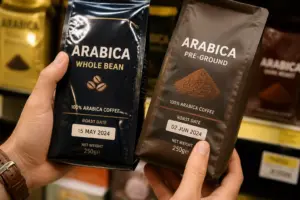
Stale or low-quality beans produce bitter coffee regardless of how perfectly you dial in your technique [1][3]. Coffee beans are at their peak flavor within 2–4 weeks of the roast date. After that, oxidation degrades the delicate flavor compounds and bitter notes become more prominent.
What to look for when buying beans:
- ✅ A printed roast date (not just a “best by” date)
- ✅ Beans roasted within the last 30 days
- ✅ Whole beans (pre-ground coffee goes stale much faster)
- ✅ Stored in an airtight container away from light and heat
- ❌ Avoid beans with no roast date printed on the bag
Water Quality
Hard water with high bicarbonate content can emphasize bitter notes in your coffee, even when everything else is dialed in [2]. Bicarbonate ions interfere with proper extraction and can make coffee taste flat and harsh simultaneously.
Simple fixes for water quality:
- Use filtered tap water (a basic Brita-style filter is sufficient)
- Avoid distilled water — it lacks the minerals needed for proper extraction
- If your tap water tastes fine on its own, it is probably fine for coffee
How to Diagnose Your Bitter Coffee Problem
Understanding why your coffee tastes bitter (and how to fix it in 3 variables) is much easier when you approach it systematically. Use this diagnostic framework:
Step-by-Step Diagnosis
Step 1: Taste and describe the bitterness
- Sharp, harsh bitterness → likely over-extraction (time or grind)
- Burnt, acrid bitterness → likely temperature too high
- Flat, heavy bitterness → possibly stale beans or hard water
Step 2: Check your brew time
- Is it longer than the recommended time for your method?
- If yes → reduce by 30 seconds and retest
Step 3: Check your grind size
- Does it look finer than sea salt for drip/pour-over?
- If yes → adjust one step coarser and retest
Step 4: Check your water temperature
- Are you pouring boiling water directly onto grounds?
- If yes → wait 90 seconds after boiling before pouring
Step 5: Evaluate your beans
- When were they roasted?
- If no roast date or older than 30 days → try fresh beans
Putting It All Together: A Practical Brewing Checklist

Here is a consolidated checklist you can reference every time you brew:
☕ Pre-Brew Checklist
- [ ] Beans: Roasted within the last 30 days, stored in airtight container
- [ ] Grind: Appropriate size for your brewing method (sea salt for drip/pour-over)
- [ ] Grinder: Burr grinder preferred for consistency
- [ ] Water: Filtered, not distilled; kettle ready
🌡️ During Brew
- [ ] Temperature: Let boiled water rest 1–2 minutes before pouring
- [ ] Timer: Set it before you start — do not guess
- [ ] Dose: Use standard ratio (1:15 to 1:17 coffee to water by weight)
🔁 After Brew (If Still Bitter)
- [ ] Reduce brew time by 30 seconds next batch
- [ ] Adjust grind coarser by one step next batch
- [ ] Change only one variable at a time
- [ ] Take notes — write down what you changed and the result
Why Your Coffee Tastes Bitter (and How to Fix It in 3 Variables): Common Mistakes Summary
| Mistake | Variable | Fix |
|---|---|---|
| Steeping French press too long | Brew time | Use a timer; stop at 4 minutes |
| Using pre-set fine grind for all methods | Grind size | Match grind to brew method |
| Pouring boiling water directly on grounds | Temperature | Wait 1–2 minutes after boiling |
| Using old or stale beans | Bean freshness | Buy fresh-roasted, check roast date |
| Using hard tap water | Water quality | Use filtered water |
| Blade grinder producing uneven grinds | Grind consistency | Upgrade to burr grinder |
Conclusion: Fix Your Bitter Coffee Starting Today
Understanding why your coffee tastes bitter (and how to fix it in 3 variables) comes down to a simple truth: bitterness is almost always a process problem, not an equipment problem. You do not need a $500 espresso machine or a specialty subscription to brew a genuinely great cup.
Here is your action plan for today:
- Start with brew time. Set a timer for your next brew and compare it to the recommended time for your method. If you are over, reduce by 30 seconds.
- Check your grind. Hold a pinch of your ground coffee next to a few grains of sea salt. If it looks much finer, go one step coarser.
- Wait after boiling. This costs nothing and takes 90 seconds. Just do it every time.
- Buy fresh beans. Check the roast date on your current bag. If there is no date or it is older than 30 days, your beans are the problem no technique can fix.
- Change one variable at a time. This is the most important rule. Systematic, incremental testing is how you actually learn your setup.
The difference between a bitter cup and a genuinely satisfying one is usually a single small adjustment. Make that adjustment today. ☕
References
[1] Does Your Coffee Taste Bitter Here S How To Fix It – https://rockcreekcoffee.com/blogs/blog/does-your-coffee-taste-bitter-here-s-how-to-fix-it
[2] Bitter Coffee Why It Happens – https://www.breville.com/us/en/blog/coffee-and-espresso/bitter-coffee-why-it-happens.html
[3] Why Coffee Tastes Bitter And How To Fix It – https://www.787coffee.com/blog/why-coffee-tastes-bitter-and-how-to-fix-it
[4] 5 Reasons Coffee Is Bitter How To Fix It – https://www.equianocoffee.com/5-reasons-coffee-is-bitter-how-to-fix-it
[5] Coffee Tastes Bitter Here Why And How To Fix It – https://coffeebros.com/blogs/coffee/coffee-tastes-bitter-here-why-and-how-to-fix-it