9 Steps to Make Coffee in French Press for a Perfect, Silky Cup
French press coffee drinkers consistently rate their brew among the most satisfying cups they make at home — and yet, a surprisingly large number of them are unknowingly over-extracting, under-heating, or grinding too fine, turning a potentially silky, full-bodied cup into something bitter and gritty. The good news? Every one of those mistakes is completely fixable. This guide walks you through the 9 Steps to Make Coffee in French Press for a Perfect, Silky Cup, covering everything from grind size and water temperature to the exact moment you should pour. Whether you are brand new to French press brewing or have been doing it for years, these steps will sharpen your technique and elevate every single cup.
Disclosure: This post contains affiliate links. As an Amazon Associate, we earn from qualifying purchases, and at no extra cost to you.
Key Takeaways ☕
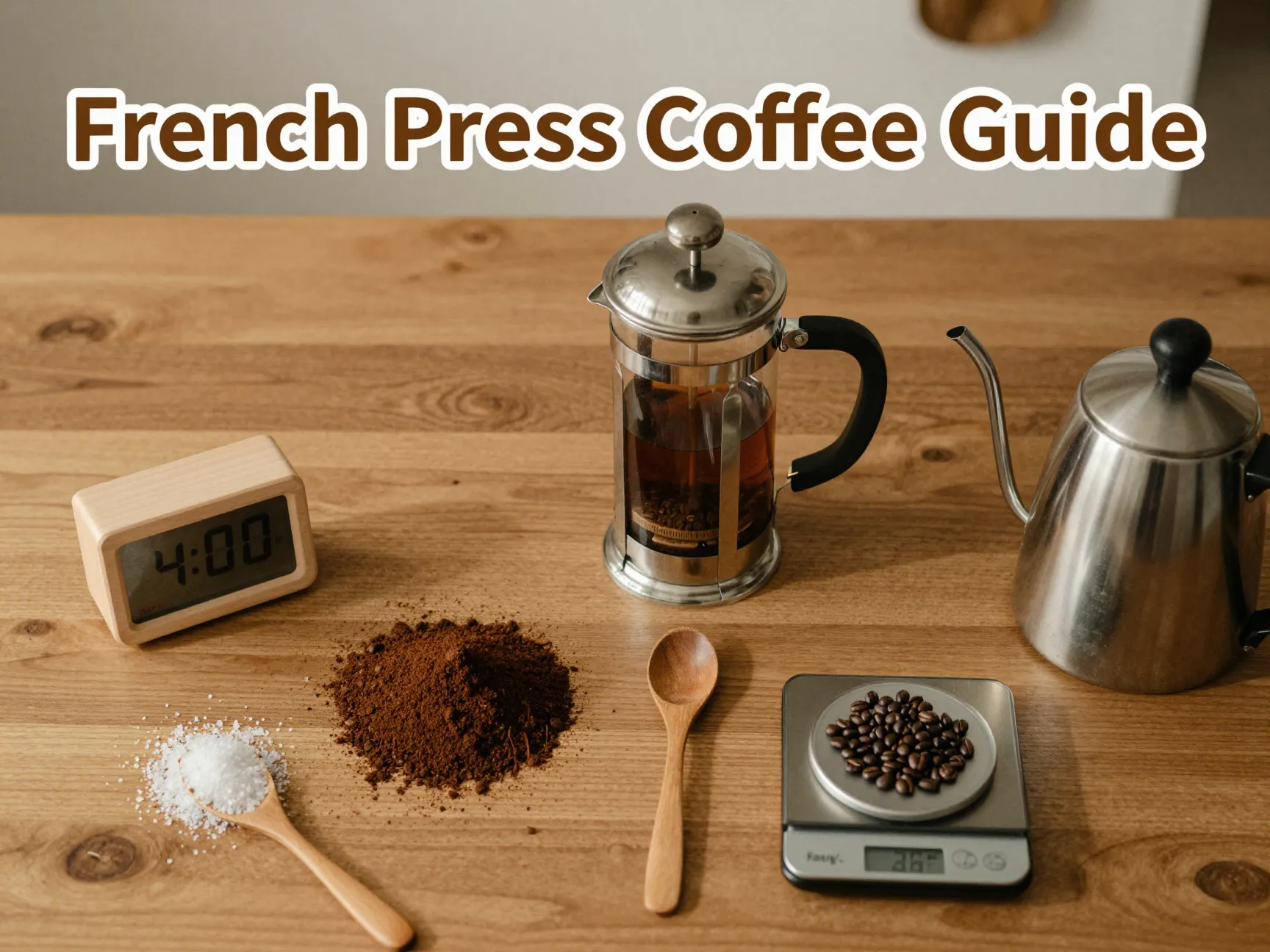
- Coarse grind is non-negotiable — grounds the size of breadcrumbs or sea salt prevent over-extraction and gritty texture.
- Water temperature should sit at 205°F (96°C) — too hot creates bitterness, too cool creates flat, lifeless coffee.
- A 1:15 to 1:20 coffee-to-water ratio gives you the flexibility to dial in your preferred strength.
- Blooming for 30 seconds before full saturation significantly improves extraction evenness.
- Pour immediately after pressing — leaving coffee in the press after plunging continues extraction and introduces bitterness.
Why French Press Coffee Is Worth Getting Right
The French press is one of the oldest and most respected brewing methods in the world. Unlike drip machines or pod systems, it gives you direct, hands-on control over every variable — grind, temperature, ratio, and time. The result, when done correctly, is a cup with remarkable body, natural oils, and complex flavor that paper-filtered methods simply cannot replicate.
“The French press is forgiving enough for beginners but precise enough to reward experts.”
That said, the method does have a few pitfalls. Without the right technique, you can end up with a muddy, over-extracted, or flat-tasting brew. The 9 Steps to Make Coffee in French Press for a Perfect, Silky Cup outlined below remove all the guesswork.
What You Need Before You Start
Before diving into the steps, gather your equipment. Having everything ready saves time and prevents temperature loss during brewing.
| Equipment | Why It Matters |
|---|---|
| French press (any size) | The brewing vessel — glass, stainless, or ceramic |
| Burr grinder | Produces consistent coarse grounds [1] |
| Gooseneck or standard kettle | Controls pour speed and temperature |
| Kitchen scale | Ensures accurate coffee-to-water ratio |
| Thermometer (optional) | Confirms water is at 205°F [1] |
| Timer | Tracks bloom and steep times |
| Wooden or plastic stirring spoon | Avoids cracking glass press walls |
The 9 Steps to Make Coffee in French Press for a Perfect, Silky Cup
1. Start With Fresh, Whole-Bean Coffee
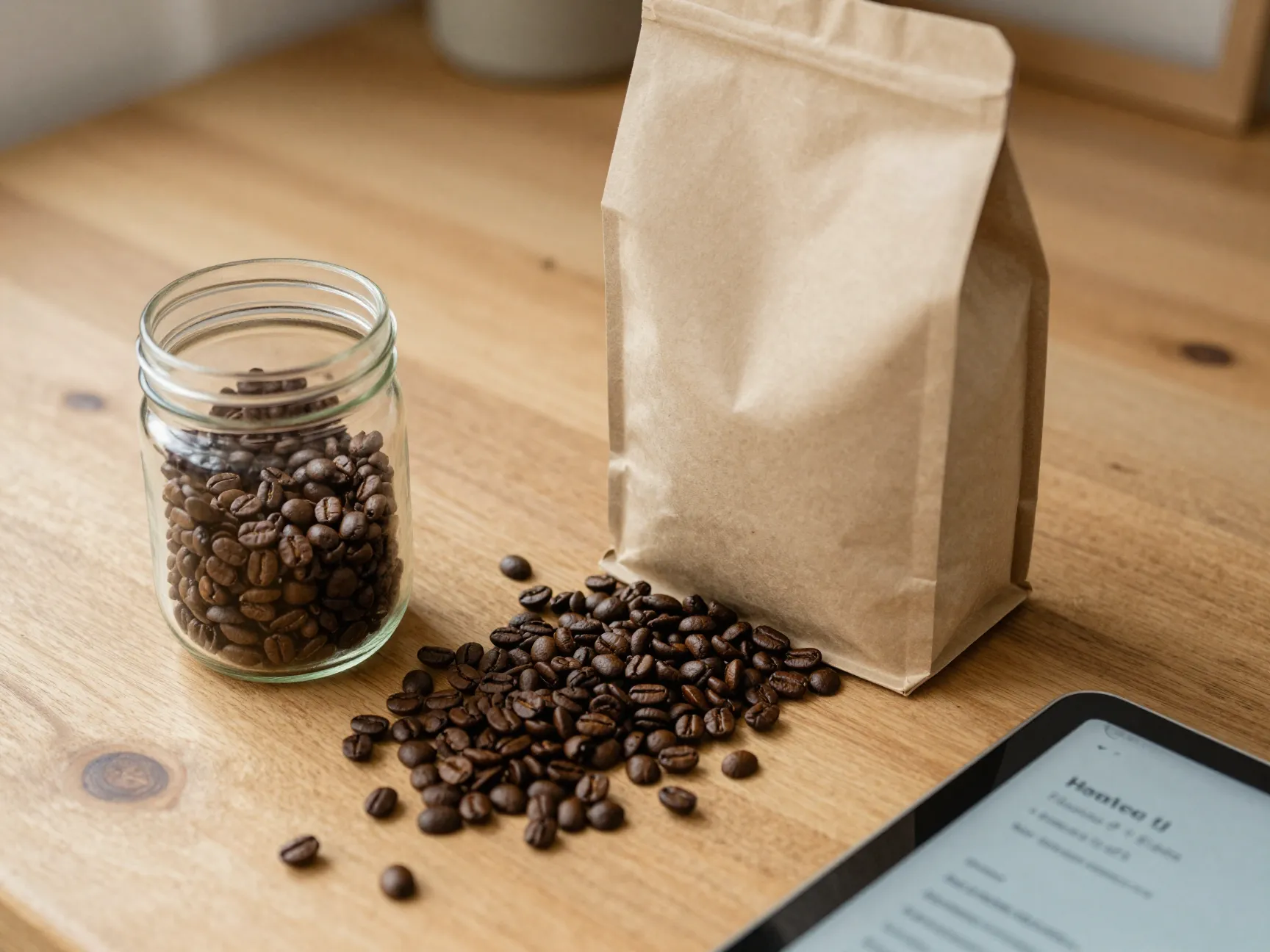
The single biggest upgrade most home brewers can make costs nothing extra — it just requires a mindset shift. Pre-ground coffee goes stale within 15 to 30 minutes of grinding. Once coffee is ground, it exposes a dramatically larger surface area to oxygen, which rapidly degrades the aromatic compounds responsible for flavor and complexity. [2]
Buy whole beans and grind them immediately before brewing. Look for beans with a roast date (not just a “best by” date) on the bag. For French press, medium to dark roasts tend to shine because the full-immersion method highlights body and richness. Light roasts can also work beautifully, producing a brighter, more nuanced cup.
Pro tip 💡: Store whole beans in an airtight container away from light and heat. Avoid the freezer for beans you use daily.
2. Grind to a Coarse, Even Consistency
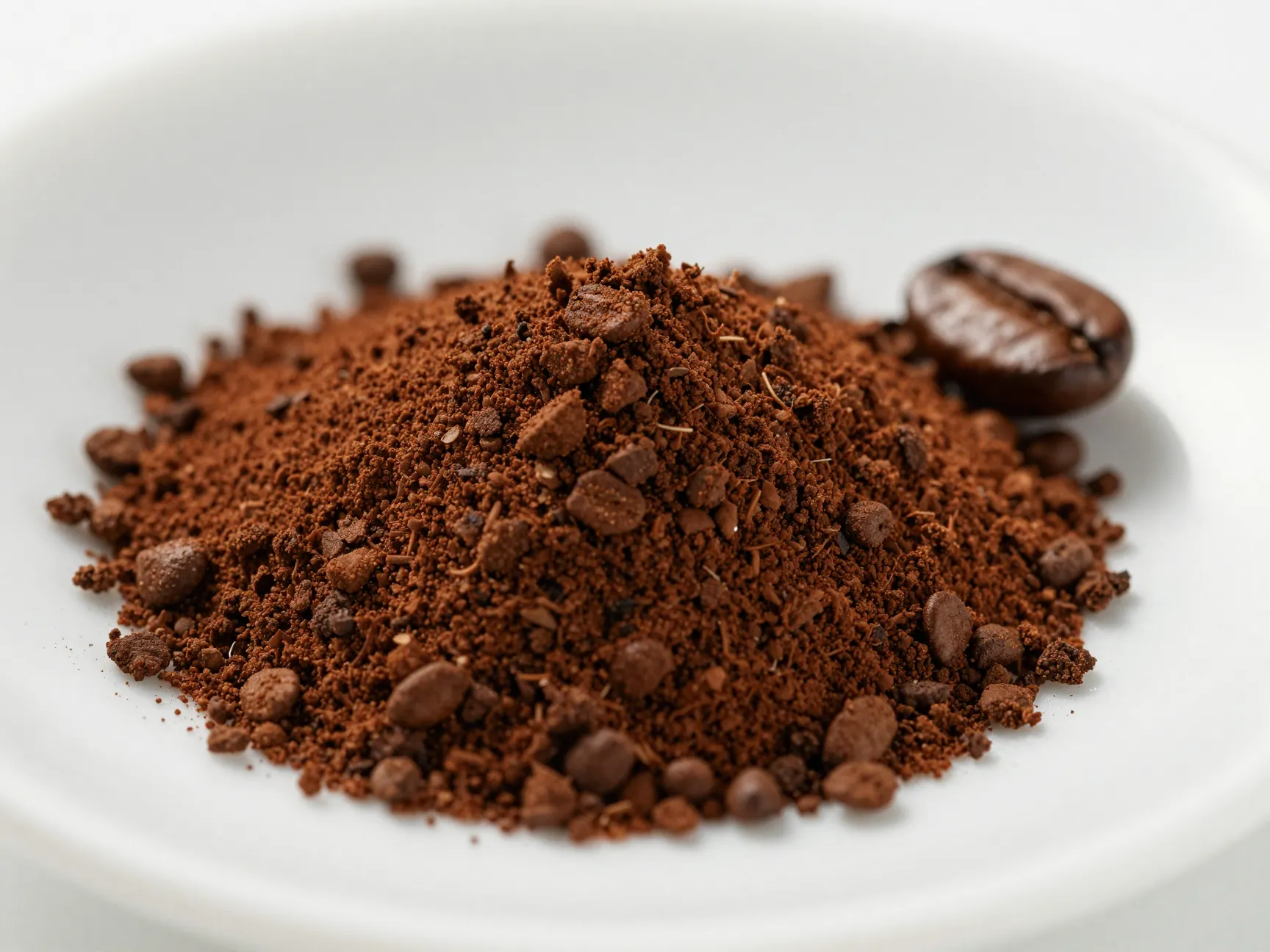
This step is where most French press mistakes begin. Your grind should look like coarse sea salt or breadcrumbs — chunky, irregular pieces with visible texture. [1] If your grounds look like fine powder or resemble table salt, they are too fine and will slip through the metal filter, creating a gritty cup and causing over-extraction.
A burr grinder is strongly recommended over a blade grinder. Blade grinders chop beans unevenly, producing a mix of fine dust and large chunks. Burr grinders crush beans between two abrasive surfaces, delivering a uniform particle size that extracts evenly. [1]
| Grind Type | Appearance | French Press Suitability |
|---|---|---|
| Extra fine | Powder (like flour) | ❌ Too fine — over-extracts |
| Fine | Table salt | ❌ Too fine — clogs filter |
| Medium | Sand | ⚠️ Borderline — may cause silt |
| Coarse | Sea salt / breadcrumbs | ✅ Ideal |
| Extra coarse | Peppercorns | ⚠️ Under-extracts — weak flavor |
3. Measure Your Coffee and Water Ratio
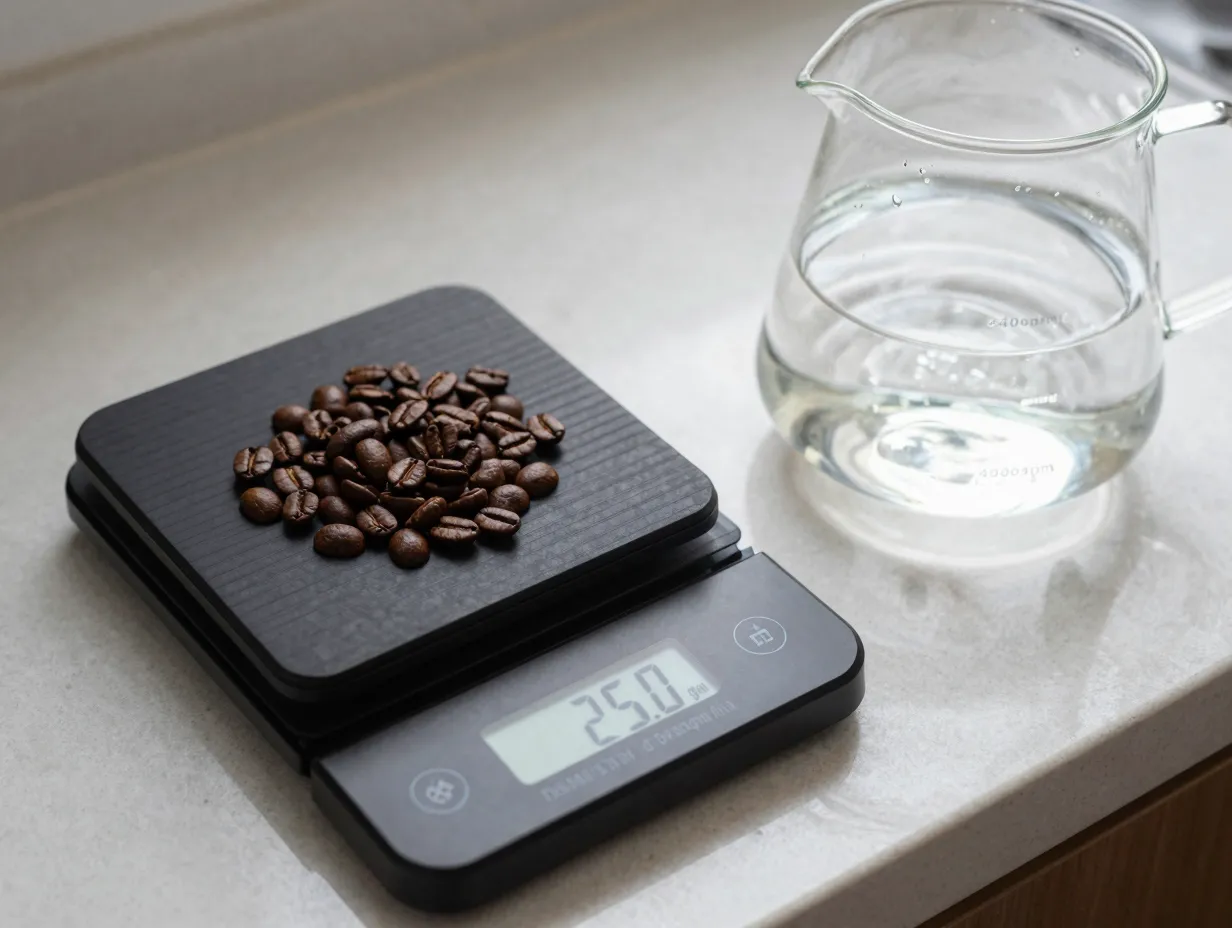
Eyeballing your coffee is one of the most common reasons a cup tastes “off.” A kitchen scale removes all the guesswork. The standard ratio for French press is 1:15 to 1:20 (coffee to water by weight). [3][6]
Here is a quick reference:
- Strong cup: 20g coffee to 300ml water (1:15) [3]
- Balanced cup: 25g coffee to 400ml water (1:16)
- Milder cup: 15g coffee to 300ml water (1:20) [6]
Start with a 1:15 ratio and adjust from there based on your taste preferences. If the cup tastes too strong or bitter, use less coffee or more water. If it tastes weak or watery, add more coffee.
“Consistency is the foundation of a great cup. Measure once, adjust intentionally, and repeat.”
4. Preheat Your French Press
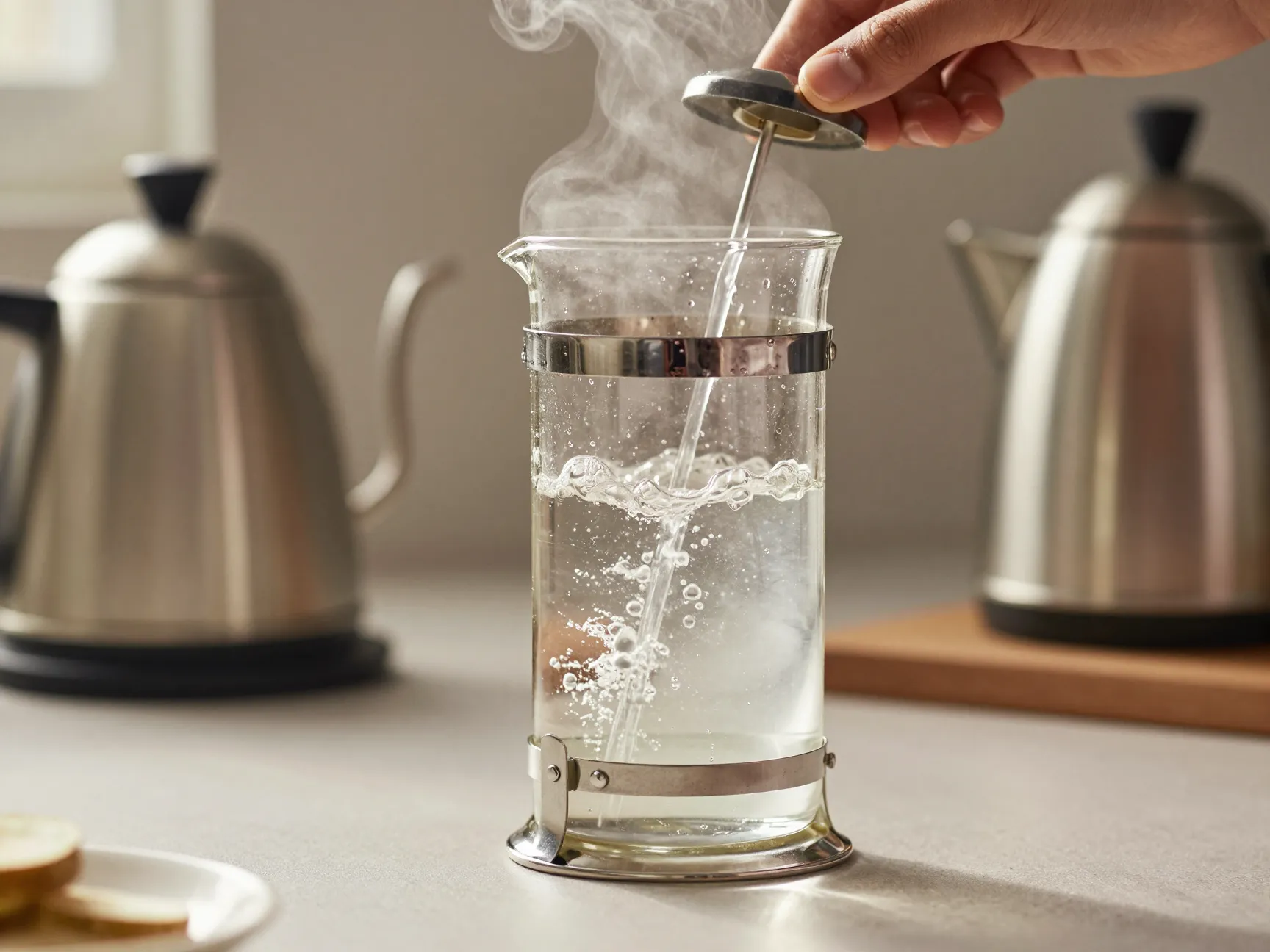
This step takes less than 60 seconds and makes a measurable difference. Pour hot water into your empty French press, swirl it around, and discard it. [4] Preheating the glass or stainless steel vessel prevents the brewing water from losing heat the moment it contacts a cold surface, which would drop your temperature below the ideal range and result in under-extraction.
This is especially important in colder kitchens or during winter months. A drop of even 10°F can noticeably flatten the flavor of your brew.
Quick steps:
- Boil water in your kettle.
- Pour a small amount into the empty French press.
- Swirl gently to coat the interior walls.
- Discard the water.
- Proceed immediately to brewing.
5. Heat Water to 205°F (96°C)
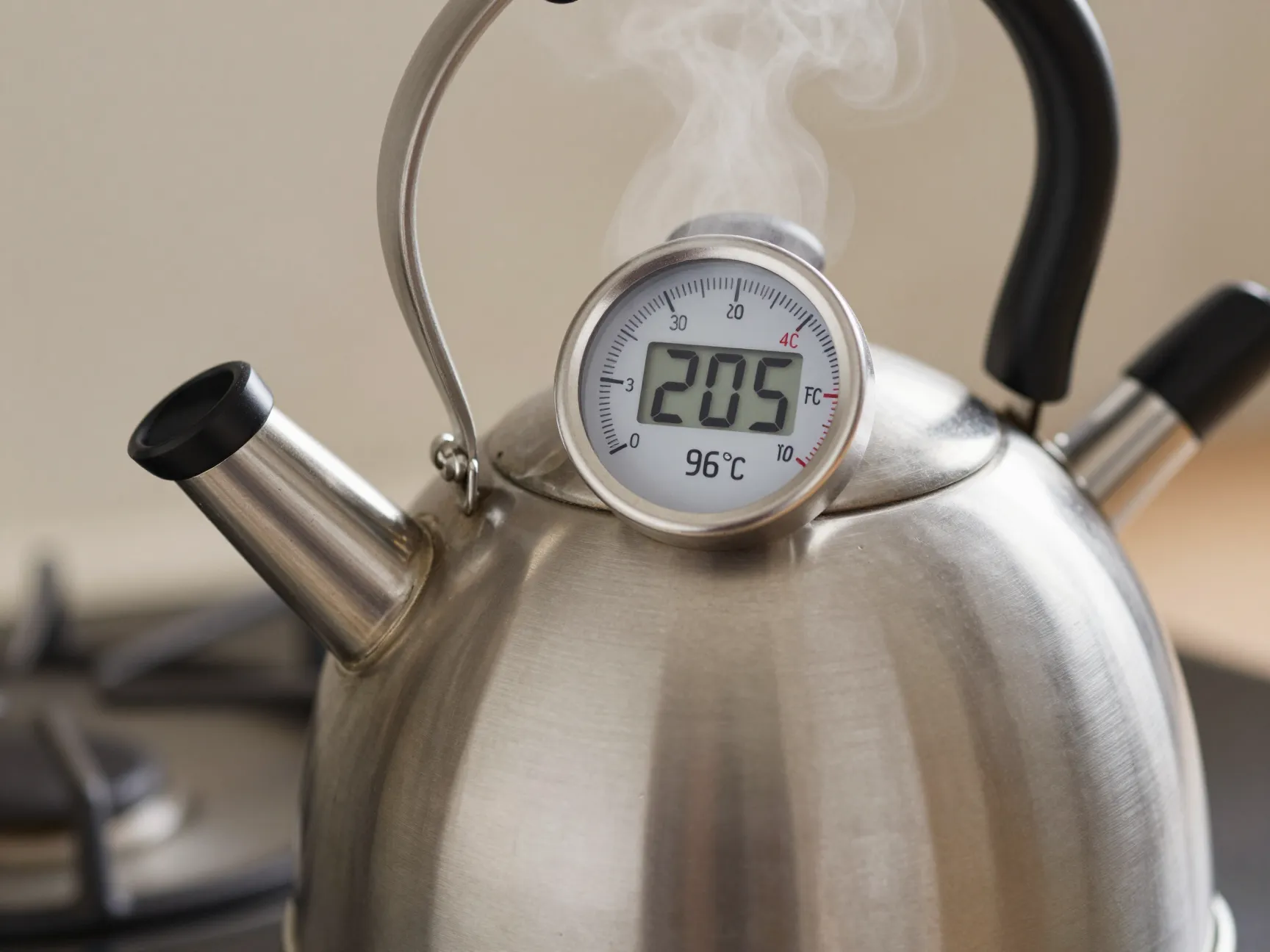
Water temperature is one of the most underestimated variables in coffee brewing. The sweet spot for French press is 205°F (approximately 96°C) — just off a full boil. [1][3] Water that is too hot (above 210°F) scorches the grounds and pulls out harsh, bitter compounds. Water that is too cool (below 195°F) under-extracts the coffee, producing a flat, sour, or lifeless cup.
If you do not have a thermometer, a simple rule works well: bring water to a full boil, then let it sit off the heat for 30 to 45 seconds. This naturally drops the temperature to the ideal range.
| Water Temperature | Result |
|---|---|
| Below 195°F (90°C) | Under-extracted — sour, weak, flat |
| 195–200°F (90–93°C) | Slightly under — acceptable but not optimal |
| 205°F (96°C) | Ideal — balanced, sweet, complex |
| Above 210°F (99°C) | Over-extracted — bitter, harsh |
6. Bloom the Coffee Grounds for 30 Seconds
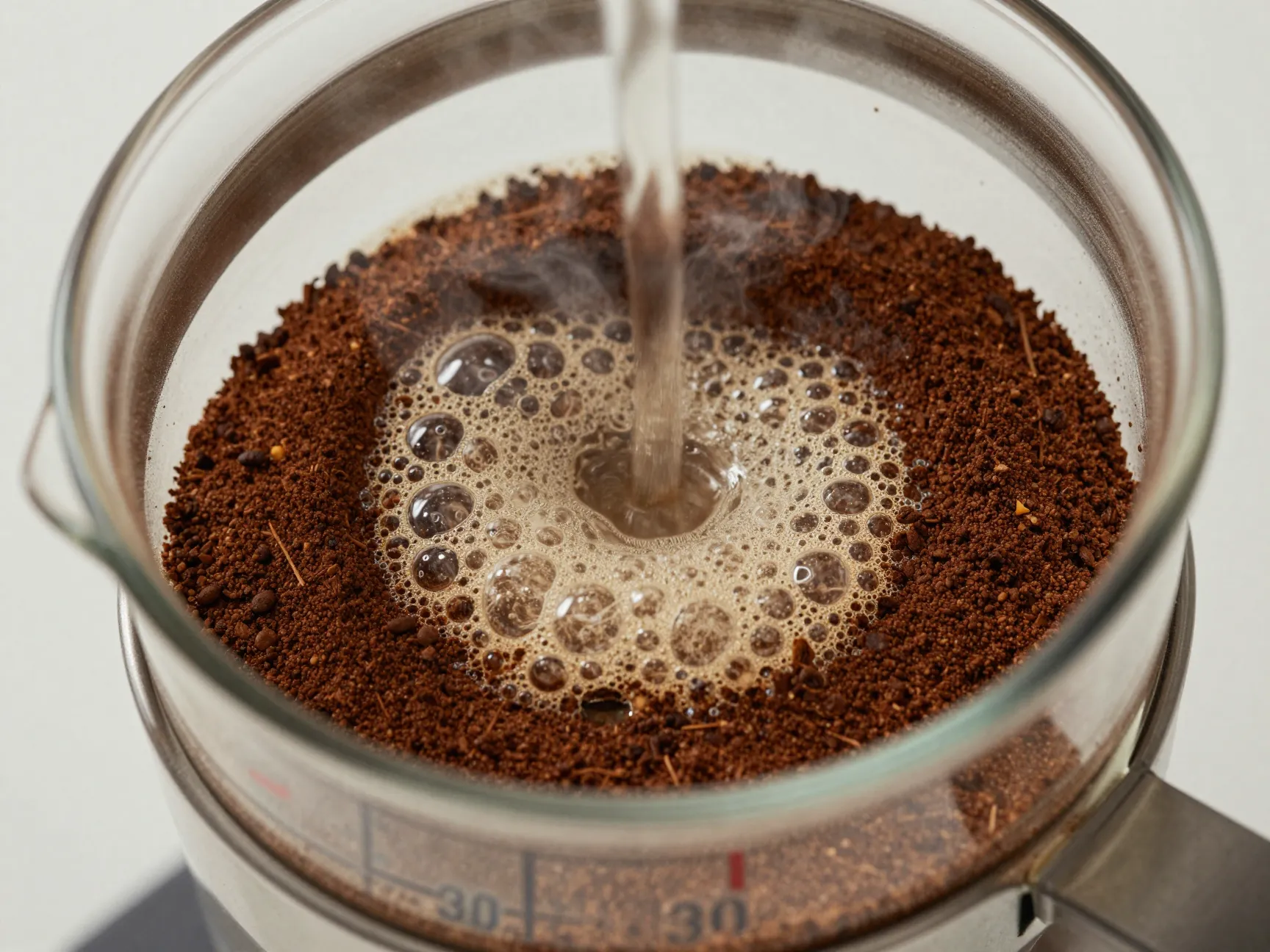
Blooming is a technique borrowed from pour-over brewing, and it works just as well in a French press. Pour just enough hot water to saturate all the grounds — roughly 100g or twice the weight of your coffee — then wait 30 seconds before adding the rest. [1]
Why does this matter? Freshly roasted coffee contains trapped carbon dioxide (CO₂) gas. When hot water hits the grounds, this CO₂ escapes rapidly. If you add all your water at once, the escaping gas creates an uneven barrier that prevents water from fully saturating the grounds, leading to inconsistent extraction.
Blooming allows the CO₂ to off-gas first, so when you add the remaining water, it can penetrate the grounds evenly and extract all the good flavors uniformly.
You will know the bloom is working when you see the grounds puff up and bubble slightly. This is a good sign — it means your coffee is fresh and releasing gas as intended.
7. Add Remaining Water and Stir Vigorously
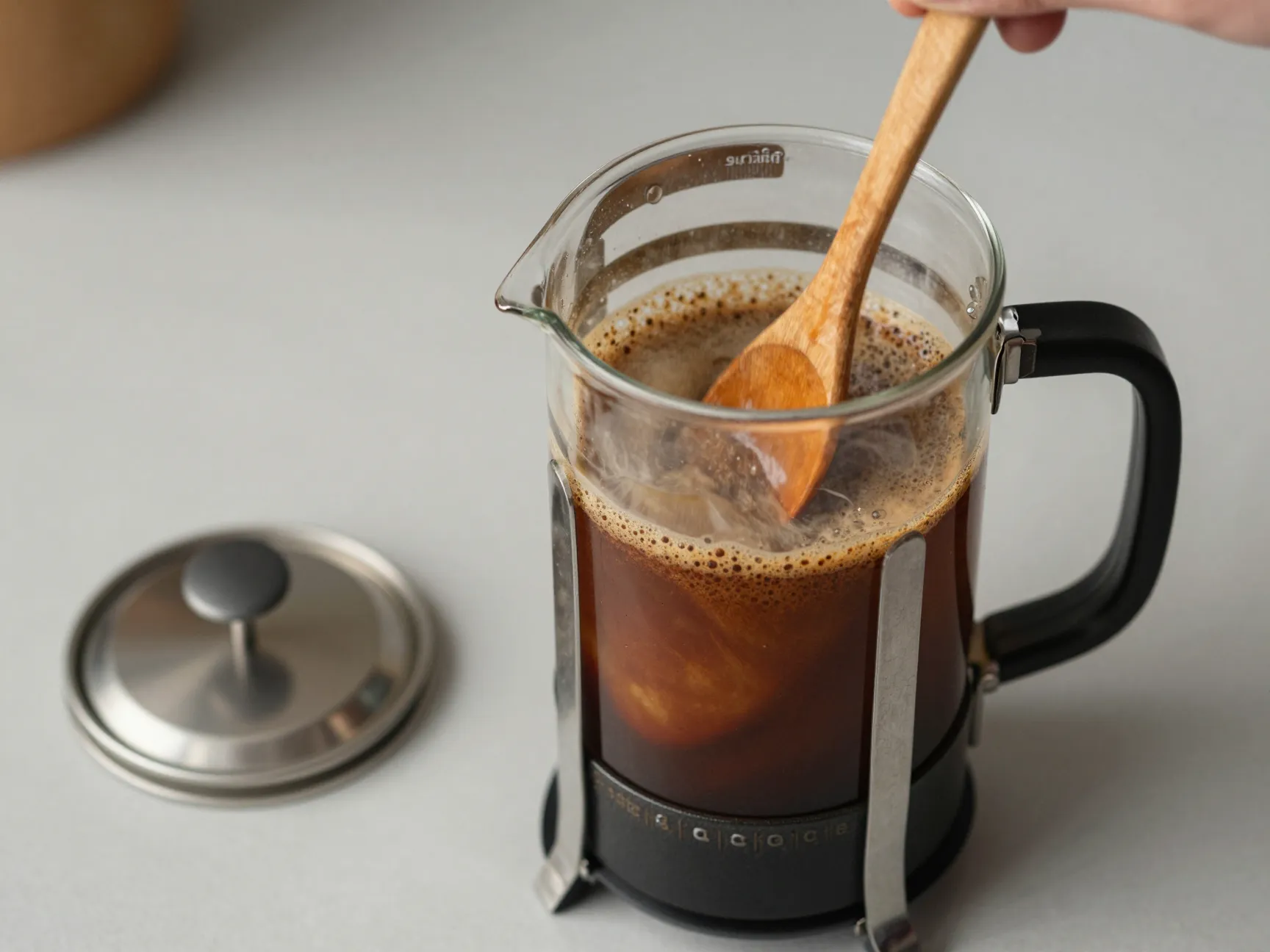
After the 30-second bloom, pour in the rest of your measured water in a slow, steady stream, making sure to saturate all the grounds. Then, stir vigorously with a wooden or plastic spoon to ensure every ground is in full contact with the water. [1]
This stirring step is easy to skip, but it matters. Without it, some grounds float to the top or clump together, extracting unevenly. A thorough stir creates a uniform slurry where all the coffee has equal access to hot water, which translates directly to a more balanced, consistent cup.
Place the lid on the French press with the plunger pulled all the way up. This traps heat inside and maintains your brewing temperature throughout the steep.
8. Steep for 4 Minutes (or Try the Hoffmann Method)
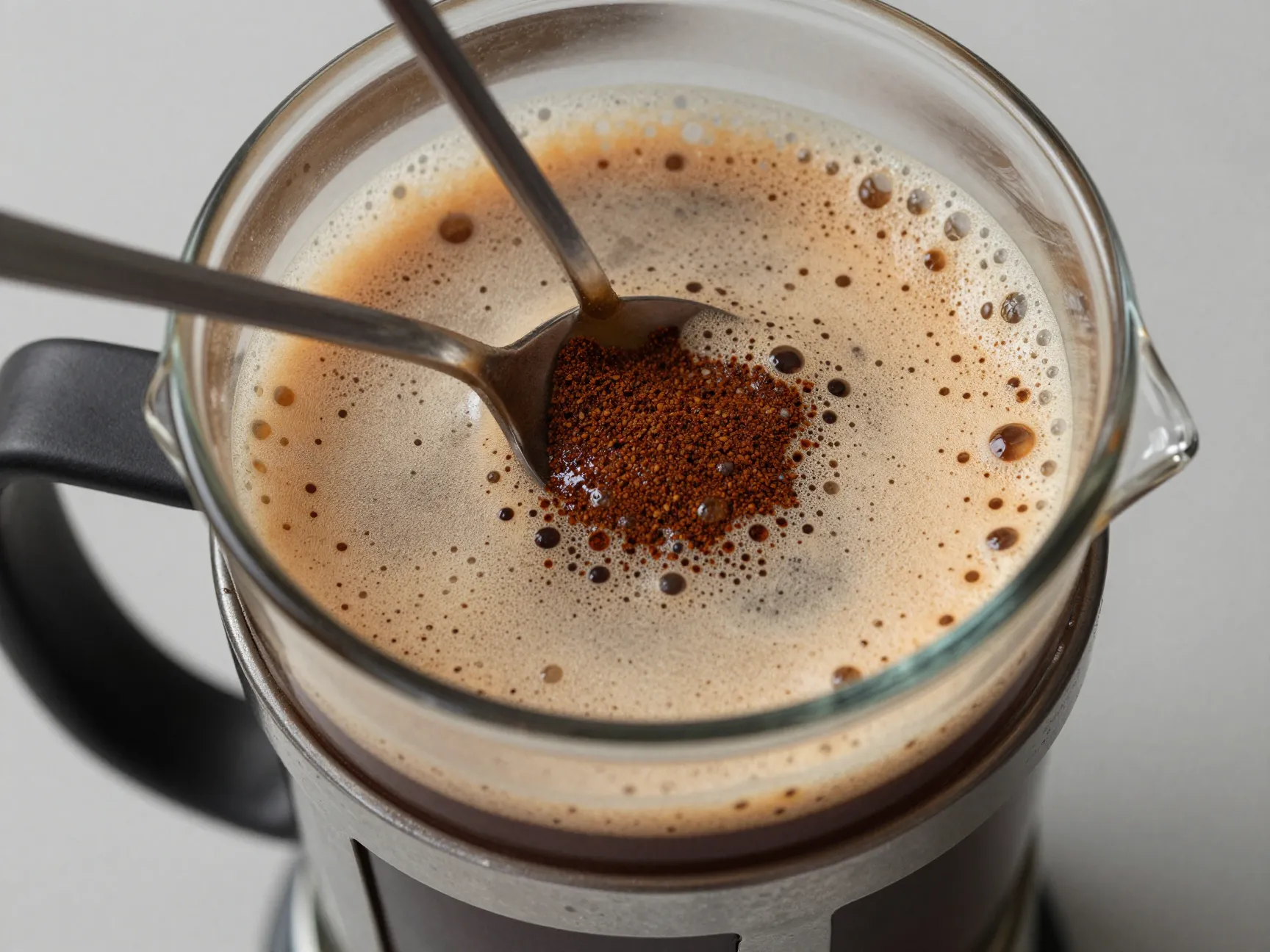
The standard steep time for French press is 4 minutes total, counting from the moment you first added water during the bloom. [1] After 4 minutes, the coffee has extracted the right balance of oils, sugars, and aromatic compounds without tipping into over-extraction territory.
However, if you want a cleaner, less silty cup, consider the James Hoffmann method, which has gained a strong following among specialty coffee enthusiasts: [2]
- After adding all your water and stirring, wait 5 minutes (instead of 4).
- Break the crust that forms on top with a spoon.
- Scoop out the foam and floating grounds from the surface.
- Wait an additional 5 minutes for the grounds to settle to the bottom.
- Press the plunger down slowly, only until the filter screen rests on top of the liquid — do not push all the way to the bottom.
- Pour immediately and carefully.
This method produces a noticeably cleaner, crisper cup with significantly less silt. [2] The trade-off is time — it takes about 10 minutes total versus the standard 4.
Which method should you use?
| Method | Total Time | Cup Style |
|---|---|---|
| Standard (4 min) | ~5 min with bloom | Full-bodied, rich, some silt |
| Hoffmann Method | ~10–11 min | Cleaner, crisper, minimal silt |
9. Press Slowly and Pour Immediately
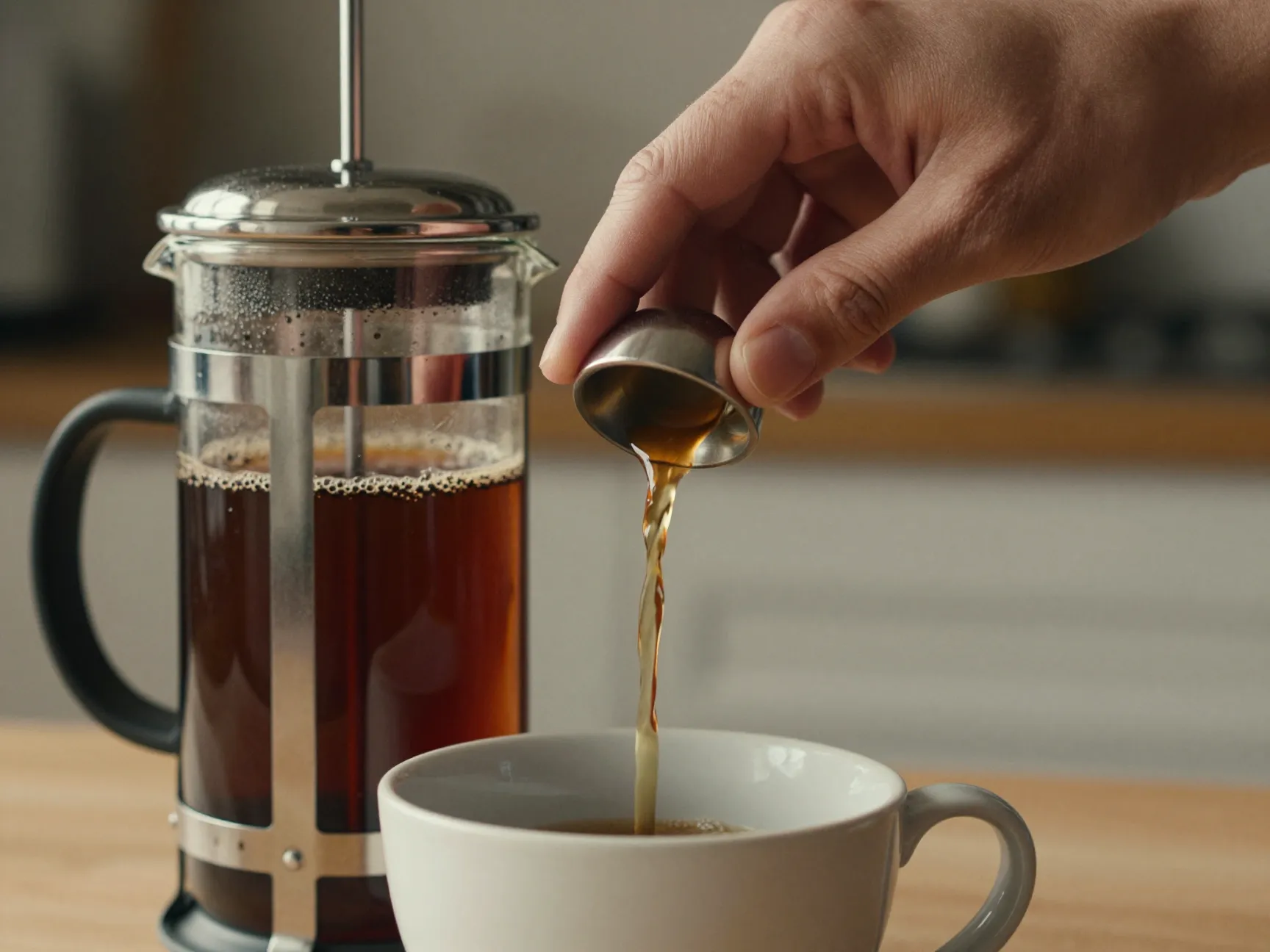
The final step is where many people unknowingly undo all their careful work. Press the plunger down slowly and steadily — if you feel strong resistance, your grind may be too fine. If it drops with no resistance at all, your grind may be too coarse.
Once you have pressed, pour the coffee immediately into your cup or a separate carafe. [1] This is critical. Leaving brewed coffee sitting on top of the grounds — even with the plunger pressed down — continues the extraction process. Within minutes, your carefully brewed cup will turn bitter and over-extracted.
If you are not drinking all the coffee at once, pour it into a thermal carafe to preserve both temperature and flavor without further extraction.
“The press is not a storage vessel. Once you plunge, pour.”
Bonus Tips for an Even Better Cup
Beyond the core 9 steps to make coffee in French press for a perfect, silky cup, a few additional habits can take your brew from good to exceptional.
💧 Water quality matters: If your tap water tastes good, it is suitable for brewing. If it has a strong chlorine smell or off-flavors, use filtered water. You do not need expensive mineral water — just clean, neutral-tasting H₂O. [2]
🧹 Clean your French press regularly: Coffee oils accumulate in the mesh filter and on the glass walls. These rancid oils can add an unpleasant, stale flavor to fresh brews. Disassemble and wash your press thoroughly after every few uses.
📏 Dial in your grind over time: Every coffee is different. A light Ethiopian natural process may need a slightly finer grind than a dark Colombian roast. Keep notes on your adjustments and you will dial in your ideal cup faster.
🌡️ Serve in a preheated cup: Just as you preheat the press, a quick rinse of your mug with hot water keeps your coffee hotter for longer.
Common French Press Mistakes to Avoid
| Mistake | What Happens | Fix |
|---|---|---|
| Grind too fine | Gritty cup, over-extraction | Adjust burr grinder to coarser setting |
| Water too hot | Bitter, harsh flavor | Let boiled water rest 30–45 seconds |
| Skipping the bloom | Uneven extraction | Always bloom for 30 seconds |
| Not stirring | Clumped, uneven grounds | Stir vigorously after adding water |
| Leaving coffee in press | Bitter, over-extracted cup | Pour immediately after pressing |
| Using stale pre-ground coffee | Flat, lifeless flavor | Grind fresh whole beans before brewing |
Frequently Asked Questions
How much coffee do I use for a 12 oz French press?
For a 12 oz (355ml) press, use approximately 22–24g of coarsely ground coffee for a balanced cup at a 1:15 ratio.
Can I use pre-ground coffee in a French press?
You can, but the results will be noticeably less flavorful. Pre-ground coffee loses its aromatic compounds quickly after grinding. [2] For the best cup, always grind fresh.
Why is my French press coffee bitter?
Bitterness usually comes from one of three causes: water that is too hot, a grind that is too fine, or steeping too long. Check all three variables and adjust one at a time.
How do I reduce silt in my French press coffee?
Use a coarser grind, try the Hoffmann method (letting grounds settle before pouring), and pour carefully to avoid disturbing the sediment at the bottom. [2]
Is French press coffee stronger than drip coffee?
French press coffee typically has more body and a higher concentration of dissolved solids than drip coffee, which many people perceive as “stronger.” However, caffeine content depends more on the coffee-to-water ratio and roast level than the brewing method.
Conclusion: Your Path to a Perfect French Press Cup
Mastering the 9 Steps to Make Coffee in French Press for a Perfect, Silky Cup is less about expensive equipment and more about intentional habits. Start with fresh whole beans, grind coarse and consistent, nail your water temperature at 205°F, bloom for 30 seconds, stir thoroughly, steep for 4 minutes (or try the Hoffmann method for a cleaner cup), and pour the moment you press.
Here are your actionable next steps:
- Buy a burr grinder if you do not already own one — it is the single highest-impact upgrade you can make.
- Use a kitchen scale for at least your first few brews to build an intuition for the right ratio.
- Try the standard 4-minute method first, then experiment with the Hoffmann technique once you are comfortable.
- Keep a simple brew journal — note your grind setting, ratio, and steep time so you can replicate or improve each cup.
- Pour immediately after pressing — every time, without exception.
A great French press cup is not a mystery. It is a repeatable process. Follow these steps consistently, adjust intentionally, and you will be brewing a genuinely exceptional cup every single morning in 2026 and beyond.
References
[1] How To Make A Perfect French Press – https://www.stonecreekcoffee.com/blogs/news/how-to-make-a-perfect-french-press
[2] James Hoffmann French Press – https://sevencoffeeroasters.com/blogs/coffee-101/james-hoffmann-french-press
[3] How To Make A French Press Coffee French Press Brew Guide – https://hermanoscoffeeroasters.com/blogs/blog/how-to-make-a-french-press-coffee-french-press-brew-guide
[4] Brew Guide French Press – https://www.stumptowncoffee.com/pages/brew-guide-french-press
[6] How To Use A French Press – https://www.illy.com/en-us/coffee/coffee-preparation/how-to-use-a-french-press