8 Steps for How Do You Make Turkish Coffee: An Authentic Ritual Explained
Fewer than 3% of coffee drinkers outside the Middle East and Balkans have ever prepared Turkish coffee the correct way — yet this 500-year-old brewing method was inscribed on UNESCO’s Intangible Cultural Heritage list in 2013, recognizing it as one of humanity’s most meaningful daily rituals. If you have been settling for a rushed pour-over or a capsule machine, you are missing something far richer than caffeine.
Disclosure: This post contains affiliate links. As an Amazon Associate, we earn from qualifying purchases, and at no extra cost to you.

This guide walks you through 8 Steps for How Do You Make Turkish Coffee: An Authentic Ritual Explained — from choosing the right pot to pouring the perfect cup. Whether you are a curious beginner or a looking to expand your repertoire, these steps will help you master one of the world’s oldest and most respected coffee traditions in 2026.
Key Takeaways ☕
- Equipment matters: A copper cezve and ultra-fine are non-negotiable for authentic results.
- Cold water is the starting point: Always begin with cold water — never hot — to control foam development properly.
- Stir only once: You stir the coffee and sugar together before heating. After that, hands off.
- Foam is everything: The thick, dark foam is the hallmark of well-made Turkish coffee — protect it at all costs.
- Patience is the secret ingredient: Low heat, multiple heating cycles, and a 1–2 minute rest before sipping are what separate great Turkish coffee from a mediocre cup.
What Makes Turkish Coffee Different From Other Brews?
Before diving into the 8 Steps for How Do You Make Turkish Coffee: An Authentic Ritual Explained, it helps to understand what sets this method apart. Unlike , espresso, or , Turkish coffee is unfiltered. The grounds are brewed directly in the water and then allowed to settle at the bottom of the cup. You drink the liquid above them.
This produces a cup that is:
- Intensely aromatic — the oils are never filtered out
- Thick and syrupy in texture
- Rich in caffeine relative to its small serving size
- Deeply cultural — in Turkey, Greece, Bosnia, and across the Arab world, offering Turkish coffee is an act of hospitality
“Turkish coffee is not just a drink. It is a conversation, a ceremony, and a connection.” — A sentiment shared by coffee cultures across three continents.
The Sweetness Spectrum 🍬
Turkish coffee is ordered and prepared according to a sweetness preference declared before brewing, because sugar is added during cooking, not after. Here is a quick reference:
| Term | Meaning | Sugar Amount |
|---|---|---|
| Sade | No sugar | 0 teaspoons |
| Az şekerli | Slightly sweet | ½ teaspoon |
| Orta | Medium sweet | 1 teaspoon |
| Çok şekerli | Very sweet | 2 teaspoons |
This is one of the most charming quirks of the ritual — your preference is built into the brew itself [3].
The Equipment You Need Before You Start
Getting the right tools is half the battle. Here is what you need:
- 🫕 Cezve (also called ibrik): A small, long-handled pot, ideally copper or brass. Copper conducts heat evenly and gives you the best control [1][3].
- ☕ Demitasse cups: Small, thick-walled cups (about 2–3 oz / 60–90 ml) that retain heat well.
- 🔥 A low-heat source: A gas stove, electric burner, or even a sand-filled tray work well. The key is low, controllable heat.
- ⚗️ Finely ground Turkish coffee: Ground to a powder consistency finer than espresso — almost like flour [3][4].
- 🥄 A teaspoon: For measuring and carefully transferring foam.
Pro tip: If you do not have a cezve, a small saucepan with a spout can work as a substitute [2], but the narrow neck of a traditional cezve is specifically designed to concentrate and preserve foam.
8 Steps for How Do You Make Turkish Coffee: An Authentic Ritual Explained
Now let’s get into the heart of this guide. Follow these eight steps carefully and you will produce a cup that rivals anything served in Istanbul’s oldest coffeehouses.
1. Prepare the Equipment and Coffee
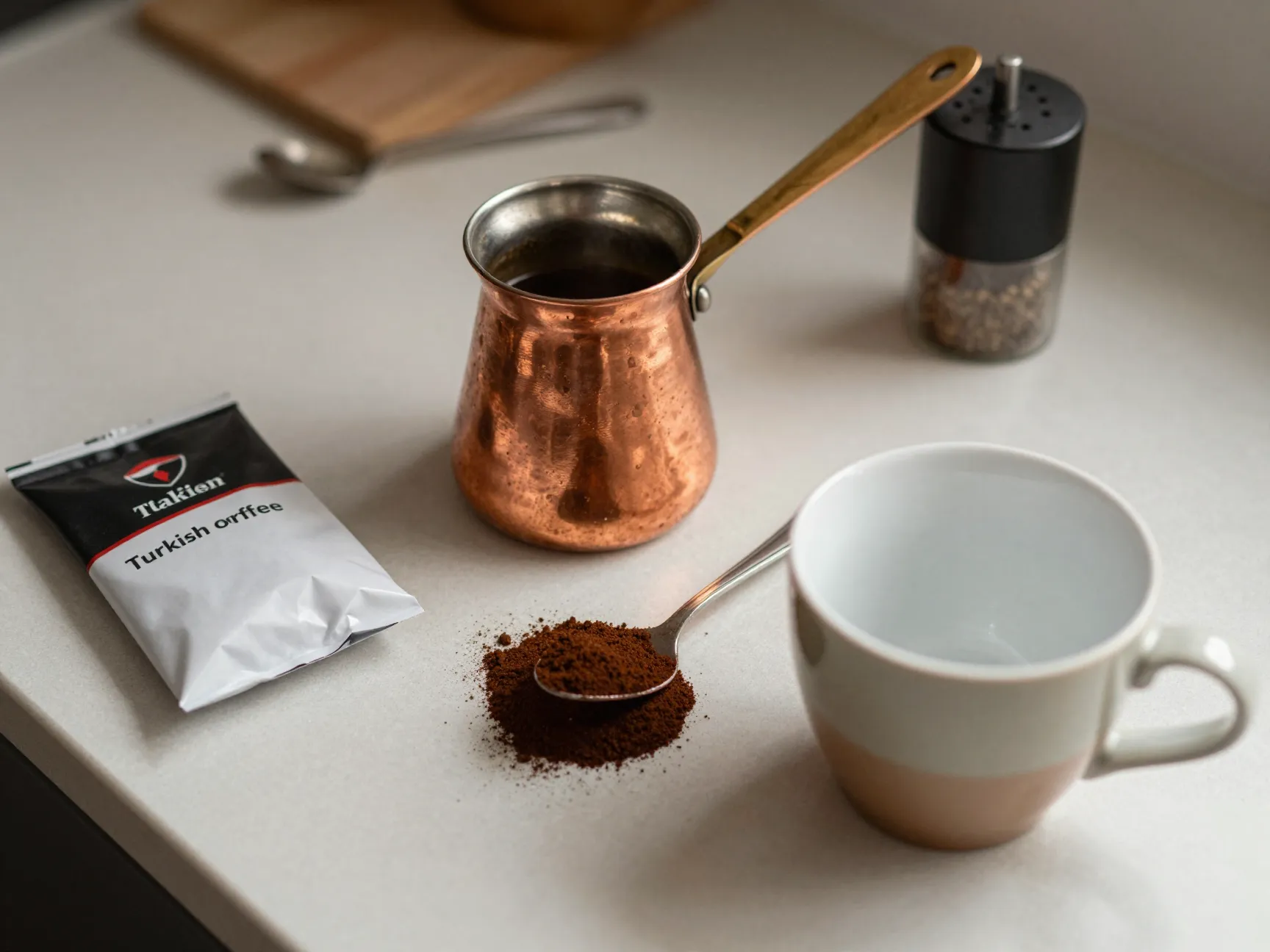
Start by selecting your cezve. Copper is the gold standard because it heats evenly and allows you to control temperature with precision [1][3]. Rinse it with cold water before use.
Next, measure your coffee. The standard ratio is one heaping tablespoon (about 7–8 grams) of finely ground Turkish coffee per cup [1][3]. The grind must be ultra-fine — finer than espresso, closer to a powder. If you are buying pre-ground Turkish coffee, look for brands that specifically label their product as “Turkish grind.” If you are grinding at home, use a burr grinder set to its finest setting and grind for longer than you think necessary.
Why this matters: Coarser grinds will not produce the thick, syrupy body that defines authentic Turkish coffee. The fine powder is what creates that signature texture and allows the grounds to eventually settle cleanly at the bottom of your cup.
2. Measure Cold Water
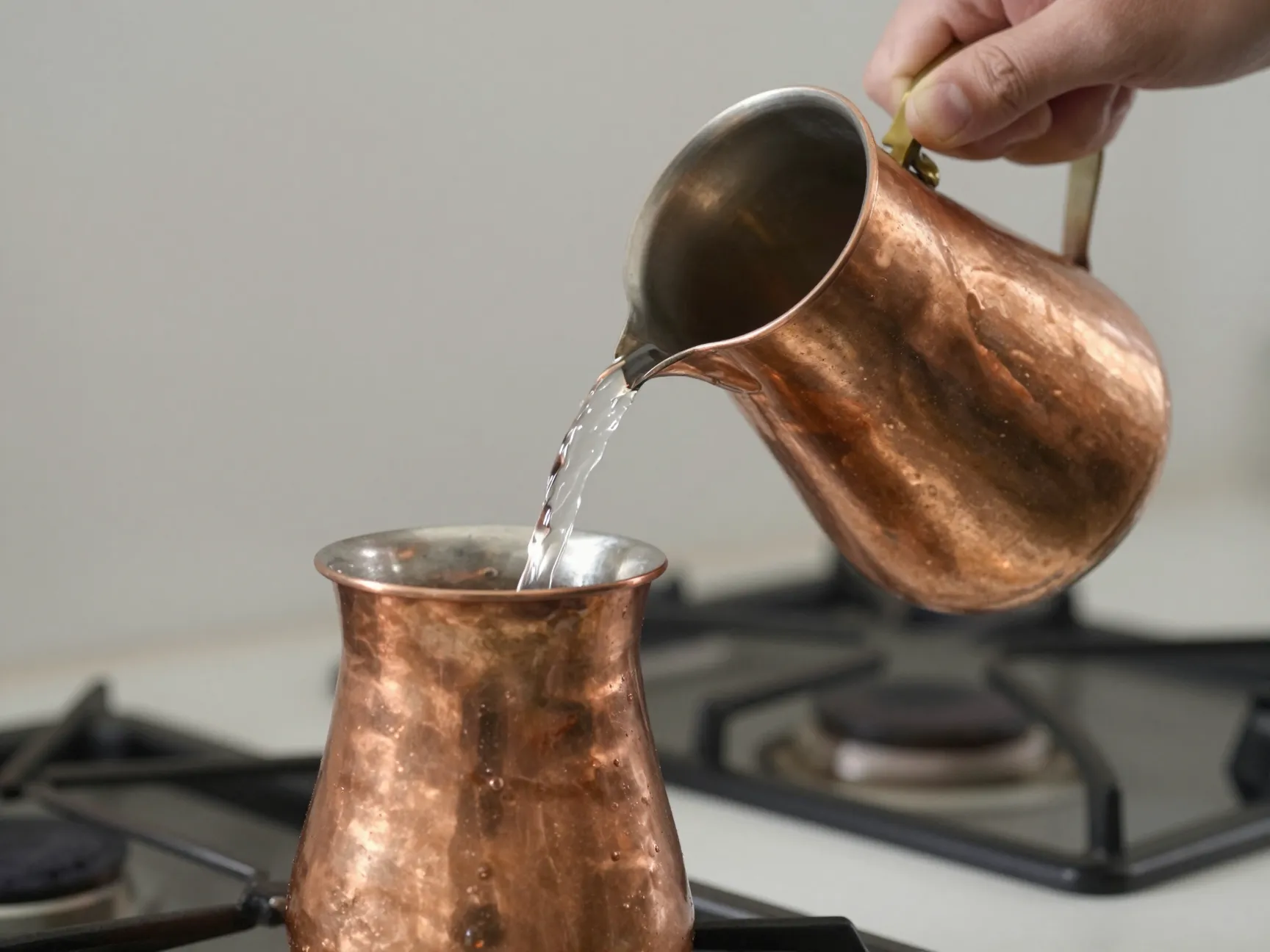
This step surprises many people: always use cold water, never warm or hot [3][4].
Use your serving demitasse cup as your measuring tool. Fill it with cold water and pour it into the cezve — one cup of water per serving. This ensures your water-to- is always correct regardless of your cezve’s size [3].
The water level should reach the neck of the cezve but not above it [3]. This is important because the narrow neck is what traps steam and helps build the foam in later steps. Overfilling will cause the coffee to boil over before you can manage the foam.
Quick checklist before moving on:
- ✅ Water is cold
- ✅ Water level is at the neck of the cezve
- ✅ You are using one cup’s worth of water per serving
3. Add Coffee and Sugar
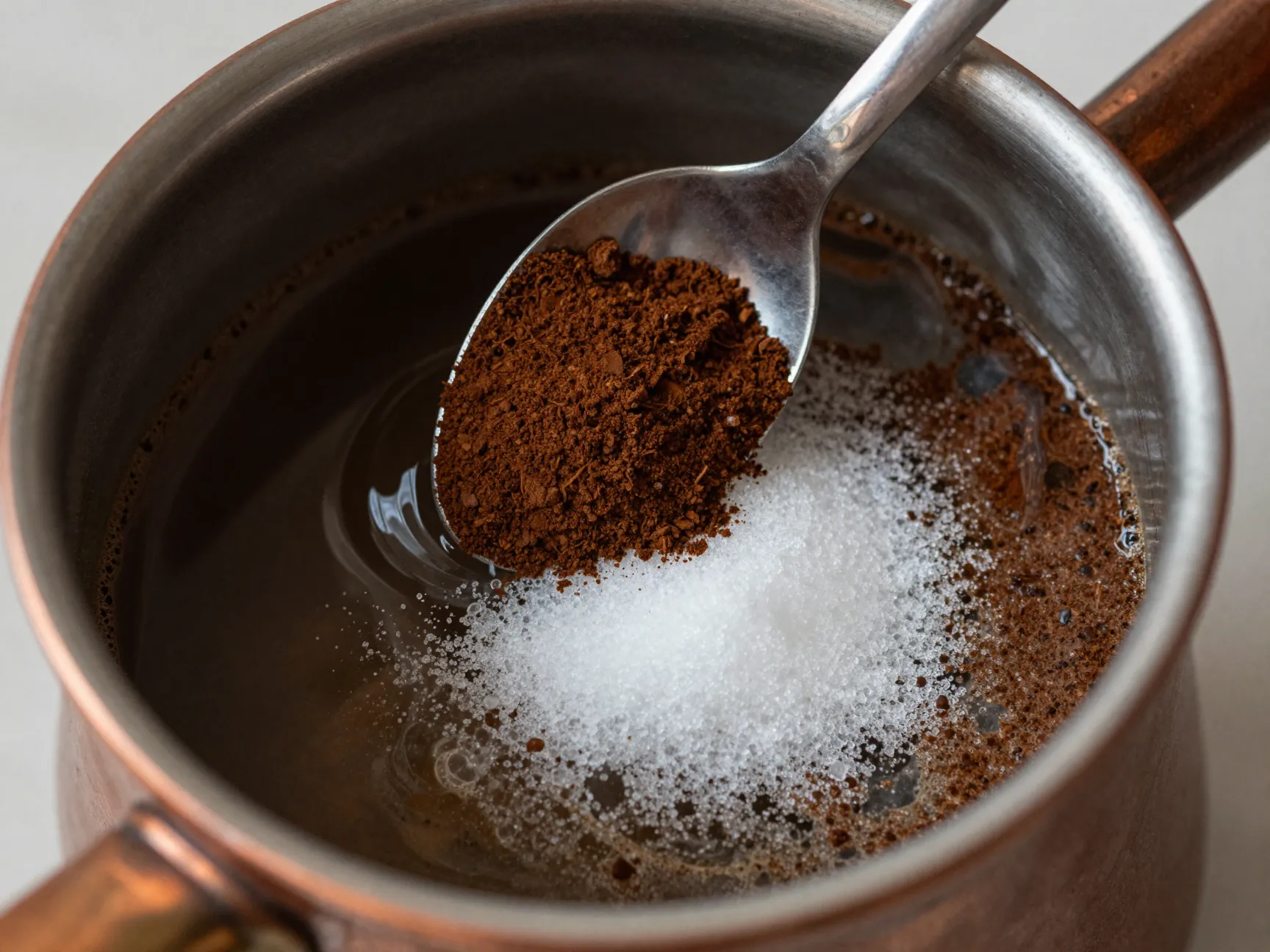
Add your measured coffee and your chosen amount of sugar (based on the sweetness table above) directly into the cold water [3][4].
Now, stir briefly to combine everything together. This is the only time you stir the coffee during the entire brewing process [3][6]. After this point, you do not touch it with a spoon again until a specific moment later in the process.
⚠️ Critical rule: Stirring after the coffee begins to heat will destroy the foam. The foam is the soul of Turkish coffee — guard it fiercely.
The coffee and sugar will sit on top of the water at first. That is perfectly normal. The heat will do the work of combining them.
4. Heat Slowly on Low Flame
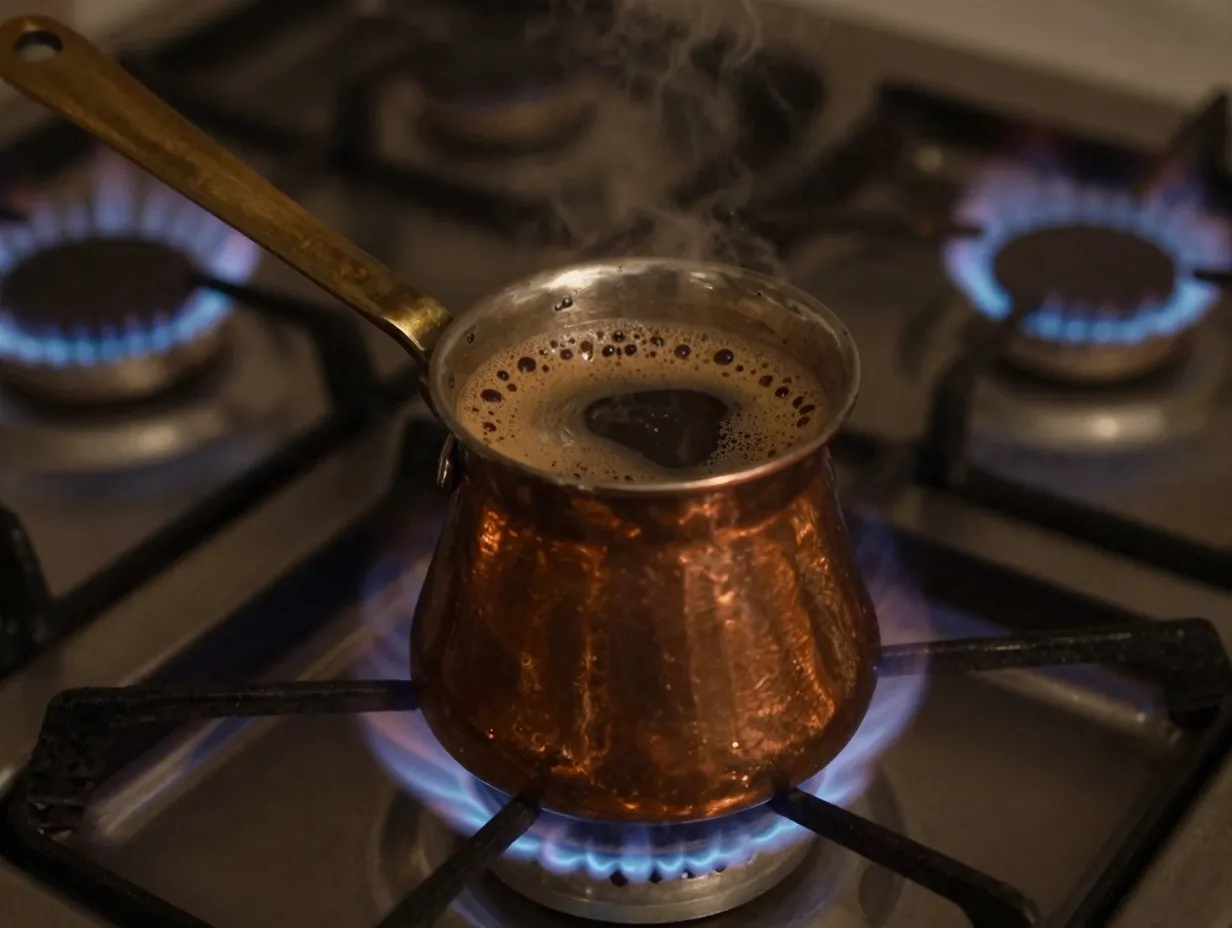
Place your cezve on the lowest heat setting available [3][4][6]. This is not a process you can rush. The entire brewing process from cold water to finished cup should take approximately 3 to 4 minutes [3].
Low and slow heat serves two purposes:
- Flavor development: Gentle heat allows the coffee’s aromatic compounds to release gradually, producing a more complex, nuanced cup.
- Foam formation: High heat will cause the coffee to boil rapidly and violently, destroying the foam before it has a chance to form properly.
Stand by the stove and watch closely. Do not walk away. Turkish coffee requires your full attention for just a few minutes, and those minutes matter.
5. Watch for Foam Formation
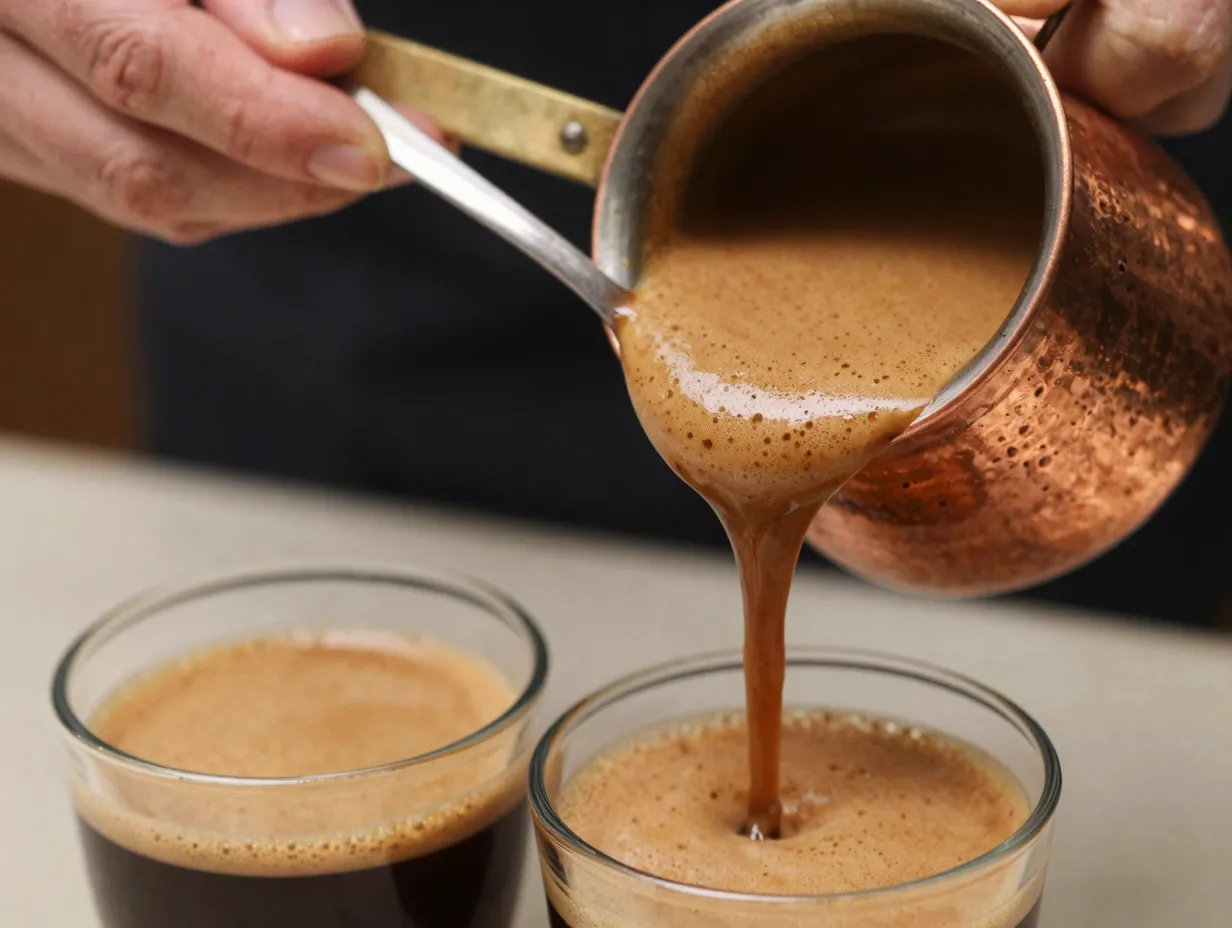
As the coffee slowly heats, you will notice a dark, thick foam beginning to form on the surface [3][6]. This foam is called köpük in Turkish, and it is the most prized element of the entire cup.
Watch the foam carefully. It will rise slowly at first, then more quickly as the temperature increases. Your job is to remove the cezve from heat just before the foam boils over [3][6].
Once you remove it from heat, use a teaspoon to carefully scoop the thick foam and divide it between your serving cups [3][6]. Each cup should get an equal share of foam. This ensures every guest receives the signature creamy top layer.
Signs your foam is ready to scoop:
- It is dark brown and thick, not thin and bubbly
- It has risen to just below the rim of the cezve
- It has a slightly domed appearance
6. Return to Heat for a Gentle Boil

Place the cezve back on low heat [4][3]. Allow the coffee to come to a gentle, controlled boil — not a rolling boil, but a slow, steady rise of foam and liquid toward the neck of the cezve [4].
When the foam rises to the neck again, remove the cezve from heat. This time, stir the foam down gently with your spoon [4][3]. You are not stirring the coffee aggressively — just pressing the foam back down to prevent overflow and to begin the next heating cycle.
This step is about building depth of flavor. Each heating cycle extracts more from the grounds and layers the taste.
7. Repeat the Heating Cycle
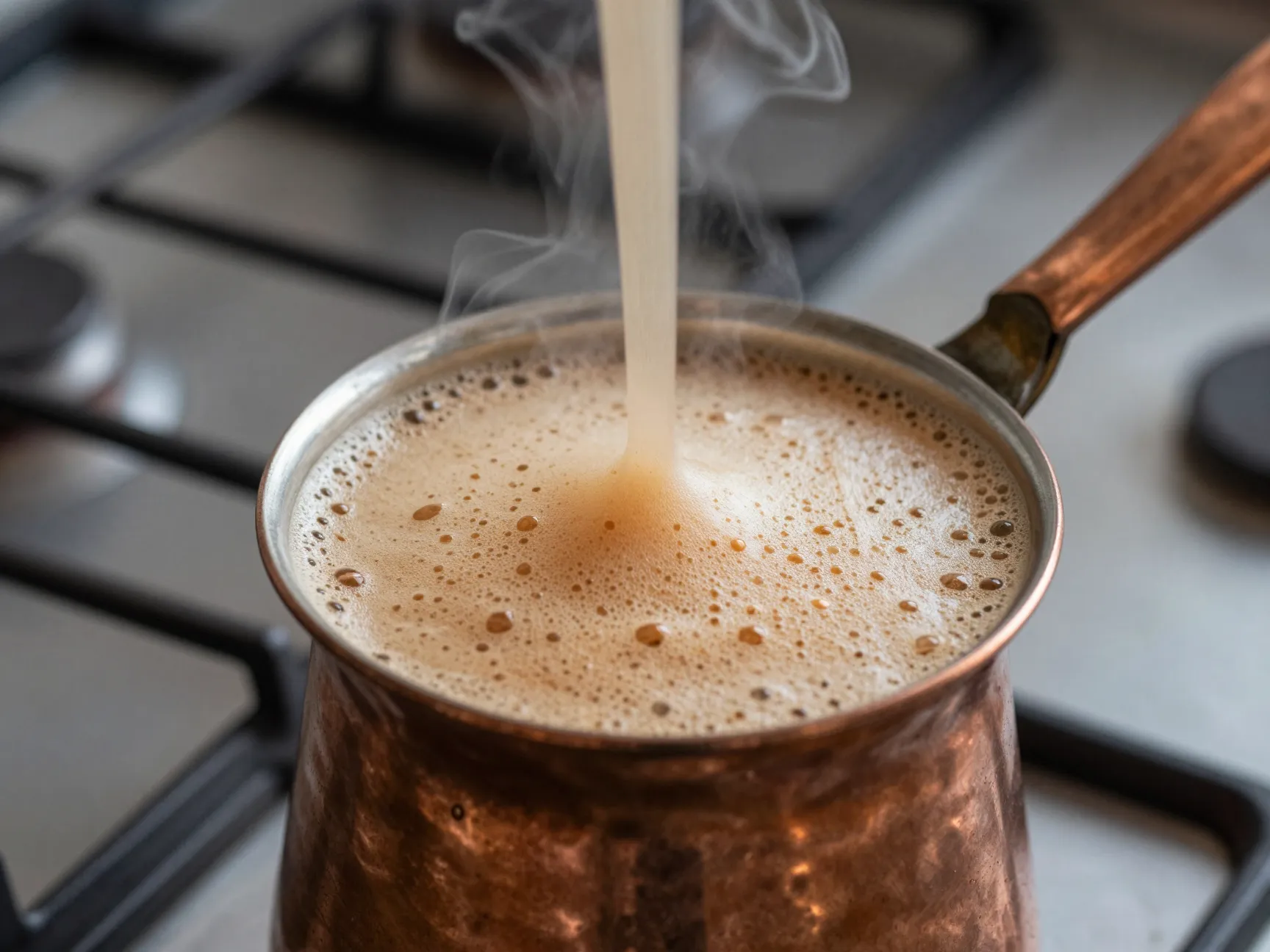
Return the cezve to low heat one final time [4]. This third heating cycle follows the same pattern: watch the foam rise, remove from heat just before it boils over.
Here is the key difference in this final cycle: Do not stir the foam down this time [4]. Let it rest on top. This foam will become the beautiful, creamy crown on your finished cup.
The three-cycle heating method is what separates a truly authentic cup from a simplified version. Many shortcuts skip this step, but the result is a thinner, less flavorful coffee with poor foam. The repeated heating extracts the full depth of the coffee’s flavor compounds and creates a more stable, luxurious foam [4][8].
Summary of the three heating cycles:
| Cycle | Action After Foam Rises |
|---|---|
| 1st (Step 5) | Scoop foam into cups |
| 2nd (Step 6) | Stir foam down gently |
| 3rd (Step 7) | Do NOT stir — leave foam intact |
8. Pour and Serve
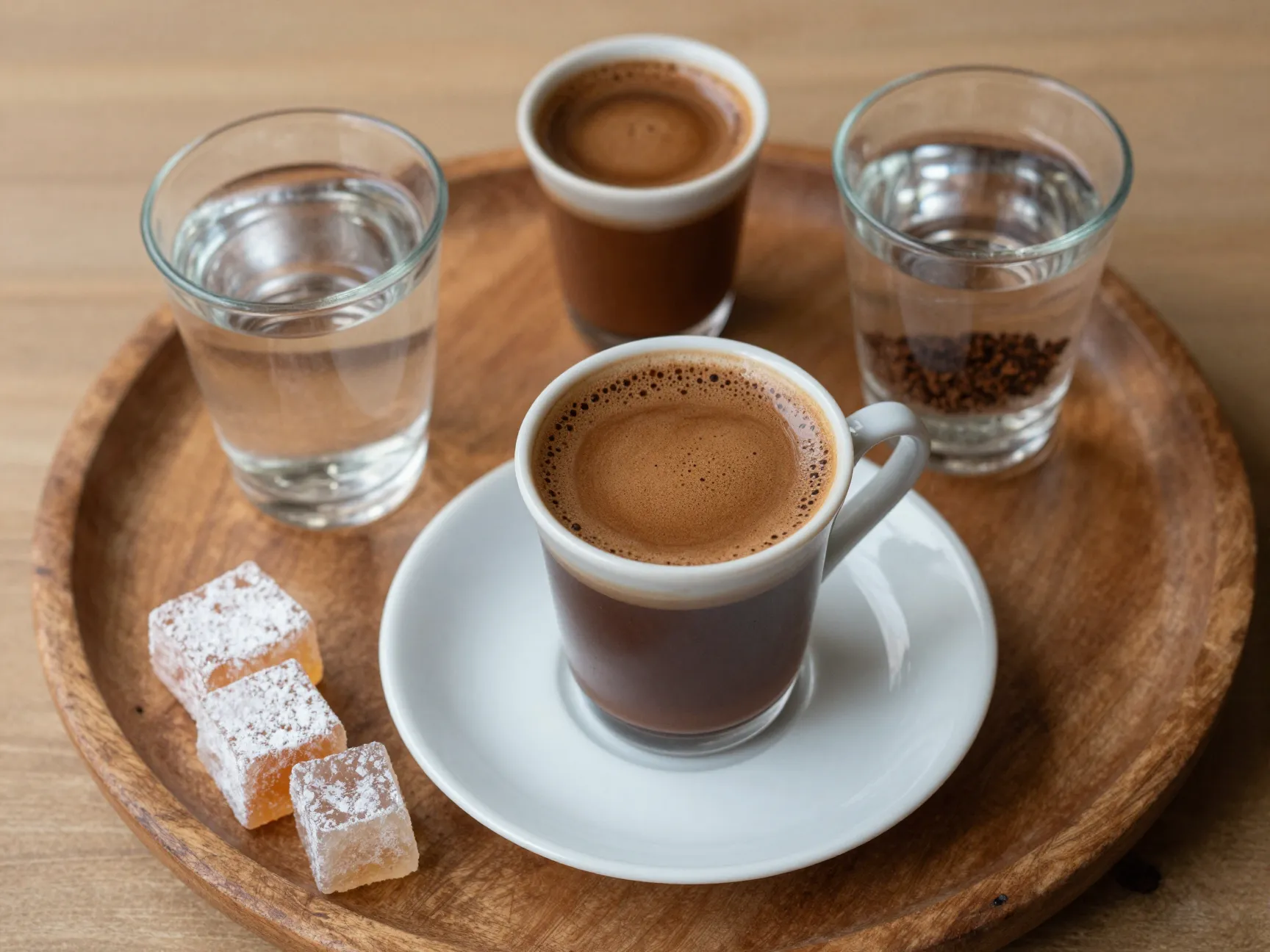
This final step requires a steady hand and a slow pour [1][3].
How to pour correctly:
- Hold the cezve close to the cup
- Pour in a slow, steady stream to avoid disturbing the foam
- Aim for the side of the cup rather than the center to minimize turbulence
- Divide the liquid evenly between cups if making multiple servings
Once poured, let the coffee rest for 1 to 2 minutes before drinking [3][1]. This resting time allows the fine grounds to settle to the bottom of the cup. Drinking too soon means a mouthful of gritty sediment — not the experience you want.
The traditional serving presentation includes:
- 🥛 A glass of cold water (to cleanse the palate before drinking)
- 🍬 Something sweet on the side — Turkish delight (lokum), a small piece of chocolate, or a date
- ☕ The coffee itself, foam intact on top [3][1]
Sip slowly. The grounds at the bottom are not a mistake — they are tradition. Some cultures even read fortunes from the patterns they leave behind.
Common Mistakes to Avoid
Even experienced home brewers make these errors. Here is what to watch out for:
- Using — Always start cold. Hot water prevents proper foam development [3][4].
- Grinding too coarsely — Turkish coffee must be powder-fine. A produces a weak, watery result [3].
- Stirring after heating begins — One stir at the start, then patience [3][6].
- Using high heat — This destroys foam and burns the coffee. Low and slow is the only way [3][6].
- Skipping the rest period — Drinking immediately means drinking grounds. Wait the full 1–2 minutes [3][1].
- Overfilling the cezve — Leave room for the foam to rise. Filling past the neck leads to overflow [3].
Frequently Asked Questions
Can I use a regular small pot instead of a cezve?
Yes — a small saucepan with a spout can work as a substitute, though the narrow neck of a cezve makes foam management easier [2].
What coffee brand should I use?
Look for brands specifically labeled “Turkish coffee” or “Turkish grind.” Popular options include Kurukahveci Mehmet Efendi and Illy Turkish Roast. The key is the , not the brand [5][7].
Is Turkish coffee stronger than espresso?
Turkish coffee has a similar per ounce but is served in smaller quantities. Its unfiltered nature means more oils and a thicker body, which can make it feel stronger [7].
Can I add milk or cream?
Traditionally, no. Turkish coffee is always served black (with or without sugar). Adding milk fundamentally changes the texture and is not part of the authentic ritual [7][3].
Why does my coffee not have foam?
The most common causes are: heat too high, water too hot at the start, or stirring during brewing [3][6].
The Cultural Significance of Turkish Coffee in 2026
Understanding the 8 Steps for How Do You Make Turkish Coffee: An Authentic Ritual Explained is about more than technique — it is about participating in a living cultural tradition. In Turkey, the phrase “bir fincan kahvenin kırk yıl hatırı vardır” translates to “a cup of coffee is remembered for forty years.” Offering Turkish coffee to a guest is an act of hospitality, respect, and connection.
In 2026, Turkish coffee culture continues to spread globally, with specialty cafés in New York, London, Berlin, and Sydney now offering traditional cezve-brewed coffee alongside their espresso menus. The ritual has found new audiences among third-wave coffee enthusiasts who value process, provenance, and patience [7][5].
Learning to make it yourself is a way of honoring that tradition — and producing one of the most complex, satisfying cups of coffee you will ever drink.
Conclusion: Your Next Steps Toward the Perfect Cup
Mastering the 8 Steps for How Do You Make Turkish Coffee: An Authentic Ritual Explained is genuinely achievable for any home brewer willing to slow down and pay attention. Here is your action plan:
- Get a copper cezve — Order one online or find one at a Middle Eastern grocery store. Budget around $15–$30 for a quality piece.
- Source proper Turkish-grind coffee — Buy a small bag of pre-ground Turkish coffee to start. Experiment with grinding your own once you are comfortable with the process.
- Practice the three-cycle heating method — The first time will feel uncertain. By the third attempt, you will have a feel for the foam and the timing.
- Serve it traditionally — Cold water, something sweet, and no rushing. Let the ritual be the point.
- Share it — Turkish coffee is best enjoyed in company. Make it for someone else and watch their reaction when they taste that first sip of properly foamed, slow-brewed coffee.
The world moves fast in 2026. Turkish coffee insists on slowing down. That, perhaps more than anything, is why it has survived for five centuries — and why it is worth learning today.
References
[1] Watch – https://www.youtube.com/watch?v=hQwIjfX6i_Q
[2] How To Make Turkish Coffee With Saucepan Option – https://www.teaforturmeric.com/how-to-make-turkish-coffee-with-saucepan-option/
[3] How To Make Turkish Coffee Traditional Way – https://cookingorgeous.com/blog/how-to-make-turkish-coffee-traditional-way/
[4] A Brewing Guide For Turkish Coffee – https://driftaway.coffee/a-brewing-guide-for-turkish-coffee/
[5] Turkish Coffee – https://www.peacecoffee.com/blogs/brew-guides/turkish-coffee
[6] How To Make Turkish Coffee – https://foolproofliving.com/how-to-make-turkish-coffee/
[7] Turkish Style Coffee What Is It And How Is It Made – https://www.gamberorossointernational.com/news/turkish-style-coffee-what-is-it-and-how-is-it-made/
[8] Turkish Coffee How To Make It T64291 – https://www.home-barista.com/brewing/turkish-coffee-how-to-make-it-t64291.html