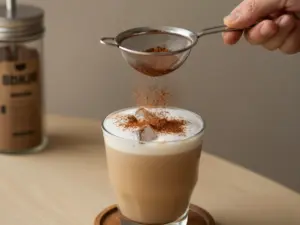
8 Simple Steps: How Do You Make Espresso Martini Perfection at Home?
The has become the most ordered cocktail in bars across the United States and Australia — a title it has held consistently since 2022. Yet most home bartenders still believe you need professional equipment or barista training to pull it off. That belief is wrong. Knowing 8 Simple Steps: How Do You Make Perfection at Home? is all it takes to produce a silky, foam-topped cocktail that rivals anything a high-end bar can serve.
Disclosure: This post contains affiliate links. As an Amazon Associate, we earn from qualifying purchases, and at no extra cost to you.

In this guide, I’ll walk you through every step — from choosing your ingredients to the final garnish — so you can master this iconic drink in your own kitchen in 2026.
Key Takeaways 📋
- Balance is everything: A 1:1:1 ratio of vodka, , and fresh espresso is the best starting point for beginners [4]
- Fresh espresso is non-negotiable: The natural oils and crema in freshly pulled espresso create that signature thick foam [4]
- Temperature matters: Always cool your espresso before shaking to prevent ice dilution [3]
- Shake hard and strain twice: Vigorous shaking for 10–12 seconds plus double straining produces the smoothest, frothiest result [4][1]
- Small details win: A chilled glass, three coffee beans, and a pinch of sea salt elevate a good drink to a great one [2][1]
What Is an Espresso Martini and Why Does It Matter?
The espresso martini was invented in London in the 1980s by bartender Dick Bradsell. A model reportedly asked him for a drink that would “wake me up and mess me up.” The result was a cocktail that combined the boldness of coffee with the kick of vodka — and it has never gone out of style.
What makes this drink special is its dual nature: it’s both a dessert cocktail and an energizing pick-me-up. The foam on top isn’t just decorative — it’s a sign of quality. That thick, caramel-colored froth tells you the espresso was fresh, the shake was vigorous, and the technique was right.
💬 “The foam is the fingerprint of a well-made espresso martini. If it’s there, you did it right.”
Understanding the science behind the drink makes every step in this guide make more sense. Let’s get into it.
The Essential Equipment and Ingredients You’ll Need
Before diving into 8 Simple Steps: How Do You Make Espresso Martini Perfection at Home?, gather everything you need. Preparation is half the battle.
Equipment Checklist ✅
| Equipment | Why You Need It |
|---|---|
| For mixing and aerating the drink | |
| Hawthorne strainer | Catches large ice chunks |
| Fine mesh strainer | Removes tiny ice shards for a smooth drink |
| Jigger (measuring tool) | Ensures accurate ratios |
| Martini or coupe glass | The classic serving vessel |
| Produces the crema and oils needed for foam |
Ingredient List 🧾
| Ingredient | Amount |
|---|---|
| Vodka | 2 oz |
| Fresh espresso | 1 oz |
| (e.g., Kahlúa) | 0.5 oz |
| 0.5 oz | |
| Ice | Generous handful |
| Coffee beans (garnish) | 3 beans |
These measurements come from well-tested recipes used by professional bartenders [3][1]. The simple syrup is adjustable — if you prefer a sweeter drink, increase it slightly. If you like it more bitter and bold, reduce it or skip it entirely.
8 Simple Steps: How Do You Make Espresso Martini Perfection at Home?
Now let’s get to the heart of the guide. Follow these eight steps in order and you’ll have a perfect espresso martini every single time.
1. Pull a Fresh Shot of Espresso

The single most important ingredient in this cocktail is freshly pulled espresso. The natural oils and crema that come from a proper espresso machine are what create the thick, stable foam layer on top of your finished drink [4].
Why this matters: and regular brewed coffee simply don’t contain the same emulsified oils. They produce a flat, watery cocktail with no foam. concentrate can work in a pinch, but it still produces significantly less foam than fresh espresso [3].
If you don’t own an espresso machine, a Moka pot is a reasonable alternative. It won’t produce true crema, but it creates a concentrated, oil-rich coffee that performs better than drip coffee. As a last resort, you can add an egg white to compensate — more on that in Step 4.
Pro tip: Pull a double shot and use 1 oz for the cocktail. Drink the rest as a reward for your hard work. ☕
2. Cool the Espresso to Room Temperature
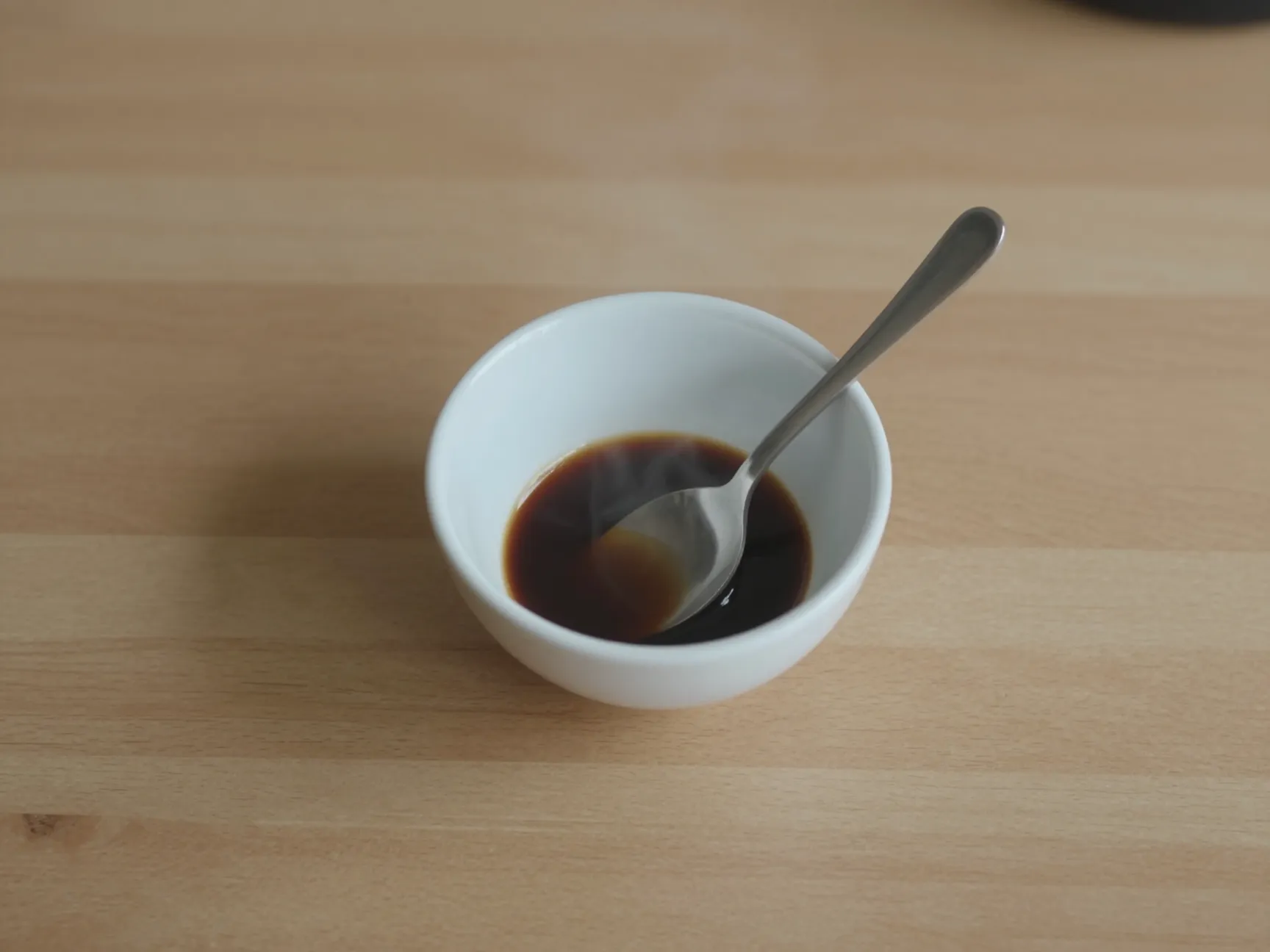
This step is one of the most overlooked — and most important — in the entire process. Never shake hot espresso with ice [3].
Here’s why: Hot liquid melts ice rapidly. When the ice melts too quickly, it over-dilutes your cocktail, throws off the flavor balance, and prevents proper chilling. The result is a watered-down, lukewarm drink with no foam.
How to cool it quickly:
- Pour the espresso into a small bowl or cup
- Set it aside for 5–10 minutes at room temperature
- For faster cooling, place the cup in a bowl of cold water for 2–3 minutes
Once the espresso is at room temperature (or slightly cooler), you’re ready to move on.
3. Chill Your Martini Glass

While your espresso cools, take this time to chill your serving glass [2]. A warm glass will raise the temperature of your cocktail the moment it’s poured, dulling the flavors and reducing the longevity of the foam.
Two easy methods:
- Fill the glass with ice and cold water. Let it sit for 2–3 minutes, then discard the ice water just before pouring.
- Place the glass in the freezer for 10–15 minutes before you start making the drink.
A properly chilled glass keeps your espresso martini cold from the first sip to the last. It’s a small step that makes a noticeable difference.
4. Measure and Add Your Ingredients to the Shaker
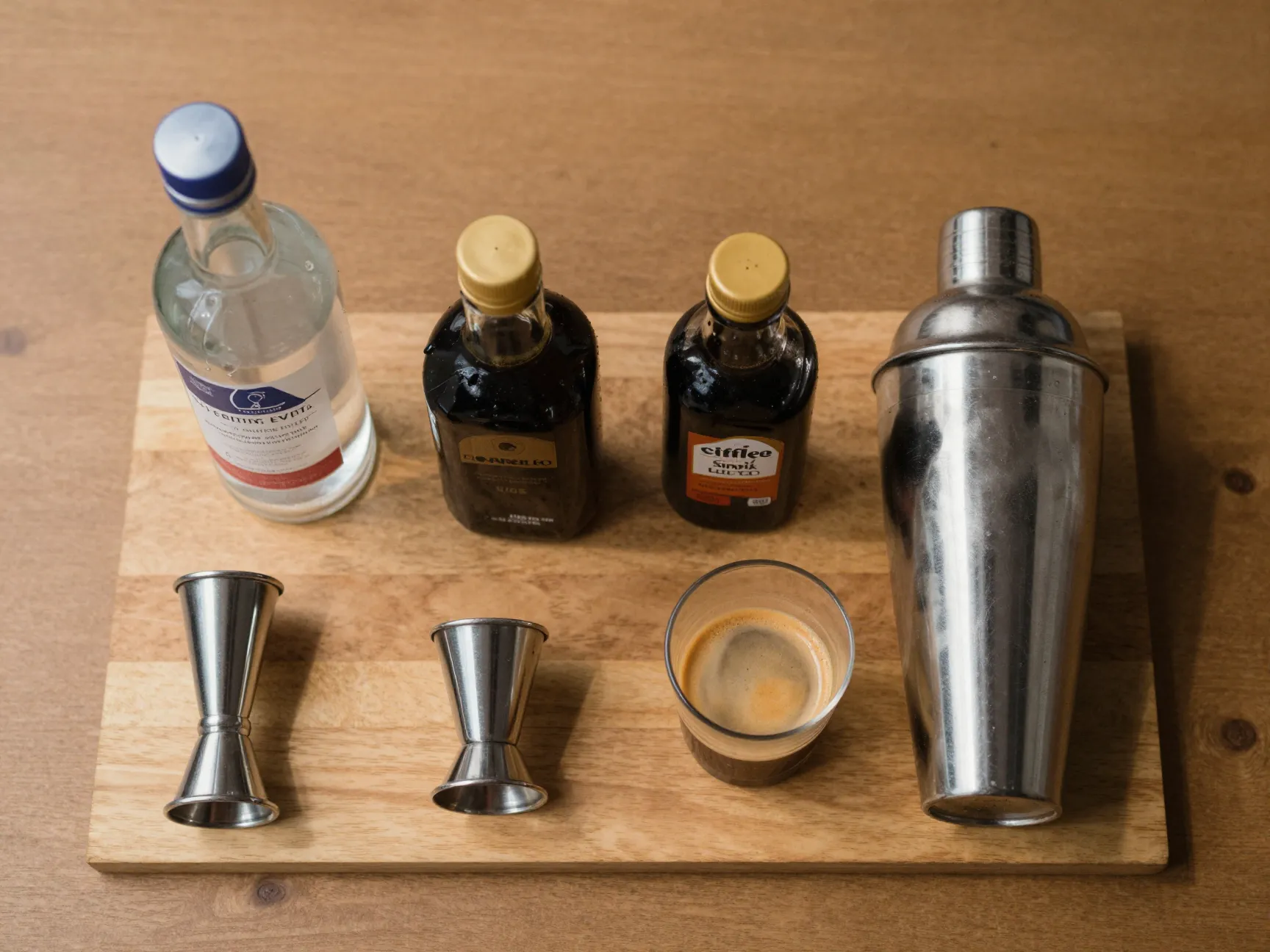
Accuracy matters in cocktail making. Use your jigger to measure each ingredient precisely before adding it to your cocktail shaker [3][1].
Add in this order:
- 2 oz vodka
- 0.5 oz coffee liqueur
- 0.5 oz simple syrup
- 1 oz cooled fresh espresso
Why this order? Adding the espresso last allows you to visually confirm the color and quantity before sealing the shaker.
💡 Egg white tip: If you don’t have an espresso machine and are using cold brew concentrate, add one egg white to the shaker before adding ice. Shake for 15 seconds without ice (a “dry shake”), then add ice and shake again. This creates a creamier, thicker foam layer that compensates for the lack of natural espresso crema [3].
Choosing your vodka: A clean, neutral vodka works best. You don’t want the vodka’s flavor to compete with the coffee. Mid-range options like Grey Goose, Absolut, or Ketel One are excellent choices.
Choosing your coffee liqueur: Kahlúa is the classic choice. Mr. Black is a more coffee-forward option that many bartenders now prefer for a bolder flavor.
5. Fill the Shaker with Ice
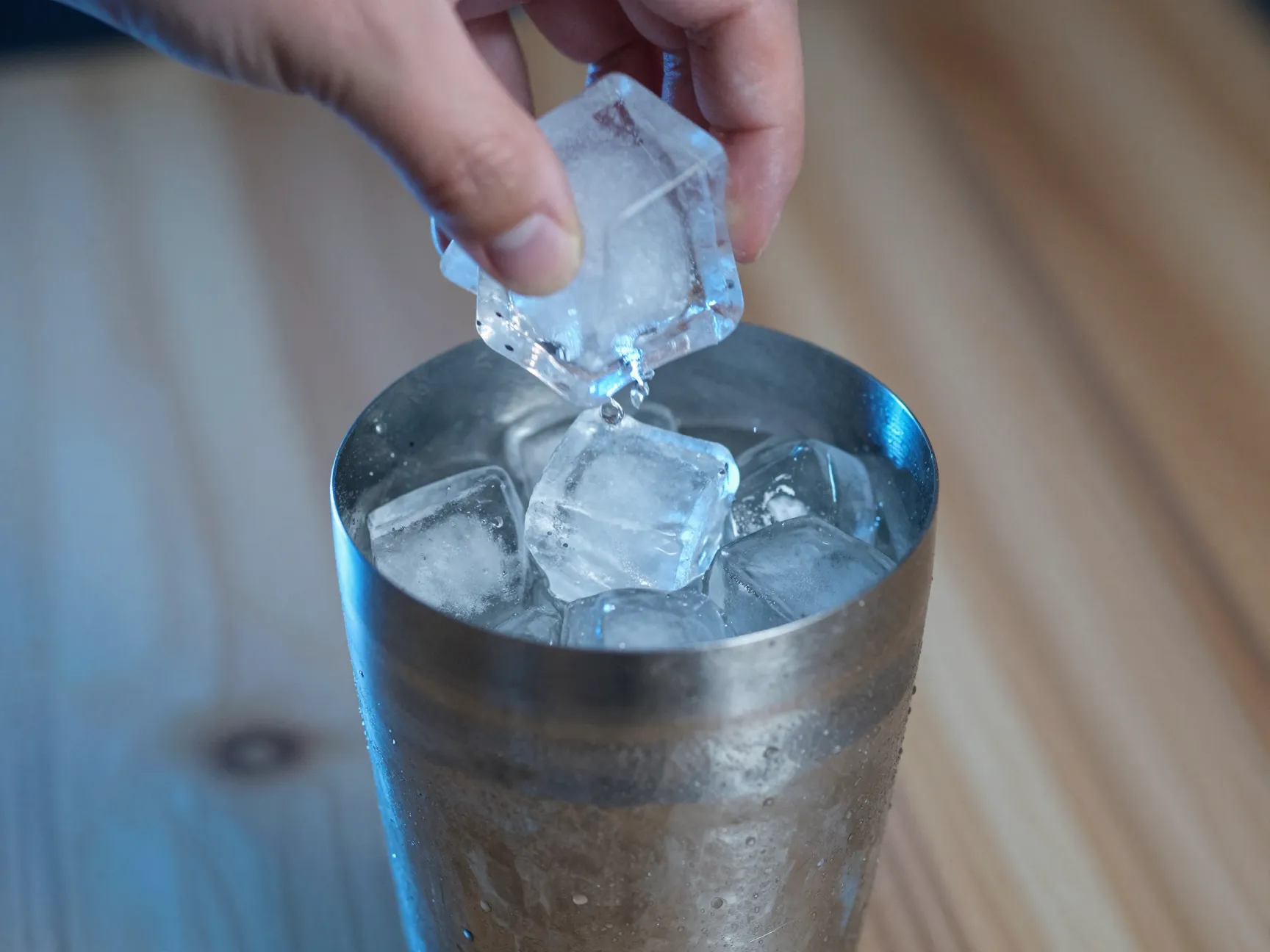
Add a generous handful of ice to your cocktail shaker — enough to fill it about two-thirds full. The ice serves two purposes: it chills the drink and, when shaken vigorously, it helps aerate the mixture to build foam.
Use fresh, dry ice if possible. Ice that has been sitting in the freezer for a long time absorbs odors and can affect the taste of your cocktail. Fresh ice also tends to be harder, which means it melts more slowly during shaking.
Seal the shaker tightly. Make sure both ends are locked before you start shaking — you don’t want an espresso martini shower in your kitchen. 😄
6. Shake Vigorously for 10–12 Seconds
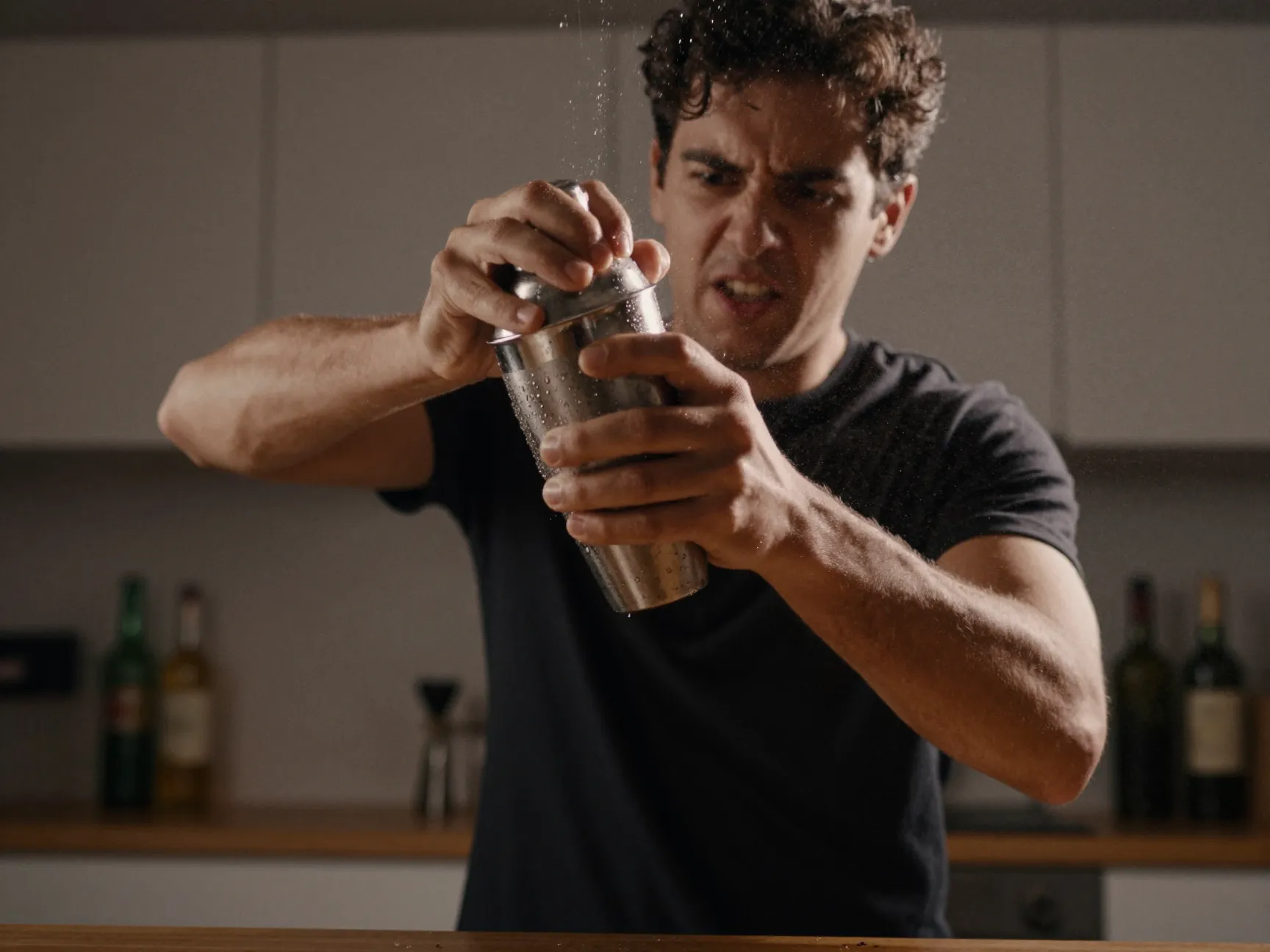
This is the step that separates a great espresso martini from a mediocre one. Shake hard, shake fast, and don’t stop early [4].
Hold the shaker with both hands — one on each end — and shake with full energy for 10 to 12 seconds. The vigorous motion does two critical things:
- Emulsifies the coffee oils — breaking them into tiny droplets that create a stable foam
- Chills the mixture rapidly — bringing it down to the ideal
💬 “The shake is where the magic happens. Those 12 seconds are the difference between a flat drink and a foam-topped masterpiece.”
You’ll know you’ve shaken enough when the outside of the shaker feels very cold — almost painfully cold — in your hands. That’s the sign the drink is properly chilled.
Common mistake: Many home bartenders shake gently, as if they’re afraid to disturb the cocktail. Don’t be gentle. The espresso martini needs aggressive shaking to develop its signature foam.
7. Double Strain into Your Chilled Glass
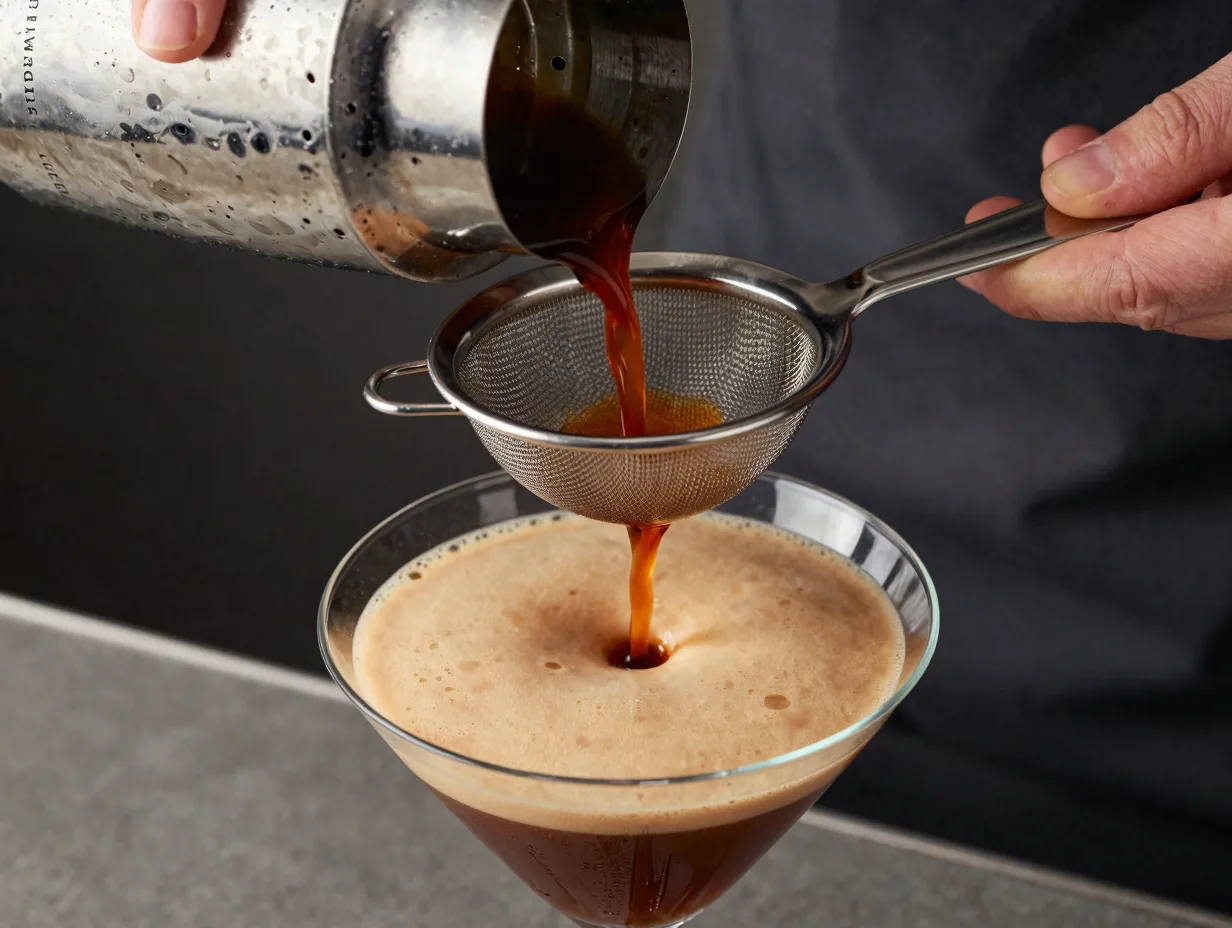
Pour the cocktail through both a Hawthorne strainer and a fine mesh strainer simultaneously [1]. This is called double straining, and it’s a technique used by professional bartenders for good reason.
Why double strain?
- The Hawthorne strainer (the one that fits over the shaker) catches large ice chunks
- The fine mesh strainer catches tiny ice shards and any undissolved particles
- The result is a silky smooth, velvety texture with no dilution from ice fragments
Hold the fine mesh strainer over your chilled glass. Pour the cocktail through both strainers at once. Pour slowly and steadily — don’t rush this step. The foam will settle on top naturally as the liquid fills the glass.
Watch the foam form: As you pour, you’ll see the frothy layer rise to the top. A thick, stable foam that holds its shape for several minutes is the sign of a well-made espresso martini.
8. Garnish and Serve

You’re almost there. The final step is the garnish — and it matters more than you might think [1].
The classic garnish:
Place three coffee beans in the center of the foam, grouped tightly together. This is the traditional garnish for an espresso martini, and it’s not just decorative. As you sip, your nose passes over the beans and picks up their aroma, enhancing the coffee flavor of each sip [1].
Optional enhancements:
- Sea salt: A tiny pinch of flaky sea salt on the foam’s edge accentuates the sweetness and adds complexity [1]
- Chocolate shavings: A light dusting of dark chocolate adds a mocha note
- Vanilla sugar rim: Lightly coat the glass rim with vanilla sugar for a dessert-style twist
Serve immediately. The foam is at its best in the first 2–3 minutes after pouring, so don’t let it sit.
Troubleshooting: Common Problems and Fixes
Even with the best technique, things can go wrong. Here’s a quick reference guide:
| Problem | Likely Cause | Fix |
|---|---|---|
| No foam on top | Hot espresso or weak shake | Cool espresso fully; shake harder for longer |
| Watery taste | Too much ice dilution | Use colder espresso; shake for exactly 10–12 sec |
| Bitter flavor | Too much espresso or no syrup | Add 0.25 oz more simple syrup |
| Too sweet | Too much syrup | Reduce simple syrup to 0.25 oz |
| Foam disappears fast | Instant coffee used | Switch to fresh espresso or add egg white |
| Cloudy appearance | Skipped fine strainer | Always double strain |
Variations Worth Trying in 2026 🔄
Once you’ve mastered the classic recipe, these variations are worth exploring:
- Vanilla Espresso Martini — Replace simple syrup with vanilla syrup for a warm, dessert-style flavor
- Salted Caramel Espresso Martini — Add 0.25 oz salted caramel syrup and garnish with a caramel rim
- Spiced Espresso Martini — Add a pinch of cinnamon or cardamom to the shaker before shaking
- Dairy-Free Creamy Version — Add 0.5 oz oat milk creamer for a richer, creamier texture without dairy
- Cold Brew Martini — Use cold brew concentrate (2 oz) in place of espresso for a smoother, less acidic version [3]
Quick Reference: The Perfect Espresso Martini at a Glance
| Step | Action | Key Detail |
|---|---|---|
| 1 | Pull fresh espresso | Use machine; avoid instant coffee |
| 2 | Cool espresso | Room temperature before shaking |
| 3 | Chill glass | Ice water or freezer method |
| 4 | Measure ingredients | 2 oz vodka, 1 oz espresso, 0.5 oz each liqueur & syrup |
| 5 | Add ice to shaker | Fill two-thirds full |
| 6 | Shake vigorously | 10–12 seconds, both hands |
| 7 | Double strain | Hawthorne + fine mesh strainer |
| 8 | Garnish and serve | Three coffee beans, optional sea salt |
Conclusion: Your Path to Espresso Martini Mastery
The espresso martini is one of the most rewarding cocktails to master at home. It looks impressive, tastes incredible, and — once you understand the technique — it’s genuinely straightforward to make. The 8 Simple Steps: How Do You Make Espresso Martini Perfection at Home? outlined in this guide give you everything you need to go from beginner to confident home bartender.
Here’s what to do next:
- Start with the classic recipe — 2 oz vodka, 1 oz espresso, 0.5 oz coffee liqueur, 0.5 oz simple syrup [3][1]
- Practice the shake — It takes a few tries to find the right intensity and duration
- Invest in a fine mesh strainer — It’s inexpensive and makes a significant difference in texture
- Experiment with variations once you’re comfortable with the base recipe
- Share the results — This cocktail is made to impress
The difference between a bar-quality espresso martini and a disappointing one comes down to fresh espresso, proper temperature control, an aggressive shake, and careful straining. Master those four elements, and you’ll never need to pay bar prices for this drink again. 🍸
References
[1] How To Make Espresso Martini At Home – https://menottis.com/blogs/news/how-to-make-espresso-martini-at-home
[2] How To Make The Perfect Espresso Martini At Home – https://javahouse.com/blogs/whats-new-at-java-house/how-to-make-the-perfect-espresso-martini-at-home
[3] Espresso Martini – https://preppykitchen.com/espresso-martini/
[4] Watch – https://www.youtube.com/watch?v=7RYAR9FfQ90