
Coffee Roast Levels Explained: Which One Matches Your Flavor Preference?
More than 600 billion cups of coffee are consumed worldwide each year — yet most people have never consciously chosen their roast level. They grab whatever bag looks familiar, brew it, and wonder why their cup never tastes quite like the one at their favorite café. The answer almost always comes down to roast. Understanding Coffee Roast Levels Explained: Which One Matches Your Flavor Preference? is the single most impactful piece of knowledge you can apply to transform your daily cup from ordinary to extraordinary.
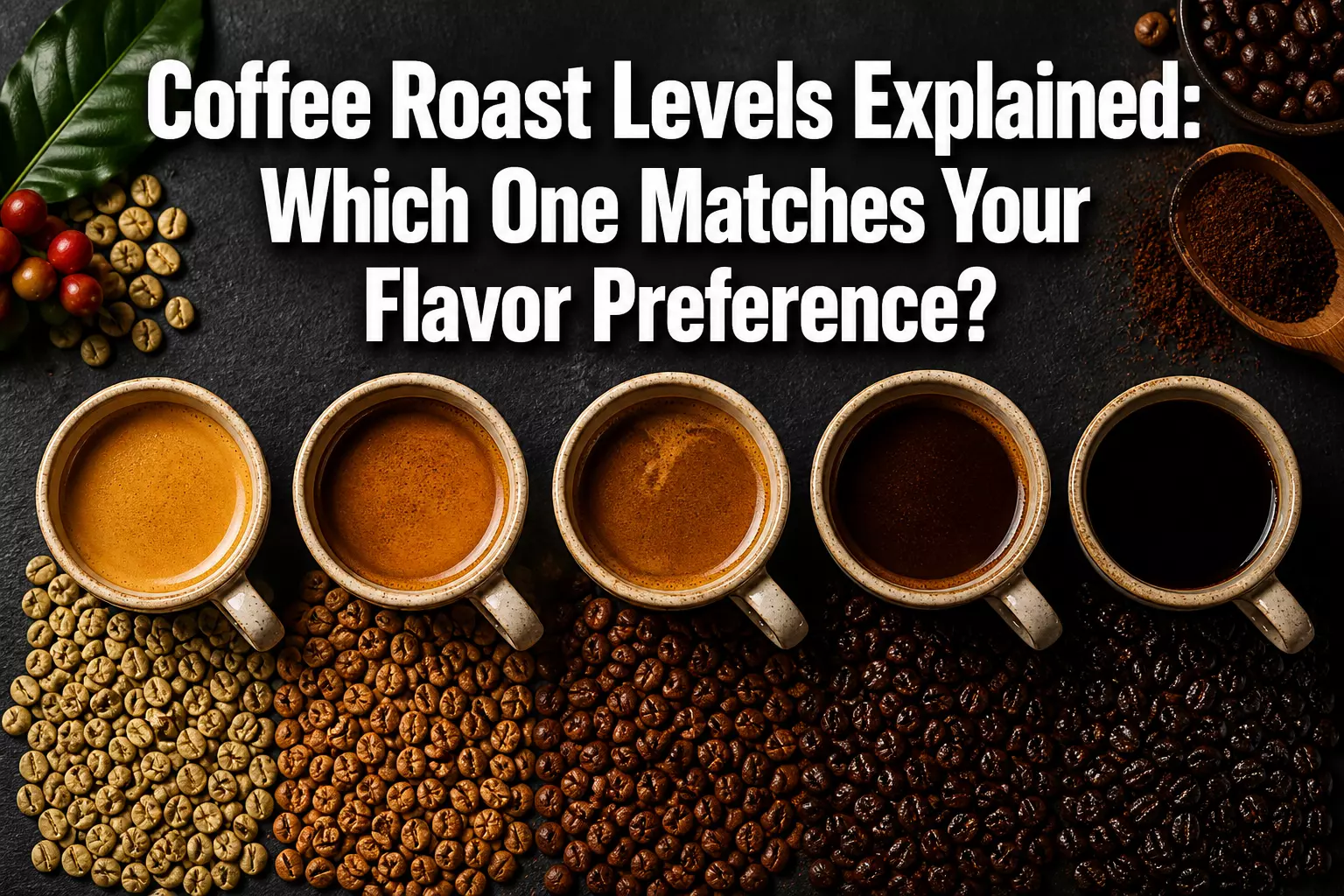
This guide breaks down every major roast level, the science behind the flavor changes, and — most importantly — how to match a roast to your personal taste.
Key Takeaways ☕
- Light roasts preserve origin character, delivering bright acidity, fruity, and floral notes.
- Medium roasts offer a balanced, crowd-pleasing profile with caramel, chocolate, and nut flavors.
- Medium-dark roasts provide fuller body and a hint of spice with reduced acidity.
- Dark roasts produce bold, smoky, bittersweet flavors — but lose most origin characteristics.
- The Agtron scale is the industry-standard tool for measuring roast level objectively.
- There is no “best” roast — only the best roast for you.
- Interactive Tool: Find Your Ideal Coffee Roast Level
What Actually Happens During Coffee Roasting?
Before diving into roast levels, it helps to understand what roasting does to a green coffee bean. Raw, unroasted coffee beans are dense, grassy-smelling, and nearly undrinkable. Heat transforms them through a series of chemical reactions.
The Key Stages of Roasting
| Stage | Temperature Range | What Happens |
|---|---|---|
| Drying Phase | ~300°F (149°C) | Moisture evaporates from the bean |
| Maillard Reaction | ~300–380°F | Sugars and amino acids react, creating flavor compounds |
| First Crack | ~385–400°F (196–204°C) | Beans expand and crack audibly; light roast begins here |
| Development Phase | 400–430°F | Caramelization deepens; medium roast range |
| Second Crack | ~435–450°F (224–232°C) | Cell walls break down; dark roast territory |
💡 Pull Quote: “Every second past first crack is a decision — roasters are choosing how much origin flavor to trade for roast character.”
The longer and hotter the roast, the more the bean’s original flavors are replaced by roast-driven flavors like smoke, char, and bittersweet cocoa. This is the fundamental trade-off at the heart of every roast level decision [1].
The Agtron Scale: How Roast Level Is Measured Objectively
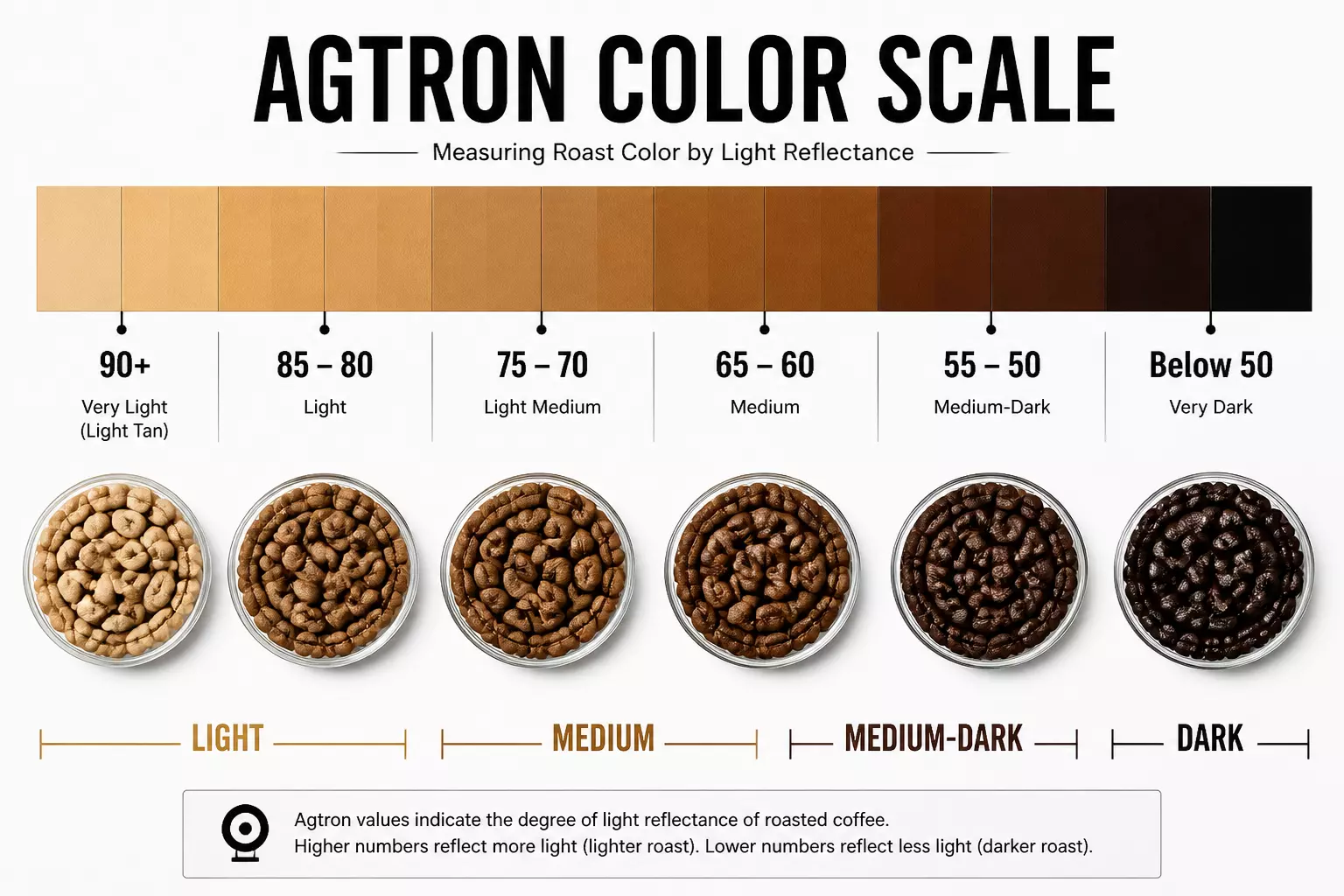
Most coffee drinkers choose by color or name — “dark roast,” “French roast,” “blonde.” But specialty coffee professionals use a far more precise tool: the Agtron scale.
Understanding the Agtron Color System
The Agtron scale assigns a numerical value to roasted coffee based on how much near-infrared light the ground coffee reflects. A higher number means more light reflected, which means a lighter roast [4].
Here’s how the scale breaks down in practice:
| Agtron Score | Roast Category | Flavor Profile |
|---|---|---|
| 90+ | Very Light / Cinnamon | Grassy, tea-like, high acidity |
| 76–90 | Light | Fruity, floral, bright |
| 62–75 | Medium-Light | Balanced, sweet, some caramel |
| 55–61 | Medium-Dark (“Specialty Dark”) | Full body, caramelized, slight spice |
| 45–54 | Dark | Smoky, bitter, low acidity |
| Below 45 | Very Dark / French | Charred, tar-like, minimal origin flavor |
According to Coffee Bros, scores above 90 represent very light roasts, while scores below 50 indicate a near-complete loss of terroir — the origin characteristics that make each coffee unique [4]. The “Specialty Dark” range (55–61) is particularly interesting: it delivers maximum caramelization while still preserving some of the bean’s origin story [4].
🔑 Key Insight: When a roaster says “we roast to highlight the bean,” they’re almost certainly keeping their Agtron scores above 60.
Coffee Roast Levels Explained: Which One Matches Your Flavor Preference? — A Deep Dive
Now let’s get into the heart of the matter. Here’s a detailed breakdown of each major roast level, what it tastes like, and who it’s best suited for.
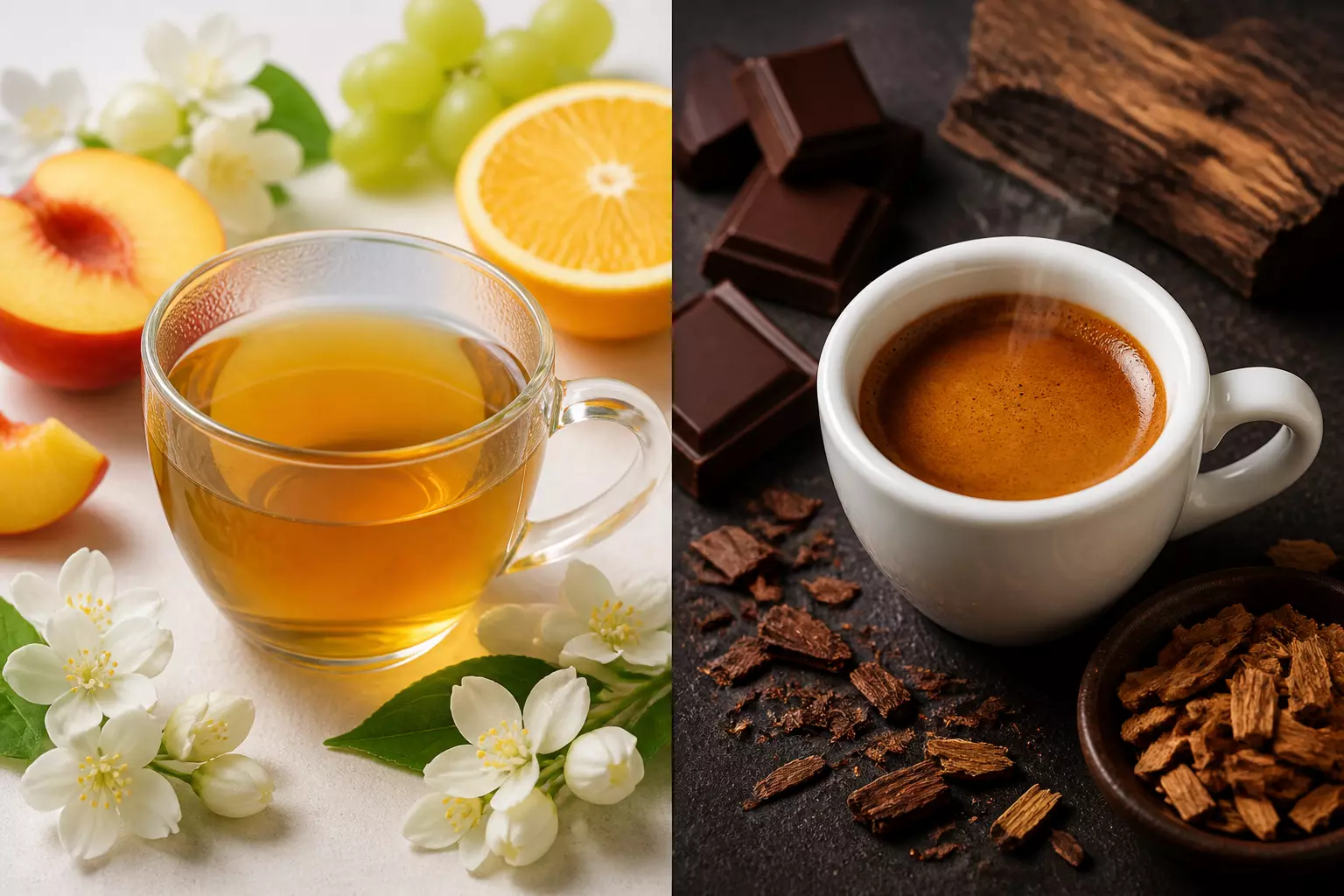
☀️ Light Roast
Color: Pale brown, cinnamon
Agtron Score: 76–90+
Body: Light, tea-like
Acidity: High
Caffeine: Slightly higher than dark roasts (denser bean)
Light roasts are taken just far enough past first crack to develop flavor while preserving the coffee’s original characteristics [1]. The result is a cup that tastes more like the place the coffee came from than the roasting process itself.
Flavor Notes You’ll Find:
- 🍋 Citrus (lemon, orange, grapefruit)
- 🌸 Floral (jasmine, rose, lavender)
- 🍓 Fruit (strawberry, blueberry, peach)
- 🍵 Tea-like clarity
Light roasts are characterized by brighter acidity and pronounced fruitiness, sometimes with floral notes that showcase the unique flavors of the coffee’s origin [3]. Delicate coffees with subtle notes like tea, jasmine, or tangerine should always be roasted lighter — dark roasting will eliminate these flavor profiles entirely [7].
Best For: Specialty coffee enthusiasts, pour-over lovers, anyone who enjoys exploring origin-specific flavors, and those who prefer a lighter, cleaner cup.
Not Ideal If: You find acidity harsh or prefer a bold, heavy-bodied coffee.
⚖️ Medium Roast
Color: Medium brown
Agtron Score: 62–75
Body: Medium
Acidity: Balanced
Caffeine: Moderate
Medium roast is the great equalizer of the coffee world. It strikes a balance between origin character and roast development, providing balanced acidity and sweetness with notes like caramel, chocolate, or nuts [1].
Flavor Notes You’ll Find:
- 🍫 Milk chocolate and cocoa
- 🍯 Caramel and brown sugar
- 🥜 Almond, hazelnut, walnut
- 🍎 Mild fruit (apple, plum)
Medium roasts offer a harmony between the original flavors of the coffee beans and the effects of roasting, providing balanced sweetness with just a hint of roastiness [6]. They are the most versatile roast level — performing well across brewing methods from drip to French press to espresso.
Best For: Most coffee drinkers, especially those new to specialty coffee. If you’re unsure where to start, medium roast is your safest, most rewarding entry point.
🌓 Medium-Dark Roast
Color: Deep brown with slight oil on surface
Agtron Score: 55–61
Body: Full
Acidity: Medium-low
Caffeine: Moderate-low
Medium-dark roasts deliver full-bodied, slightly spicy characteristics with medium-low acidity, positioned between balanced medium roasts and bold dark roasts [2]. This is the “Specialty Dark” zone on the Agtron scale — where maximum caramelization occurs before terroir begins to disappear [4].
Flavor Notes You’ll Find:
- 🍫 Dark chocolate
- 🌰 Roasted nuts
- 🌶️ Mild spice
- 🍬 Bittersweet caramel
Best For: Those who enjoy a bold cup but still want some sweetness and complexity. Great for espresso-based drinks where milk or cream is added.
🌑 Dark Roast
Color: Near-black, oily surface
Agtron Score: Below 55
Body: Heavy, thick
Acidity: Low
Caffeine: Slightly lower (longer roast breaks down some caffeine)
Dark roasts are taken further into the roasting process, resulting in lower perceived acidity and fuller, heavier body with smoky, toasted, or bittersweet flavors [1]. At this stage, the roasting process dominates — origin flavors are largely replaced by roast-driven characteristics.
Flavor Notes You’ll Find:
- 🔥 Smoke and char
- 🍫 Bittersweet dark chocolate
- 🌿 Earthy, woody notes
- ☕ Classic “coffee” flavor many grew up with
Best For: Those who love bold, intense coffee. Classic espresso drinkers. People who add cream and sugar and want the coffee flavor to cut through.
Not Ideal If: You’re interested in exploring the nuances of single-origin coffees — those flavors are largely gone at this roast level.
Quick Comparison: All Roast Levels at a Glance
| Feature | Light | Medium | Medium-Dark | Dark |
|---|---|---|---|---|
| Acidity | High | Balanced | Low-Medium | Low |
| Body | Light | Medium | Full | Very Full |
| Sweetness | Fruity | Caramel | Bittersweet | Minimal |
| Origin Flavor | Strong | Moderate | Faint | Very Faint |
| Roast Flavor | None | Slight | Moderate | Dominant |
| Best Brew Method | Pour-over, AeroPress | Drip, French Press | Espresso, Moka Pot | Espresso, Cold Brew |
How Brewing Method Affects Roast Level Perception
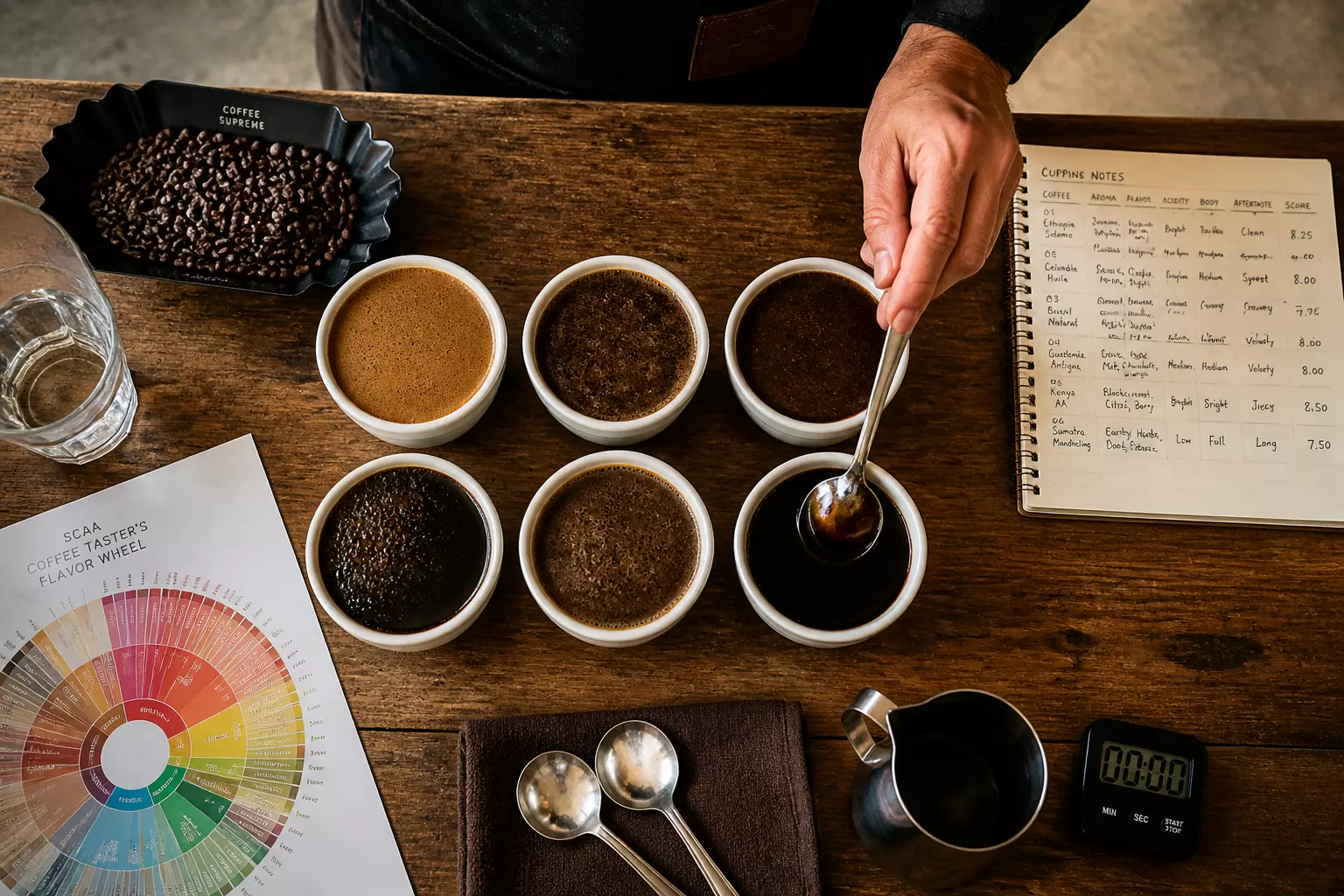
Here’s something most guides skip: the same roast can taste dramatically different depending on how you brew it. Understanding this connection is key to getting the most from your chosen roast.
Brewing Method + Roast Level Pairings
Pour-Over (V60, Chemex):
Best with light to medium-light roasts. The slow, precise extraction highlights clarity and acidity — exactly what light roasts are designed to deliver. Using a dark roast in a pour-over can produce a flat, bitter cup.
French Press:
Best with medium to dark roasts. The full-immersion method and metal filter allow oils and fine particles into the cup, which pairs beautifully with the fuller body of darker roasts.
Espresso Machine:
Works across medium-dark to dark roasts for traditional espresso. However, many specialty roasters now offer “espresso roasts” in the medium range for a sweeter, more nuanced shot.
Cold Brew:
Best with medium-dark to dark roasts. The long, cold extraction process softens bitterness and amplifies body — dark roasts shine here.
AeroPress:
The most versatile brewer — works well with any roast level. Great for experimenting.
💡 Pro Tip: If your light roast tastes sour, try a coarser grind or slightly hotter water (200–205°F). If your dark roast tastes bitter, try a coarser grind and shorter brew time.
Coffee Roast Levels Explained: Which One Matches Your Flavor Preference? — Finding Your Match
The good news: there is no wrong answer. As Camano Island Coffee puts it, there is no “right” roast level — light roasts suit those who enjoy brightness, medium roasts appeal to those seeking balance, and dark roasts are preferred by those who enjoy bold, intense cups [1].
Here’s a simple decision framework I recommend:
🎯 The Flavor Preference Finder
Ask yourself these questions:
- Do you add milk, cream, or sugar to your coffee?
- Yes → Medium-Dark or Dark roast (the bold flavor cuts through additions)
- No → Light or Medium roast (you’ll appreciate the nuance)
- Do you enjoy acidic foods like citrus, yogurt, or sourdough?
- Yes → Light roast (high acidity, bright flavors)
- No → Medium-Dark or Dark roast (lower acidity)
- Do you prefer wine-like complexity or straightforward boldness?
- Complexity → Light roast
- Boldness → Dark roast
- Both → Medium roast
- Are you brewing espresso-based drinks (lattes, cappuccinos)?
- Yes → Medium-Dark or Dark roast
- No → Any roast level works
- Are you interested in single-origin coffees from specific regions?
- Yes → Light or Medium roast (origin flavors are preserved)
- No → Any roast level
Interactive Tool: Find Your Ideal Coffee Roast Level
Use the quiz below to discover which roast level best matches your personal flavor preferences:
Which Coffee Roast Matches You?
Answer 5 quick questions to discover your perfect roast level.
Common Myths About Coffee Roast Levels — Busted 🚫
Myth #1: Dark roast has more caffeine.
❌ False. Caffeine is relatively stable through roasting, and by volume, light roast beans are denser — meaning you actually get slightly more caffeine per scoop from a light roast.
Myth #2: Light roast is "weak" coffee.
❌ False. Light roast has more caffeine and more complex flavor — it just lacks the bold, smoky character people associate with "strong" coffee. "Strong" and "dark" are not the same thing.
Myth #3: All dark roasts taste the same.
❌ Mostly false. While dark roasting does reduce origin character, there are still meaningful differences between a quality dark roast and a cheap, over-roasted one. Bean quality still matters.
Myth #4: Espresso must be made with dark roast.
❌ False. Espresso is a brewing method, not a roast level. Many specialty cafés now serve medium-roast espresso with outstanding results.
Tips for Buying and Storing Coffee by Roast Level

Buying Tips 🛒
- Look for a roast date, not just a "best by" date. Freshness matters enormously.
- Light roasts are best consumed 2–4 weeks after roasting for peak flavor.
- Dark roasts can be enjoyed within 1–3 weeks of roasting; their oils make them go stale faster.
- Buy from local roasters or specialty online roasters who publish roast dates.
- For light roasts, look for single-origin coffees with specific tasting notes on the bag — this signals quality and transparency.
Storage Tips 🫙
- Store coffee in an airtight container away from light, heat, and moisture.
- Do not refrigerate whole beans — condensation damages flavor.
- Freezing is acceptable for long-term storage (1+ month) if done in an airtight bag with minimal air.
- Buy whole beans and grind just before brewing for the freshest cup at any roast level.
Conclusion: Your Perfect Roast Is Out There
Understanding Coffee Roast Levels Explained: Which One Matches Your Flavor Preference? isn't about memorizing charts — it's about developing a personal relationship with your cup. Every roast level offers something genuinely valuable:
- 🌟 Light roast rewards curiosity and a love of complexity.
- ⚖️ Medium roast rewards balance and versatility.
- 💪 Dark roast rewards those who want bold, no-nonsense coffee.
Your Actionable Next Steps:
- Try a side-by-side tasting — buy a light and a dark roast from the same roaster and brew them the same way. The difference will be eye-opening.
- Use the interactive quiz below to find your roast match based on your flavor preferences.
- Check the roast date on your next bag of coffee — if it's more than 6 weeks old, you're missing out on flavor.
- Experiment with brew method — if you've only had light roast as drip coffee, try it as a pour-over. It's a revelation.
- Visit a local specialty roaster and ask them to walk you through their roast levels. Most love talking about it.
The perfect cup of coffee isn't a myth — it's just waiting for you to find the right roast.
References
[1] How Roast Level Changes Flavor And What Youll Like Best - https://camanoislandcoffee.com/how-roast-level-changes-flavor-and-what-youll-like-best/
[2] The Ultimate Guide To Coffee Roast Levels - https://apocalypsecoffee.com/blogs/blog/the-ultimate-guide-to-coffee-roast-levels
[3] The Influence Of Roast Profiles On Coffee Flavor - https://hyper-goat.com/blogs/news/the-influence-of-roast-profiles-on-coffee-flavor
[4] The Ultimate Guide To Understanding Coffee Roast Levels - https://coffeebros.com/blogs/coffee/the-ultimate-guide-to-understanding-coffee-roast-levels
[5] Choosing The Right Roast Level For Your Taste - https://bluehousecoffee.com/learn/choosing-the-right-roast-level-for-your-taste
[6] What Does Roast Level In Coffee Really Mean - https://tapestrycoffeemn.com/blogs/news/what-does-roast-level-in-coffee-really-mean
[7] Watch - https://www.youtube.com/watch?v=kMtQV7rYCrw
[8] Roast Levels - https://sensual.coffee/pages/roast-levels