9 Critical Factors to Consider Before Buying a Home Coffee Grinder
Nearly 70% of drinkers admit they have never thought about their grinder — only their beans. Yet coffee professionals will tell you the grinder is the single most important piece of equipment in your entire brewing setup. Get it wrong, and even a $50-per-bag specialty roast will taste flat, bitter, or weak. Get it right, and a modest bag of grocery-store beans can produce a genuinely excellent cup.
Disclosure: This post contains affiliate links. As an Amazon Associate, we earn from qualifying purchases, and at no extra cost to you.
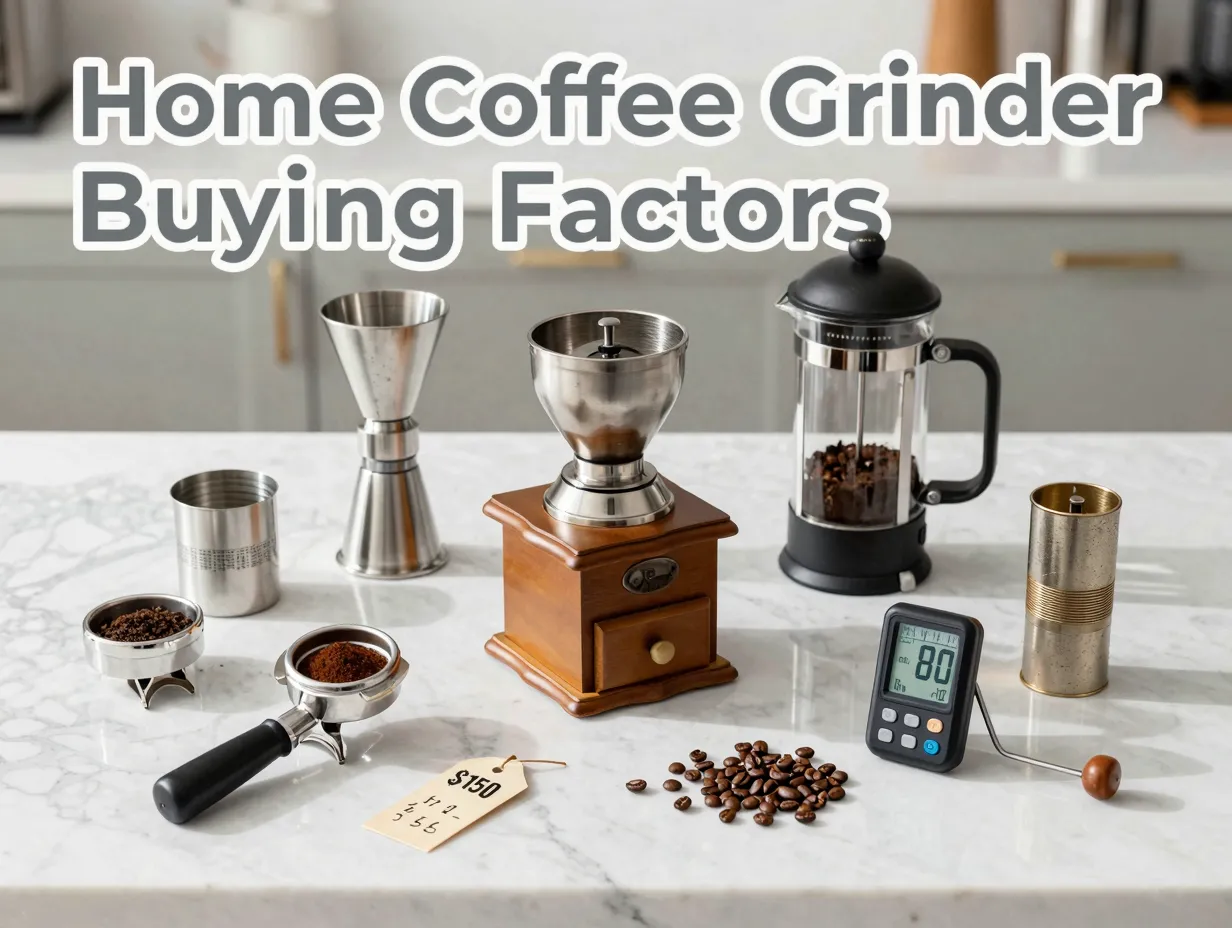
If you are serious about better coffee in 2026, understanding the 9 critical factors to consider before buying a grinder is the smartest place to start. This guide breaks down every key decision point — from burr type to budget — so you can buy with confidence and brew with consistency.
Key Takeaways 📌
- is the single biggest driver of flavor quality — uneven grounds ruin even great beans.
- Burr grinders (especially conical burr) outperform blade grinders in almost every measurable way.
- Your brewing method (espresso, French press, pour-over) should directly determine which grinder you buy.
- Budget matters, but you don’t need to spend a fortune — reliable electric grinders start around $80.
- Noise, grind retention, and motor quality are often overlooked but critically affect daily usability.
The 9 Critical Factors to Consider Before Buying a Home Coffee Grinder: Grind Quality & Equipment Basics
Before we get into the full list, it helps to understand why these factors matter so much. is a chemistry problem. Water pulls flavor compounds out of ground coffee, and the size and uniformity of those grounds control which compounds get extracted and how fast. Miss the target, and you get either a bitter, over-extracted cup or a sour, under-extracted one.
Here is the complete breakdown of every factor you need to evaluate.
1. Grind Size Consistency
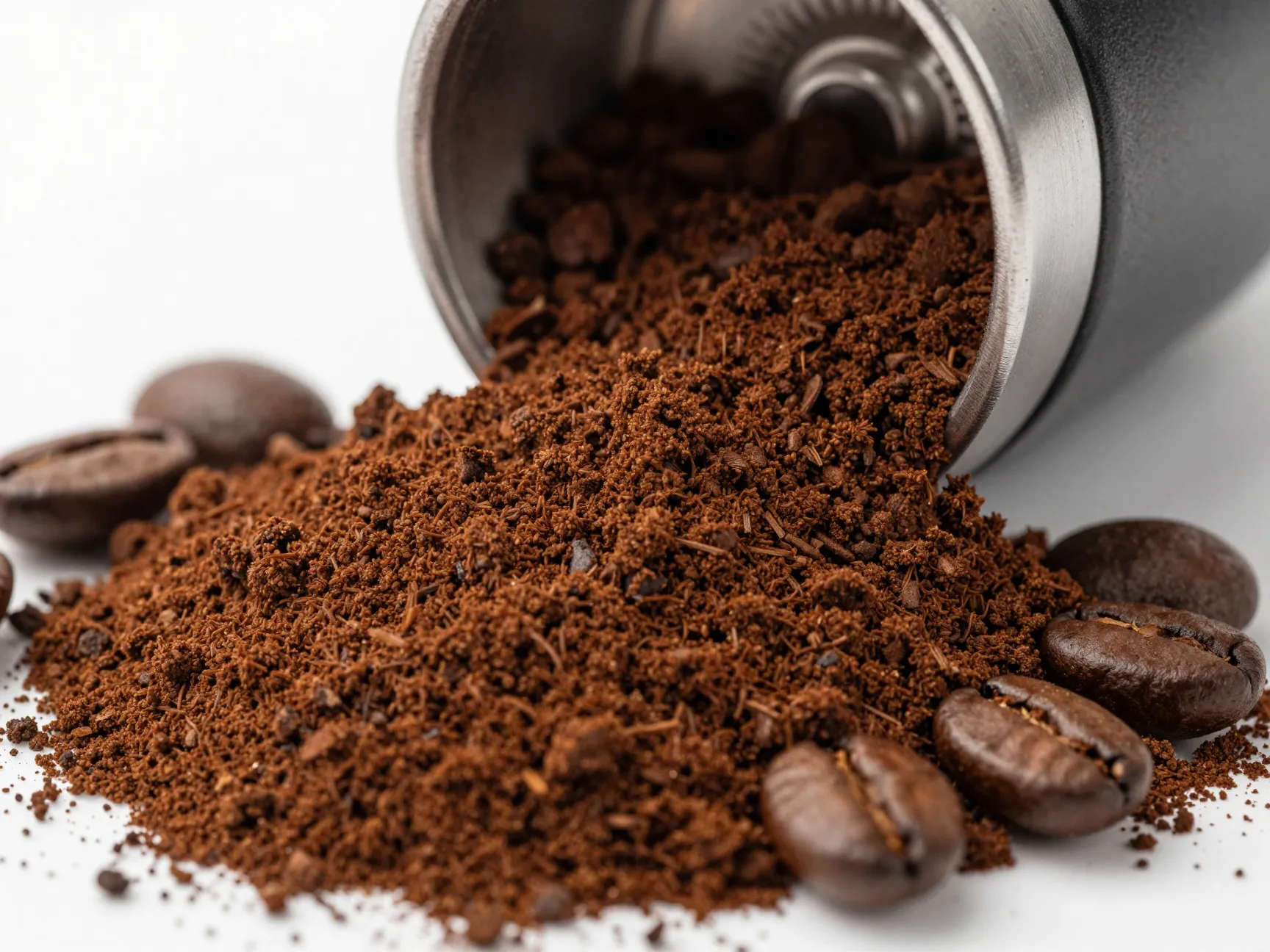
This is the most important factor on the entire list. Grind consistency refers to how uniform the particle size is across your entire batch of ground coffee.
When grounds are uneven, two things happen simultaneously — and both are bad:
- Fine particles over-extract, producing bitter, harsh, or burnt flavors.
- Coarse particles under-extract, producing weak, sour, or flat flavors [1][3].
The result is a cup that tastes muddled and unpleasant, no matter how good your beans are. A grinder that produces consistent, uniform particle sizes gives water an even surface area to work with, which means predictable, repeatable, delicious extraction every single time.
💡 Pull Quote: “Grind consistency is not a luxury feature — it is the foundation of every great cup of coffee.”
What to look for: Burr grinders (discussed next) are far superior to blade grinders for consistency. Read reviews that specifically mention “grind uniformity” and look for independent particle size testing data when available [1].
2. Burr Type: Conical vs. Flat Burr vs. Blade
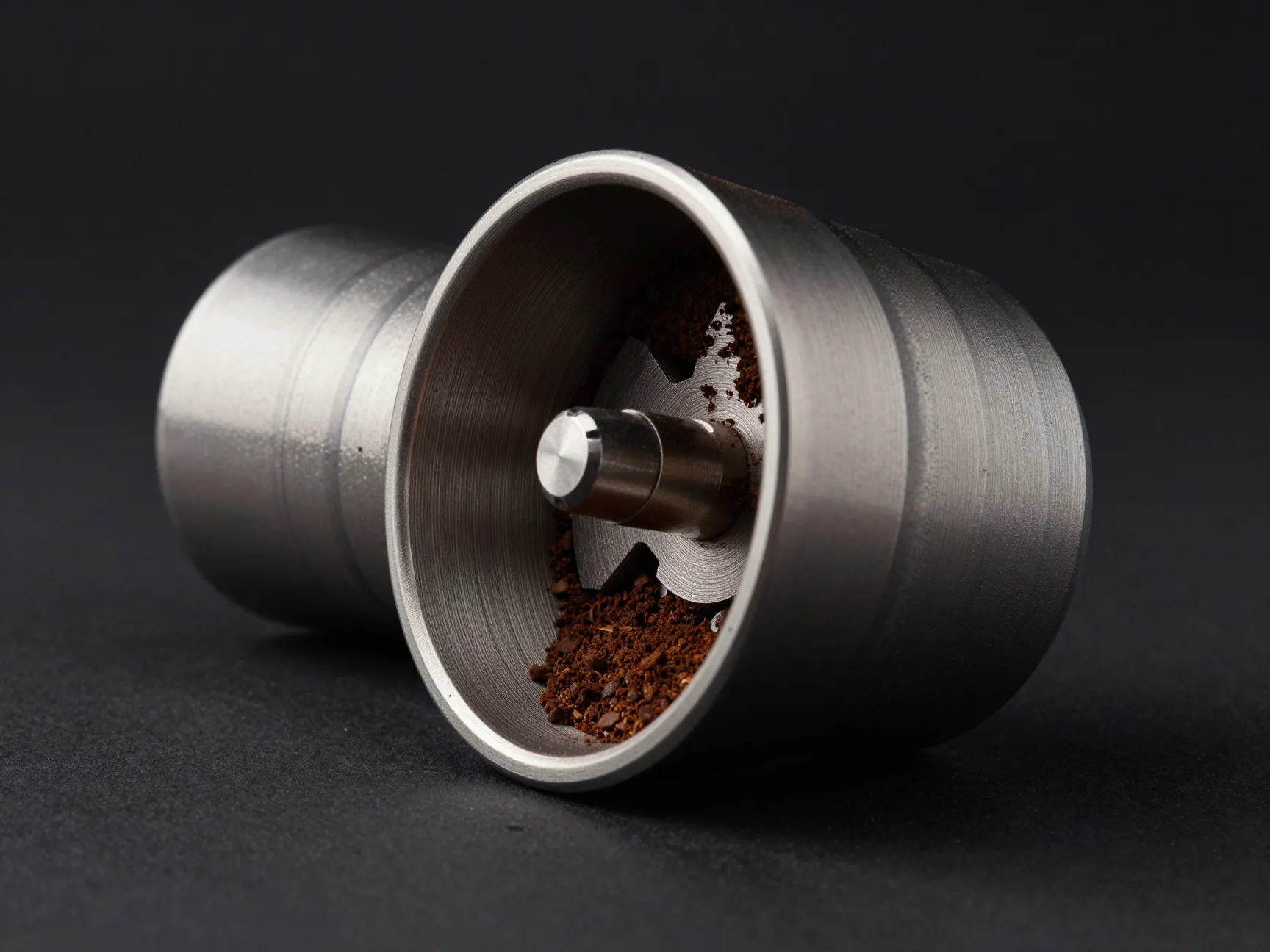
Not all grinders are created equal, and the mechanism inside the machine makes an enormous difference.
| Grinder Type | Consistency | Heat Generation | Noise | Best For |
|---|---|---|---|---|
| Blade | Poor | High | Moderate | Casual, budget use |
| Flat Burr | Excellent | Moderate | Louder | Espresso, precision |
| Conical Burr | Excellent | Low | Quieter | All-around, espresso |
Blade grinders chop beans randomly. They are cheap, but they produce wildly inconsistent particle sizes and generate heat that can damage flavor compounds [1].
Burr grinders crush beans between two abrasive surfaces — one stationary, one rotating. This produces far more uniform grounds [1].
Conical burr grinders specifically are often quieter, require less maintenance, and rotate more slowly. That slower rotation reduces heat and friction, which protects the delicate aromatic compounds in your coffee. They are especially recommended for espresso machines because of their superior grind uniformity [1].
My recommendation: Unless you are on an extremely tight budget, invest in a conical burr grinder. The quality difference is immediately noticeable in the cup.
3. Grind Adjustment Range and Settings
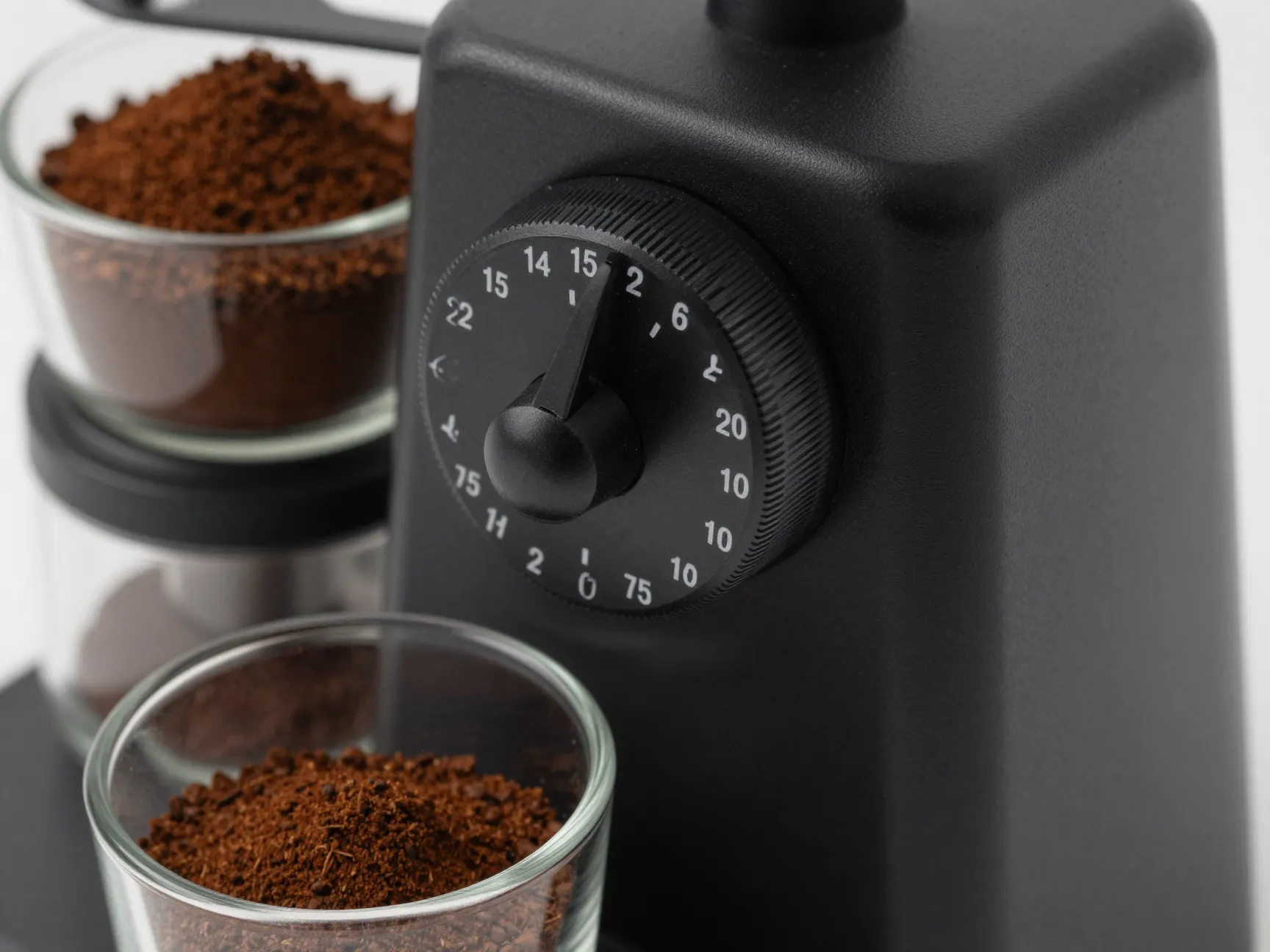
Even the best burr grinder is limited if it only offers a handful of grind settings. High-quality grinders feature at least 15 to 20 distinct settings, giving you the fine control needed to dial in your brew [2].
Why does this matter? Because different require dramatically different grind sizes:
- ☕ Espresso — Very fine (like powdered sugar)
- 🫗 AeroPress — Fine to medium-fine
- ☕ Pour-over / Drip — Medium
- 🫖 French press — Coarse
- 🧊 — Extra coarse
The best cup of coffee comes when the grind is precisely customized for each brewing method [2]. A grinder with only 5 or 6 settings forces you to compromise. One with 20+ settings lets you fine-tune extraction to match your exact taste preferences.
What to look for: Stepless adjustment (infinite settings) offers the most precision. Stepped adjustment (fixed settings) is easier to use and still excellent if it offers enough steps.
4. Motor Quality and Component Durability
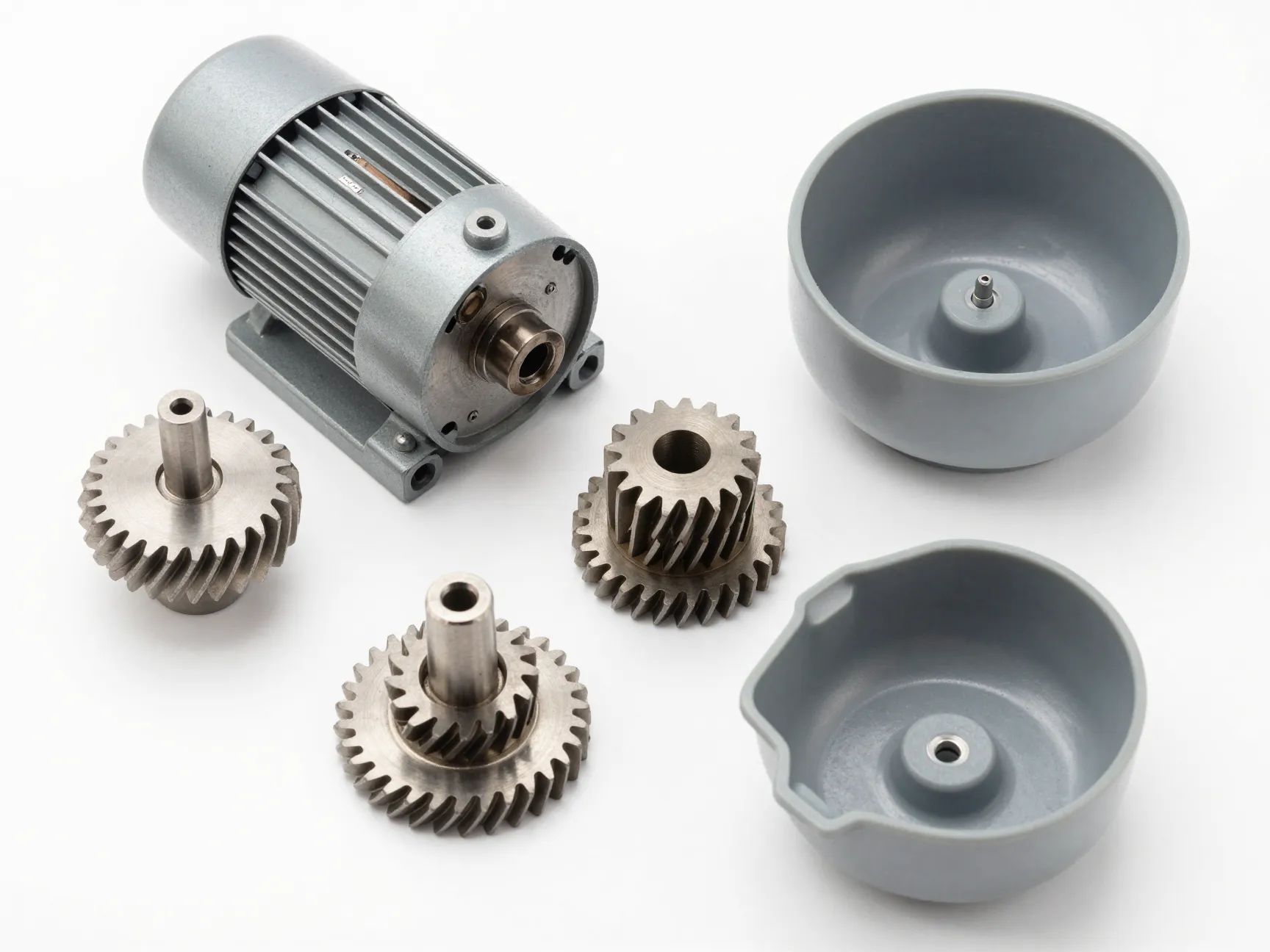
A grinder’s motor and internal components determine how long it lasts and how well it performs under daily use.
Key things to evaluate:
- Motor power: Look for motors designed to prevent overheating. Underpowered motors struggle with dense, dark-roast beans and can burn out prematurely [1].
- Gear material: Robust metal gears and transmission systems extend grinder life significantly compared to low-quality plastic gears, which crack and wear quickly [1].
- Build material: Stainless steel burrs outlast ceramic burrs in most home-use scenarios, though ceramic burrs generate less heat.
A cheap grinder with a weak motor may cost $30 upfront but need replacing within a year. A quality grinder with a strong motor and metal internals can last a decade or more with basic maintenance.
💡 Pull Quote: “Think of your grinder as a long-term investment. The motor and gears are what you are really paying for.”
5. Noise Level
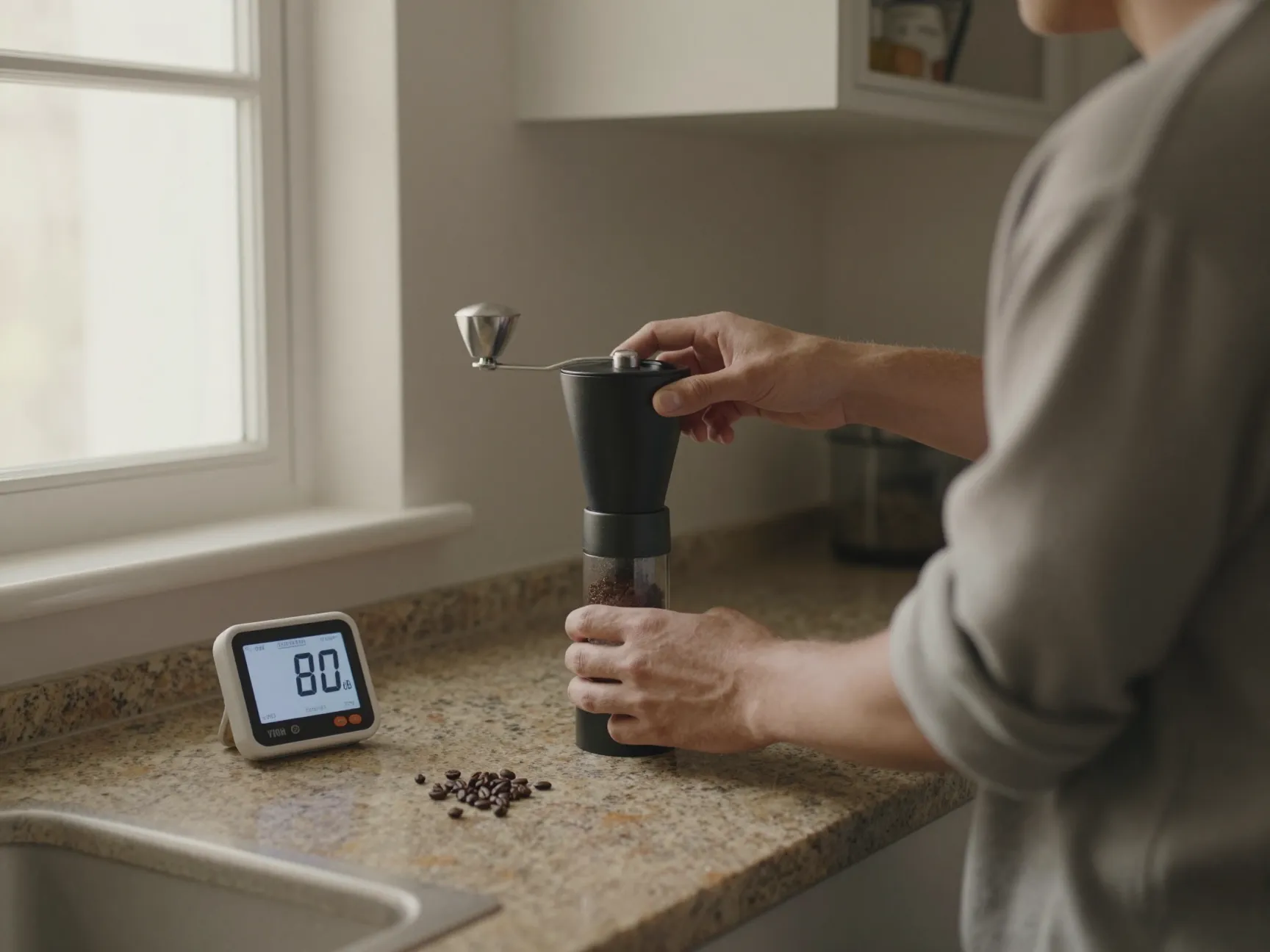
This one surprises a lot of people, but noise level is a genuinely practical factor — especially if you grind coffee early in the morning or live with others.
Coffee grinders can be loud. Some models hit noise levels that rival power tools. A good benchmark to target is around 80 decibels (dB), which is considered relatively quiet for a home coffee grinder [1].
For context:
- 🔇 60 dB — Normal conversation
- ✅ 80 dB — Target range for a “quiet” grinder
- ⚠️ 90 dB — Lawnmower territory
- 🚫 100+ dB — Hearing protection recommended
Conical burr grinders tend to run quieter than flat burr models because of their slower RPM. Hand grinders are quieter still, producing almost no mechanical noise at all.
Tip: Check YouTube reviews and look for real-world decibel readings before buying. Manufacturer claims about noise levels are often optimistic [7].
6. Grind Retention
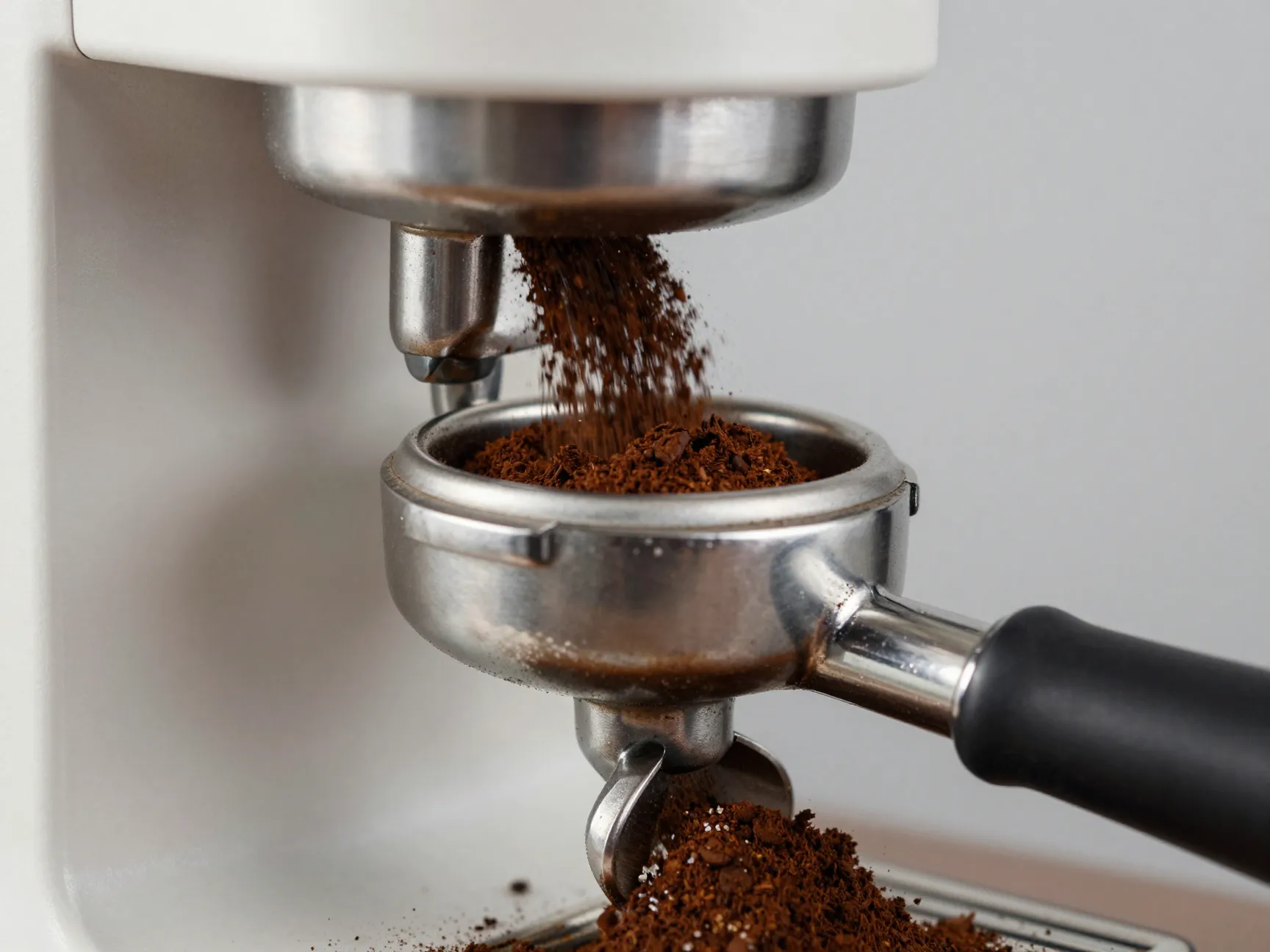
Grind retention is a factor that most beginners completely overlook — and it directly affects the freshness of every cup you brew.
Grind retention refers to the amount of ground coffee that stays inside the grinder after each use [4]. That retained coffee:
- Goes stale between uses
- Mixes with your next fresh grind
- Introduces off-flavors and reduces consistency
If you prioritize brewing with the absolute freshest coffee possible, consider a zero-retention grinder — a design specifically engineered to deliver all ground coffee into your portafilter or brew vessel with minimal waste [4].
| Retention Level | Impact | Best For |
|---|---|---|
| Zero retention | Freshest possible cup | Espresso enthusiasts, perfectionists |
| Low retention | Minimal flavor impact | Most home brewers |
| High retention | Noticeable staleness | Acceptable only for high-volume use |
For casual home use, low retention is perfectly fine. For espresso dialing and specialty brewing, zero retention is worth the premium.
7. Brewing Method Compatibility
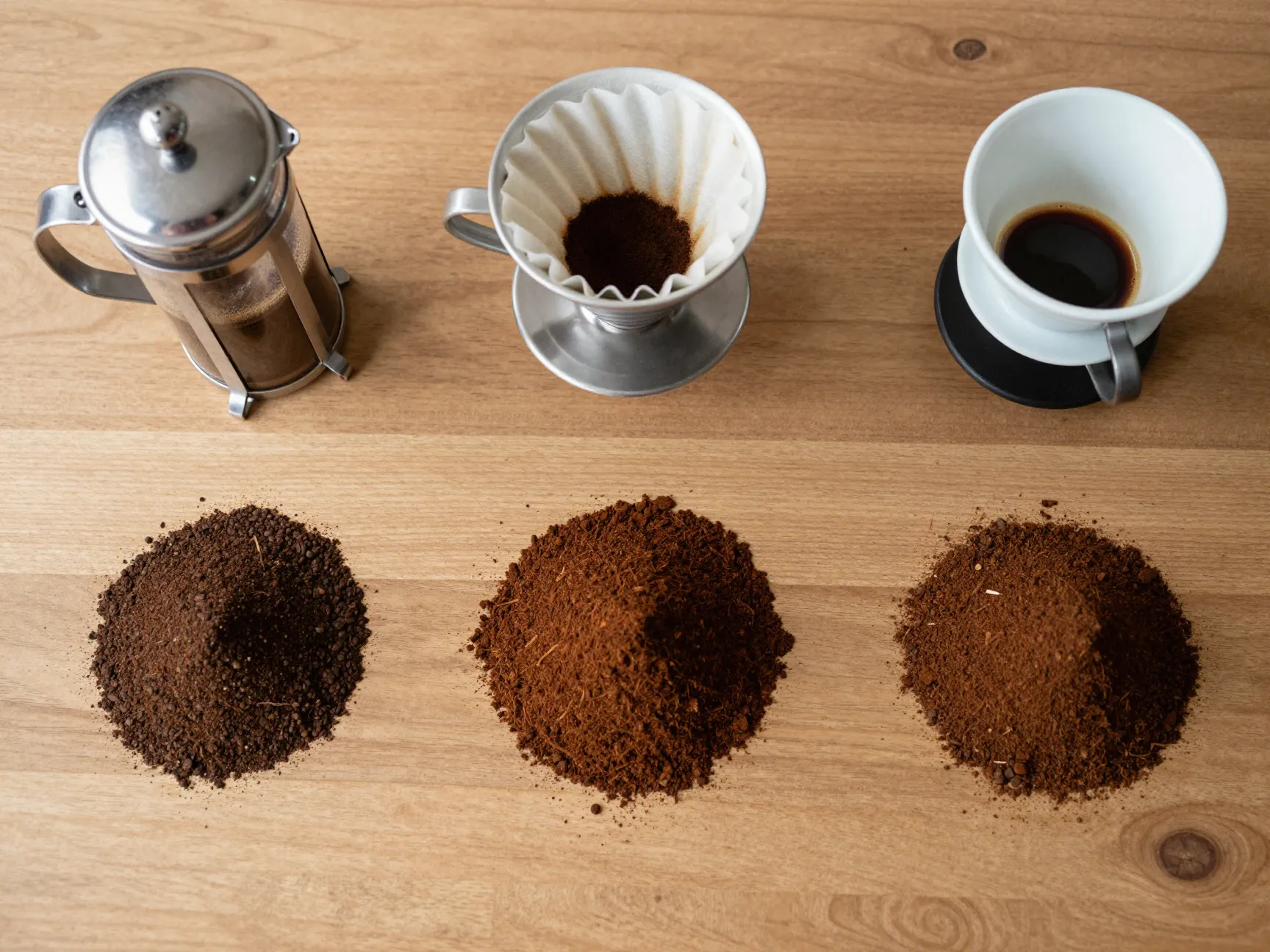
One of the most critical factors to consider — and one of the most commonly mismatched — is whether your grinder can actually produce the your brewing method requires.
Here is the key compatibility breakdown [5]:
French press: Requires a coarse grind. This is achievable with many hand grinders and most mid-range electric grinders.
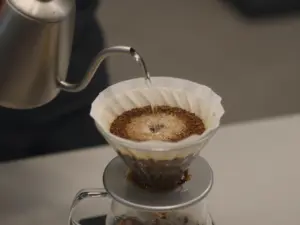
Pour-over (V60, Chemex): Requires a medium to medium-fine grind. Most burr grinders handle this well.
Drip : Requires a medium grind. Very accessible across most grinder types.
AeroPress: Flexible — works with fine to coarse, depending on your recipe.
Espresso: Requires a very fine, precise grind — and this is where most budget grinders fail. Espresso demands fine adjustment capability and consistent particle size. For this reason, automatic (electric) burr grinders are strongly recommended for espresso [5].
⚠️ Important: If you own an , do not buy a grinder that is not rated for espresso. The grind requirements are simply too precise for a general-purpose or blade grinder to meet.
Understanding the 9 Critical Factors to Consider Before Buying a Home Coffee Grinder: Budget & Practicality
The final two factors are about real-world practicality — how much you spend and whether the grinder fits your actual lifestyle.
8. Manual vs. Electric: Which Is Right for You?
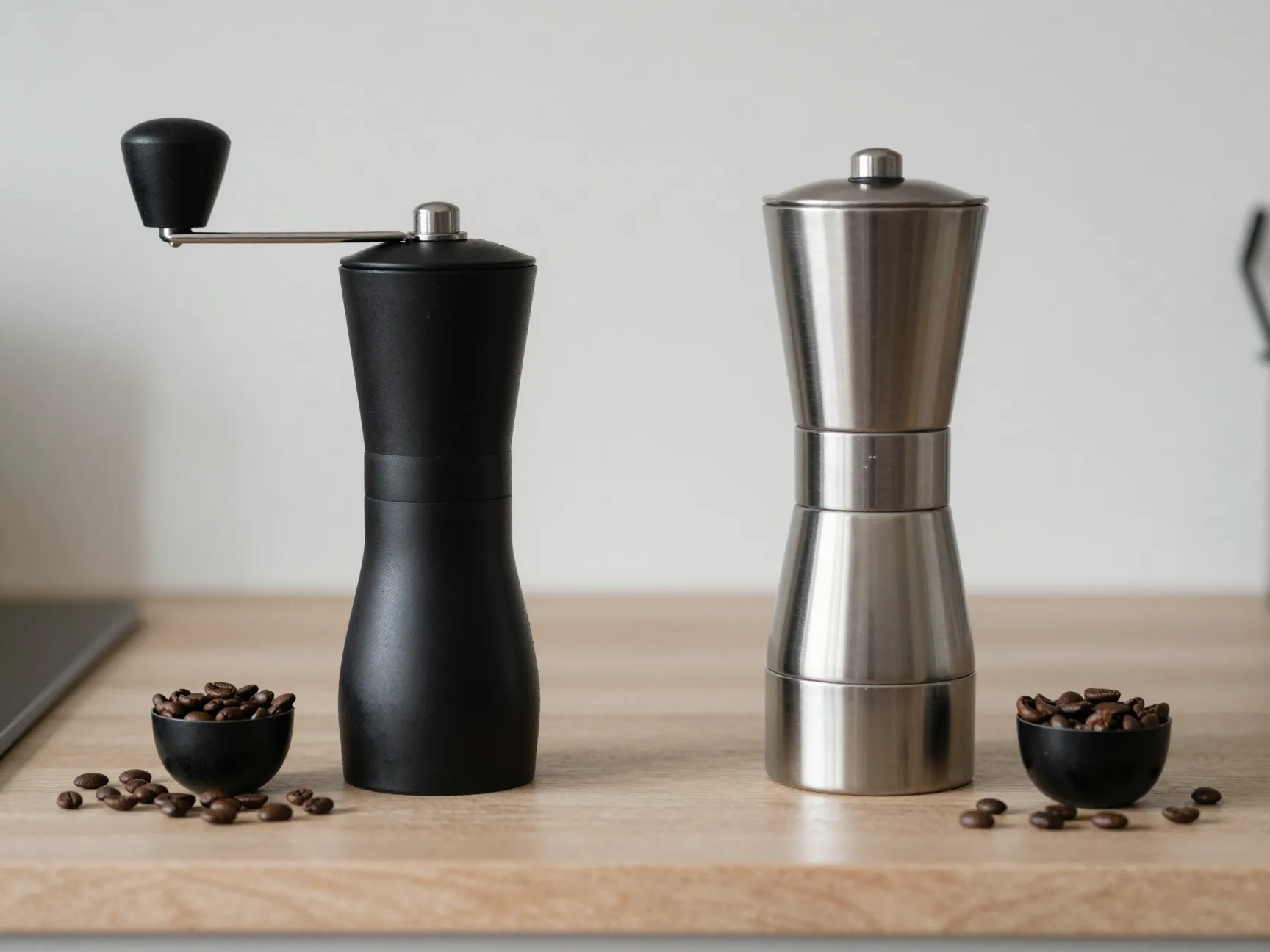
This is one of the most common decision points for new buyers, and the right answer depends entirely on your priorities.
Manual (hand) grinders:
- ✅ Lower price — quality options available for under $40 [1]
- ✅ Portable — great for travel and camping
- ✅ Quieter operation
- ✅ No electricity needed
- ❌ Slower — grinding enough coffee for 12 cups takes approximately 9 minutes [2][4]
- ❌ Physically tiring for larger quantities
Electric grinders:
- ✅ Fast — most grind a full dose in 20 to 60 seconds
- ✅ Consistent with minimal effort
- ✅ Better suited for espresso precision
- ❌ More expensive — reliable budget electric grinders start at upwards of $80 [1]
- ❌ Louder
- ❌ Less portable
Quick decision guide:
| Your Priority | Choose |
|---|---|
| Budget under $40 | Manual grinder |
| Travel / portability | Manual grinder |
| Espresso at home | Electric burr grinder |
| Speed and convenience | Electric grinder |
| French press or pour-over | Either works well |
For most home brewers who want convenience and quality, an electric burr grinder in the $80–$200 range is the sweet spot.
9. Price Range and Value for Money
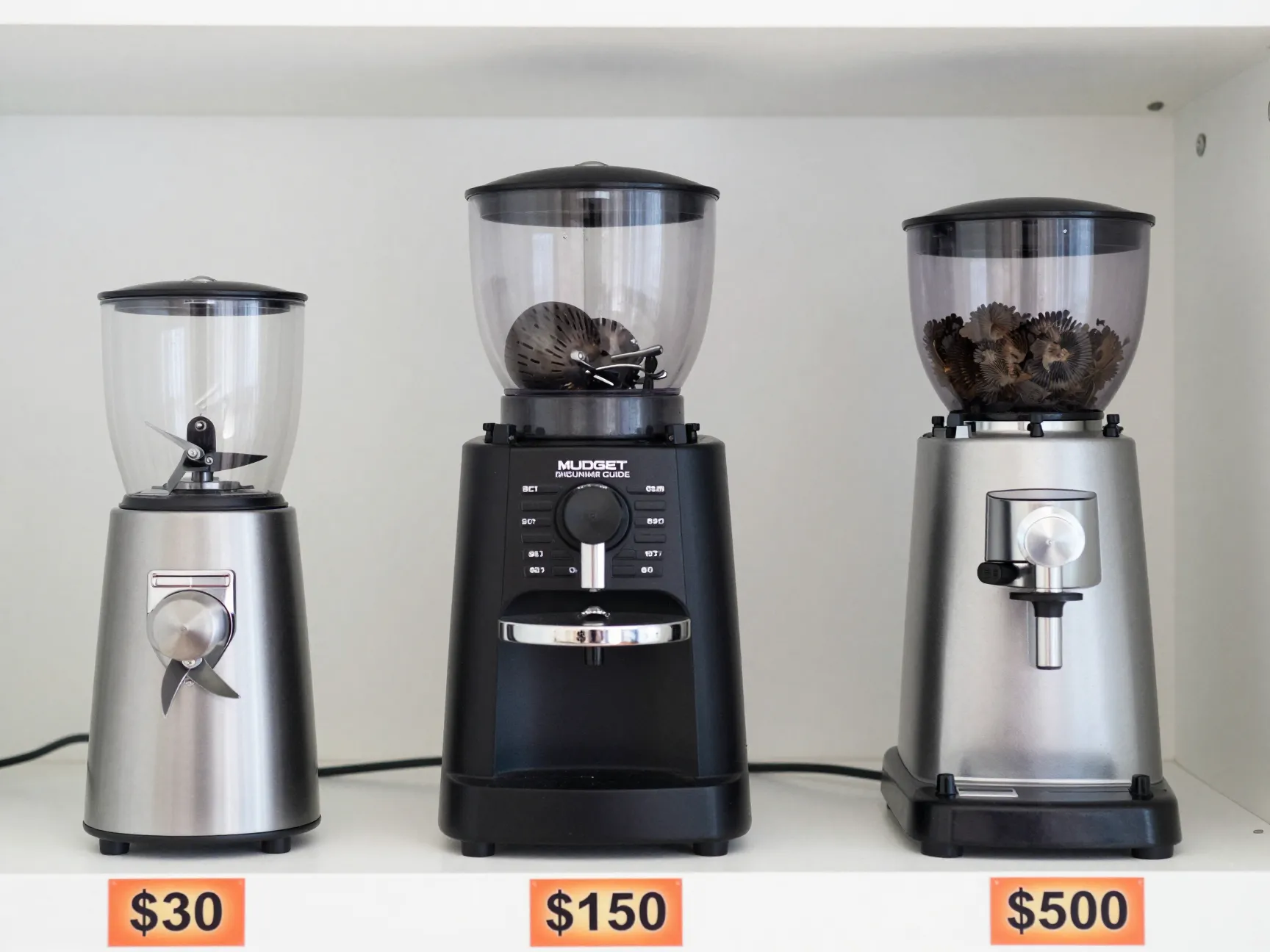
Let’s talk numbers. The coffee grinder market spans an enormous price range — from $15 blade grinders to $1,000+ professional-grade machines. Here is how to think about value at each tier:
Under $40 — Entry Level
Mostly blade grinders and basic manual grinders. Acceptable for casual drip coffee. Not recommended for espresso or specialty brewing. Manual burr grinders in this range (like the Hario Skerton) offer surprisingly good quality [1].
$40–$80 — Budget Electric
This is a tricky zone. Some decent burr grinders exist here, but quality control can be inconsistent. Worth researching individual models carefully before buying.
$80–$200 — Mid-Range Sweet Spot ⭐
This is where value peaks for most home brewers. Reliable electric burr grinders in this range offer good consistency, adequate grind settings, and durable construction. Brands like Baratza, Oxo, and Breville compete strongly here [1][2].
$200–$500 — Enthusiast Tier
Excellent grind consistency, wide adjustment range, low retention, and premium build quality. Worth it if you are serious about espresso or .
$500+ — Professional / Prosumer
Overkill for most home users. Designed for high-volume use or extreme precision. Justified only for dedicated home baristas.
💡 Pull Quote: “Spending $150 on a quality burr grinder will improve your coffee more than spending $150 on premium beans ground on a cheap machine.”
My honest take: Do not cheap out on the grinder. It is the piece of equipment that touches every single cup you make. A one-time investment in a quality mid-range grinder pays dividends in flavor for years.
A Quick Reference: All 9 Factors at a Glance
| # | Factor | Why It Matters | Key Benchmark |
|---|---|---|---|
| 1 | Grind Size Consistency | Drives flavor quality | Uniform particle size |
| 2 | Burr Type | Determines consistency and heat | Conical burr preferred |
| 3 | Grind Adjustment Range | Enables method-specific precision | 15–20+ settings |
| 4 | Motor & Component Quality | Affects longevity and performance | Metal gears, adequate power |
| 5 | Noise Level | Daily usability factor | ~80 dB target |
| 6 | Grind Retention | Freshness of each cup | Zero or low retention |
| 7 | Brewing Method Compatibility | Matches grinder to your setup | Check espresso capability |
| 8 | Manual vs. Electric | Lifestyle fit | Electric for speed/espresso |
| 9 | Price and Value | Budget alignment | $80–$200 sweet spot |
Common Mistakes to Avoid When Buying a Coffee Grinder 🚫
Before you hit “buy,” make sure you are not falling into one of these traps:
- Buying a blade grinder to save money — The flavor loss is not worth the savings.
- Ignoring your brewing method — A grinder that cannot reach espresso fineness is useless for espresso.
- Overlooking grind retention — Especially important for single- brewing.
- Buying based on looks alone — Aesthetics are nice, but burr quality and motor power matter more.
- Skipping research on noise levels — Some grinders are genuinely disruptive in a home environment [7].
- Assuming more settings always means better — Settings must be evenly spaced and repeatable to be useful [6].
Frequently Asked Questions
Q: Is a burr grinder really worth the extra cost over a blade grinder?
Yes — without question. Burr grinders produce consistent particle sizes that blade grinders simply cannot match. The flavor difference in your cup is immediate and significant [1][3].
Q: Can I use one grinder for both espresso and French press?
Some grinders can handle both, but it requires a wide adjustment range. Check that the grinder explicitly supports both fine (espresso) and coarse (French press) settings before buying [5].
Q: How often should I clean my coffee grinder?
For home use, a light cleaning every 1–2 weeks and a deep clean monthly is generally sufficient. Conical burr grinders tend to be easier to disassemble and clean than flat burr models [1].
Q: Does grind retention really affect taste that much?
For casual drip coffee, the difference is minimal. For espresso, where you are dialing in precise doses, even a gram of retained stale coffee can throw off your recipe [4].
Conclusion: Your Next Steps to the Perfect Home Grinder
Understanding the 9 critical factors to consider before buying a home coffee grinder is the difference between a frustrating purchase and a genuinely life-improving one. Your grinder is not a supporting player in your coffee routine — it is the lead actor.
Here are your actionable next steps:
- Identify your primary brewing method (espresso, pour-over, French press) — this narrows your options immediately.
- Set a realistic budget — aim for at least $80 for an electric grinder; $30–$40 for a quality manual option.
- Prioritize burr type — choose conical burr for the best all-around performance.
- Check grind settings — confirm the grinder offers at least 15–20 settings, or stepless adjustment.
- Read real-world reviews — look specifically for comments on noise level, grind consistency, and durability.
- Consider grind retention — if you are brewing espresso or care deeply about freshness, look for low or zero-retention designs.
The right grinder, matched to your brewing method and budget, will transform your morning cup. Stop blaming the beans — and start with the grind. ☕
References
[1] What To Look For In A Coffee Grinder – https://majestycoffee.com/blogs/posts/what-to-look-for-in-a-coffee-grinder
[2] Coffee Grinder Buying Guide – https://www.ovalware.com/blogs/oval-blog/coffee-grinder-buying-guide
[3] 10 Key Factors To Consider When Choosing The Right Coffee Grinder – https://www.holar.com.tw/blog/10-key-factors-to-consider-when-choosing-the-right-coffee-grinder/
[4] Coffee Grinders – https://www.wholelattelove.com/blogs/articles/coffee-grinders
[5] What To Look For When Purchasing Your First Coffee Grinder – https://beannbeancoffee.com/blogs/beansider/what-to-look-for-when-purchasing-your-first-coffee-grinder
[6] Coffee Grinders Buying Guide – https://kaldiscoffee.com/blogs/news/coffee-grinders-buying-guide
[7] Watch – https://www.youtube.com/watch?v=gcPFEgHfsEA