8 Common Mistakes You’re Making With a French Press (And How to Fix Them)
Nearly 80% of brewers admit their French press results are inconsistent — yet the device itself is one of the simplest brewing tools ever invented. If your cup keeps coming out bitter, weak, or just plain wrong, the problem almost certainly isn’t the press. It’s the process. This guide on the 8 Common Mistakes You’re Making With a French Press (And How to Fix Them) breaks down exactly where things go wrong and gives you clear, actionable fixes for every single one.
Disclosure: This post contains affiliate links. As an Amazon Associate, we earn from qualifying purchases, and at no extra cost to you.
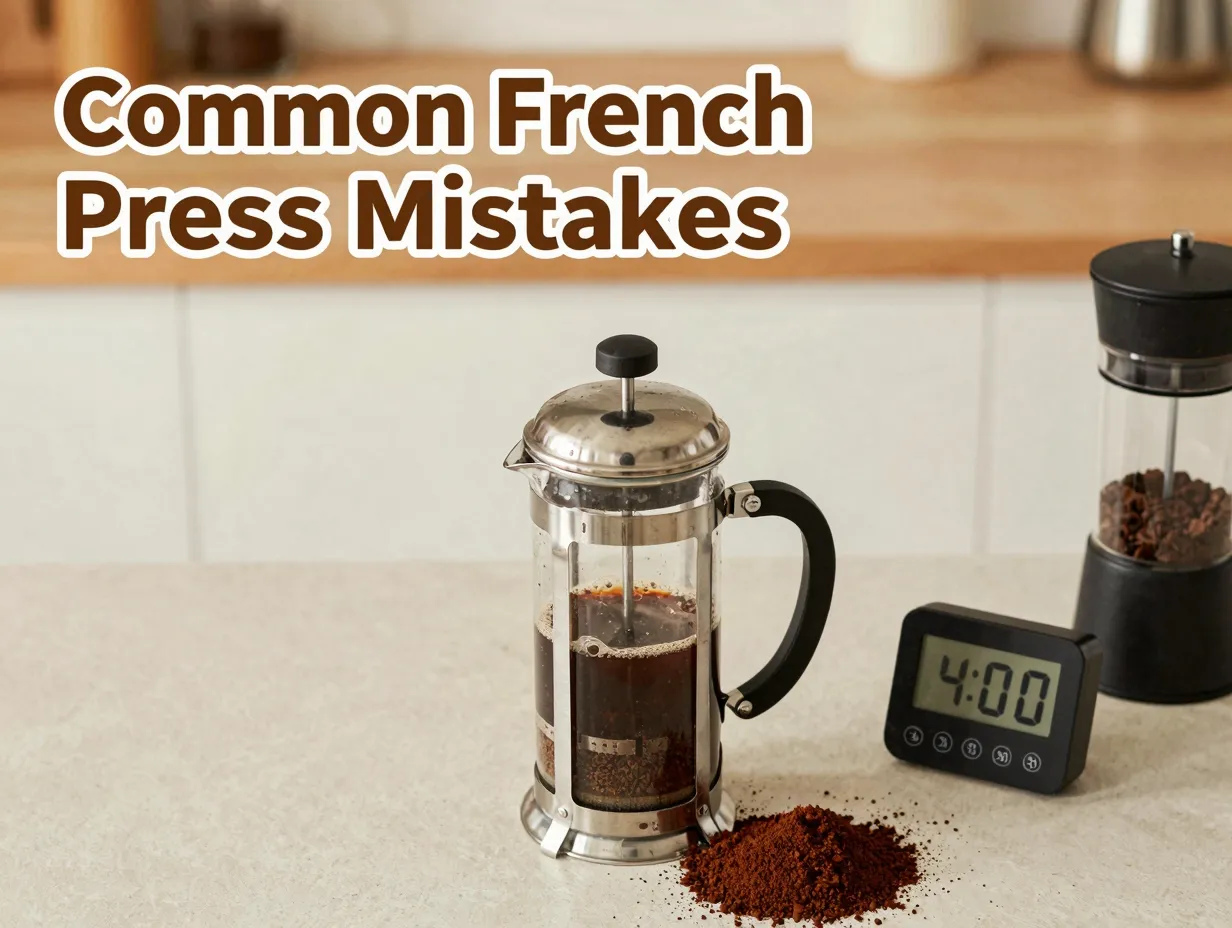
Whether you’ve been using a French press for years or just unboxed your first one, these mistakes are shockingly easy to make — and even easier to fix once you know what to look for.
Key Takeaways
- ☕ is everything — a coarse, sea-salt-like grind is non-negotiable for great French press coffee.
- ⏱️ Timing and temperature matter more than most people think — brew for exactly 4 minutes at 195°F–205°F.
- ⚖️ The golden ratio — 1 gram of coffee per 15 grams of water produces a balanced, consistent cup.
- 🌸 Blooming unlocks better flavor — a 30-second bloom before full brewing makes a real difference.
- 🧼 Cleaning is not optional — old coffee oils silently ruin every brew you make.
The Most Critical French Press Errors — And How to Fix Them
Understanding the 8 common mistakes you’re making with a French press starts with the fundamentals. Most errors fall into two categories: ingredient mistakes (grind, ratio, water quality) and technique mistakes (temperature, timing, plunging, blooming, cleaning). Let’s go through each one in numbered order.
1. Using the Wrong Grind Size
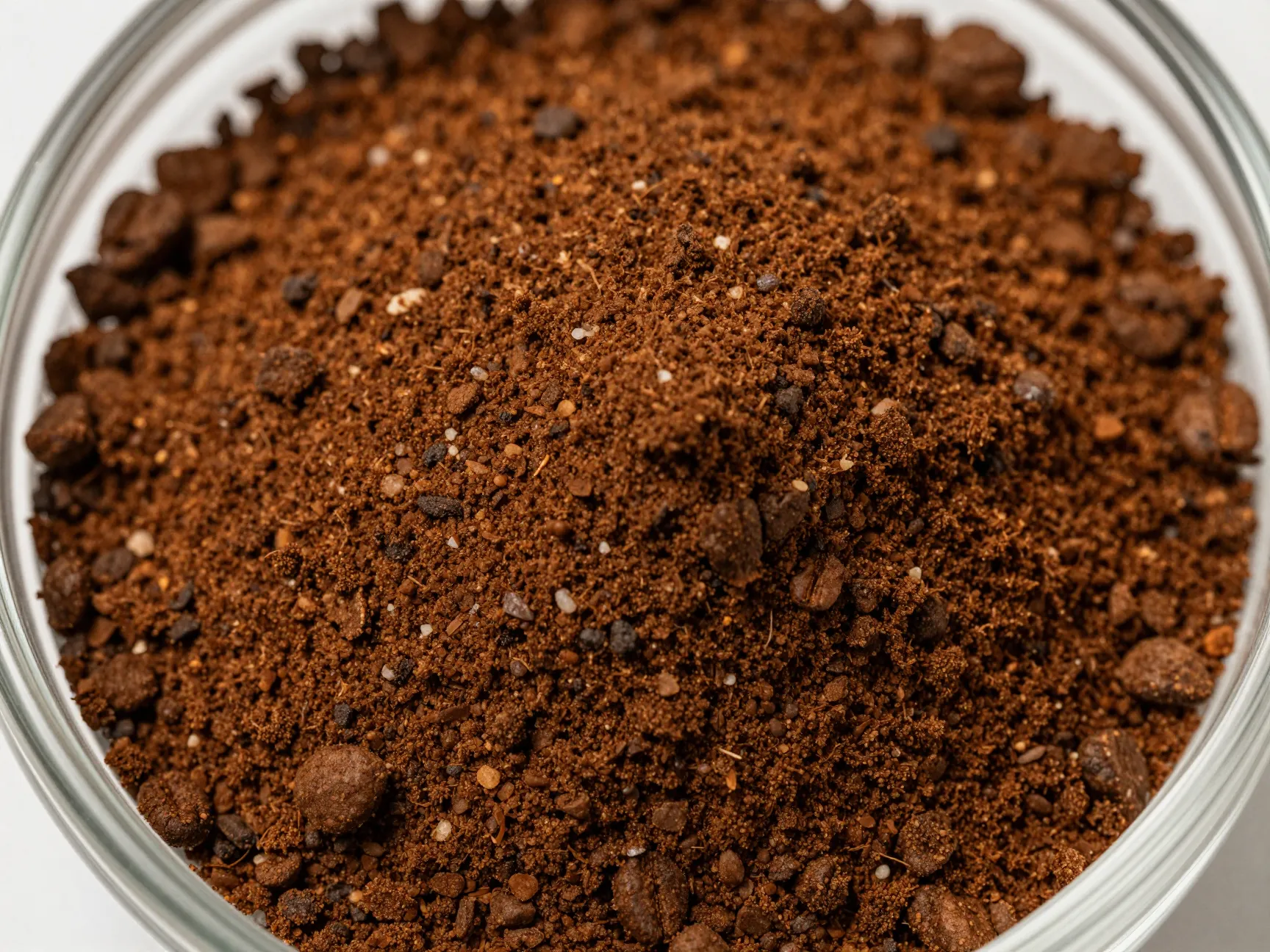
This is, without question, the single most damaging mistake you can make. The directly controls how fast water extracts flavor from . Get it wrong, and nothing else you do will save the cup. [1][2][3]
What goes wrong:
- Too fine → over-extraction → bitter, harsh, astringent coffee
- Too coarse → under-extraction → weak, watery, flat coffee
The fix: Aim for a that looks and feels like coarse sea salt or kosher salt. The particles should be chunky, uneven, and clearly visible. When you rub them between your fingers, they should feel gritty, not powdery. [1]
💡 Pro tip: If your coffee is consistently bitter, go coarser. If it’s consistently weak and watery, go slightly finer. Adjust one variable at a time.
2. Using a Blade Grinder Instead of a Burr Grinder
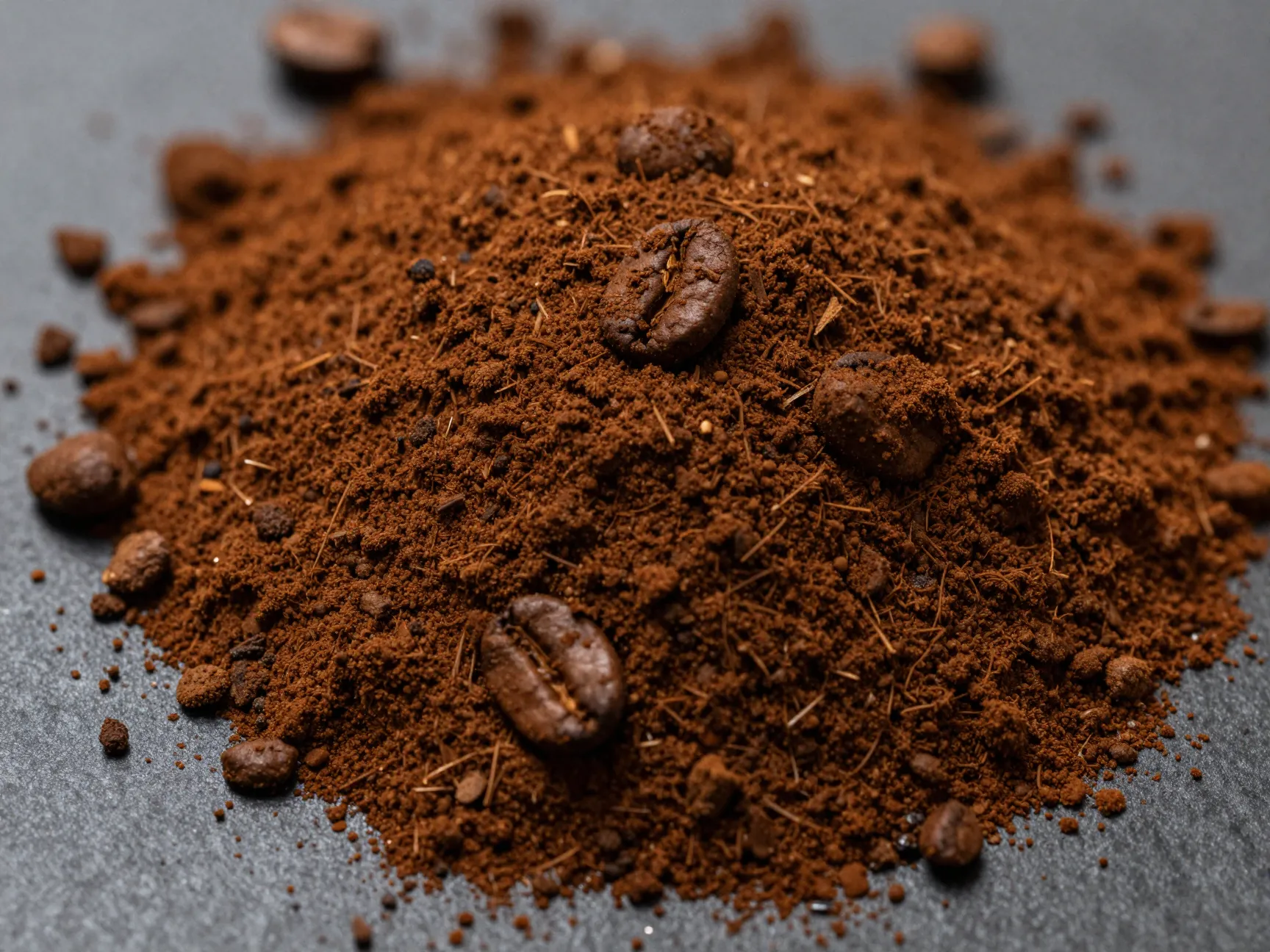
Even if you know you need a coarse grind, a blade grinder will betray you every single time. Blade grinders work like a blender — they chop randomly, producing a chaotic mix of powder-fine dust and oversized chunks in the same batch. [1][2]
Why this matters: When you brew with inconsistently sized grounds, the fine particles over-extract (producing bitterness) while the large chunks under-extract (producing sourness) — all in the same cup. The result is a muddled, unpleasant flavor that no technique can fix.
The fix: Invest in a . Burr grinders crush coffee between two abrasive surfaces set at a fixed distance, producing uniform particle sizes every time. You don’t need an expensive one — even an entry-level hand dramatically improves consistency. [2]
| Grinder Type | Consistency | Price Range | Best For |
|---|---|---|---|
| Blade Grinder | ❌ Very inconsistent | $10–$30 | Spices (not coffee) |
| Entry Burr Grinder | ✅ Good | $30–$80 | |
| Mid-Range Burr | ✅✅ Excellent | $80–$200 | Enthusiast brewing |
3. Getting the Coffee-to-Water Ratio Wrong
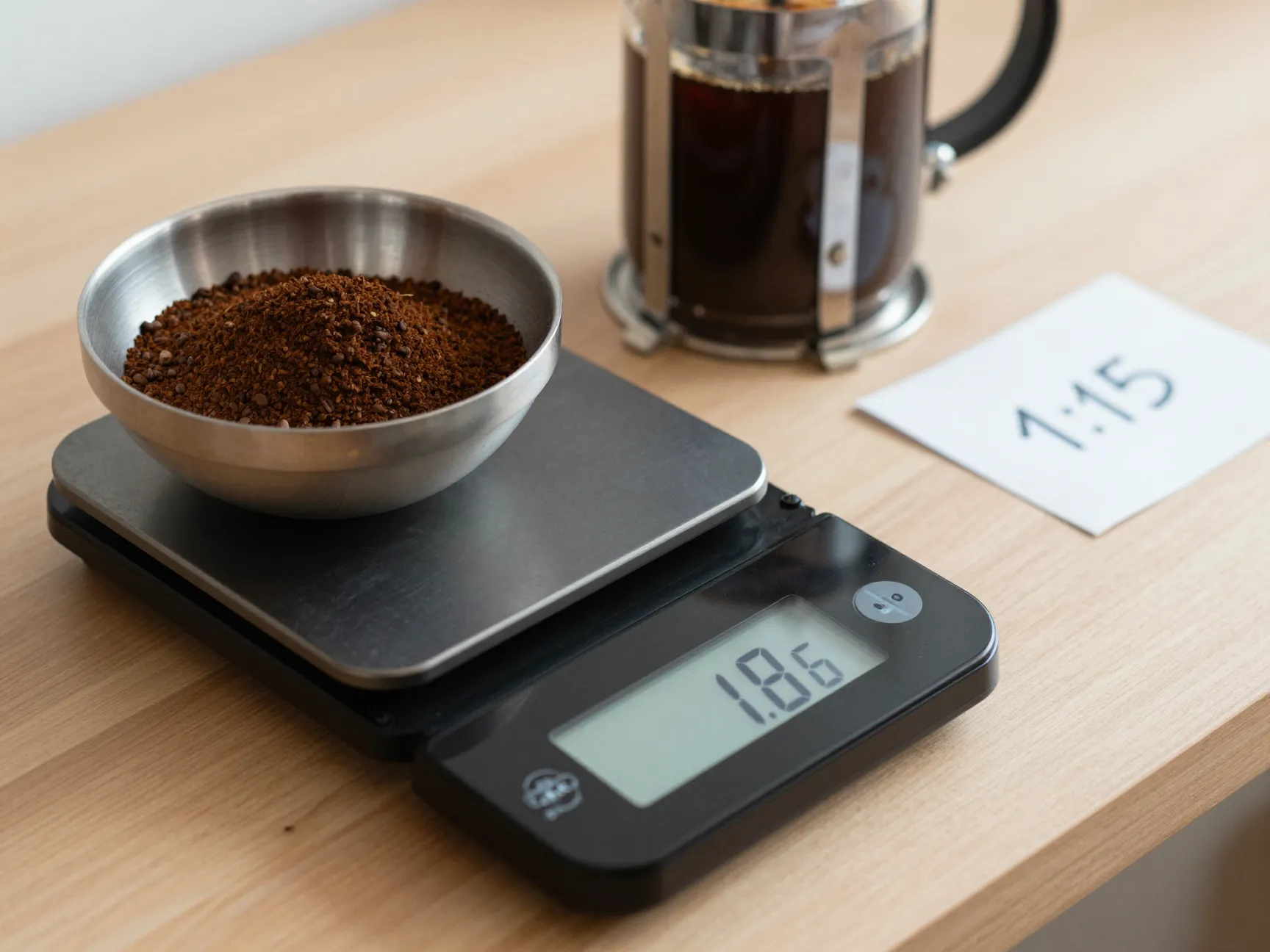
Many people eyeball their coffee and water measurements, and the result is a cup that’s either overwhelmingly strong or disappointingly weak. Consistency requires a ratio, not guesswork. [1][2][3]
The golden ratio: Use 1 gram of coffee per 15 grams of water. In more practical terms, that’s roughly 1 tablespoon of coffee per 4 ounces of water. [1]
Quick reference table:
| French Press Size | Water Volume | Coffee Needed |
|---|---|---|
| 12 oz (small) | 350 ml | ~23 g (~4.5 tbsp) |
| 17 oz (medium) | 500 ml | ~33 g (~6.5 tbsp) |
| 34 oz (large) | 1000 ml | ~67 g (~13 tbsp) |
The fix: Use a kitchen scale instead of tablespoons for the most accurate results. Tablespoons work in a pinch, but varies between roasts, so weight is always more reliable. [3]
🎯 Remember: The 1:15 ratio is your baseline. If you prefer , move to 1:12. For a lighter cup, try 1:17. Always adjust gradually.
4. Using Water at the Wrong Temperature
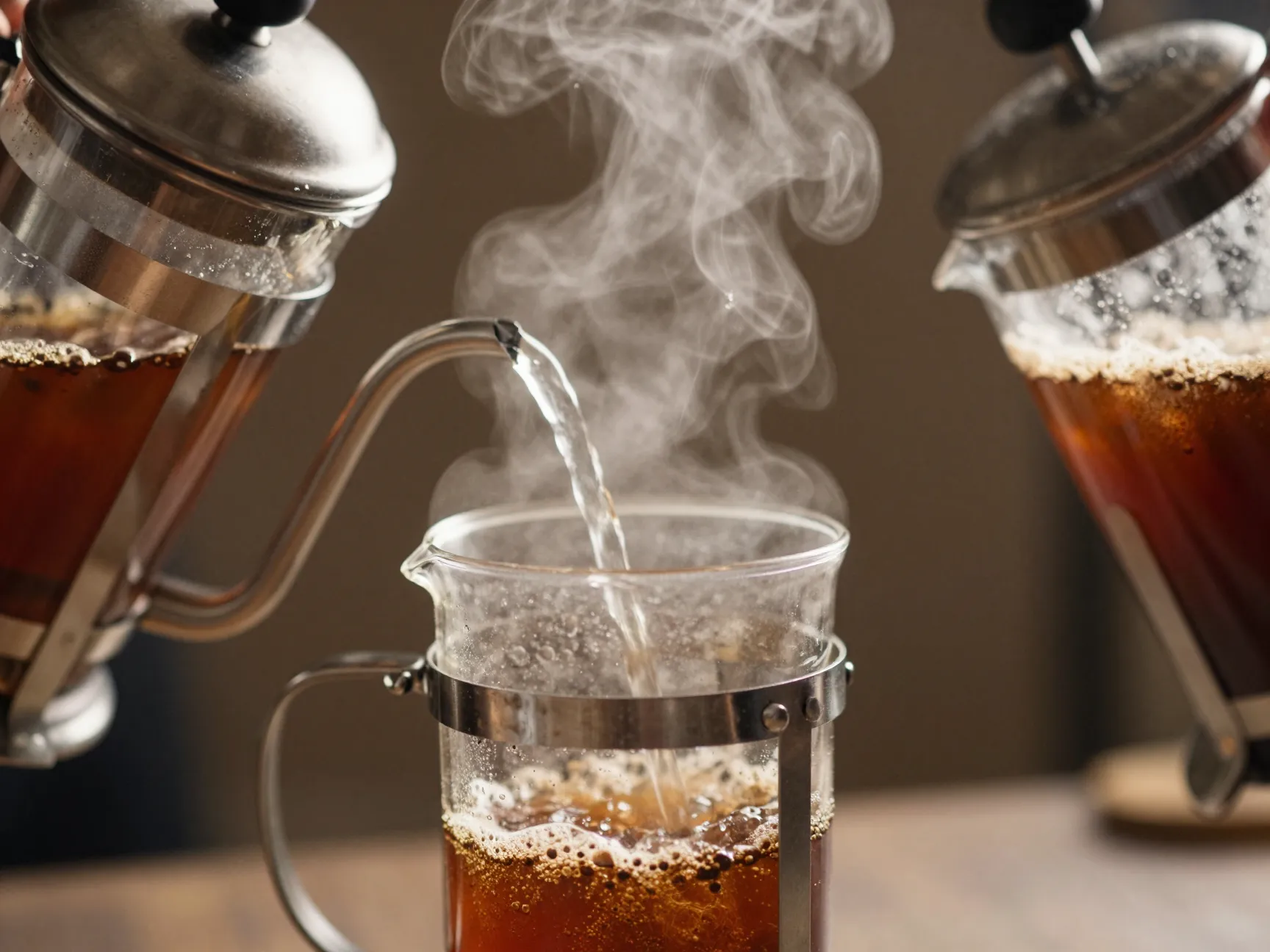
Boiling water straight from the kettle seems logical, but it’s actually one of the most common ways to ruin a French press brew. Water at a full boil (212°F/100°C) scorches and pulls out harsh, bitter compounds that should stay locked in the grounds. [2][4]
The ideal range: 195°F to 205°F (90°C to 96°C). This range extracts the full spectrum of desirable flavors without crossing into scorched, bitter territory. [4]
The fix: After your kettle boils, simply wait 30 seconds before pouring. This drops the temperature into the ideal zone without any thermometer needed. If you want precision, use an instant-read thermometer or invest in a variable-temperature kettle. [2]
Temperature effects at a glance:
- 🔴 Below 195°F → Under-extraction, sour and flat
- 🟢 195°F–205°F → Ideal extraction, balanced and complex
- 🔴 Above 205°F → Over-extraction, bitter and harsh
5. Skipping the Bloom
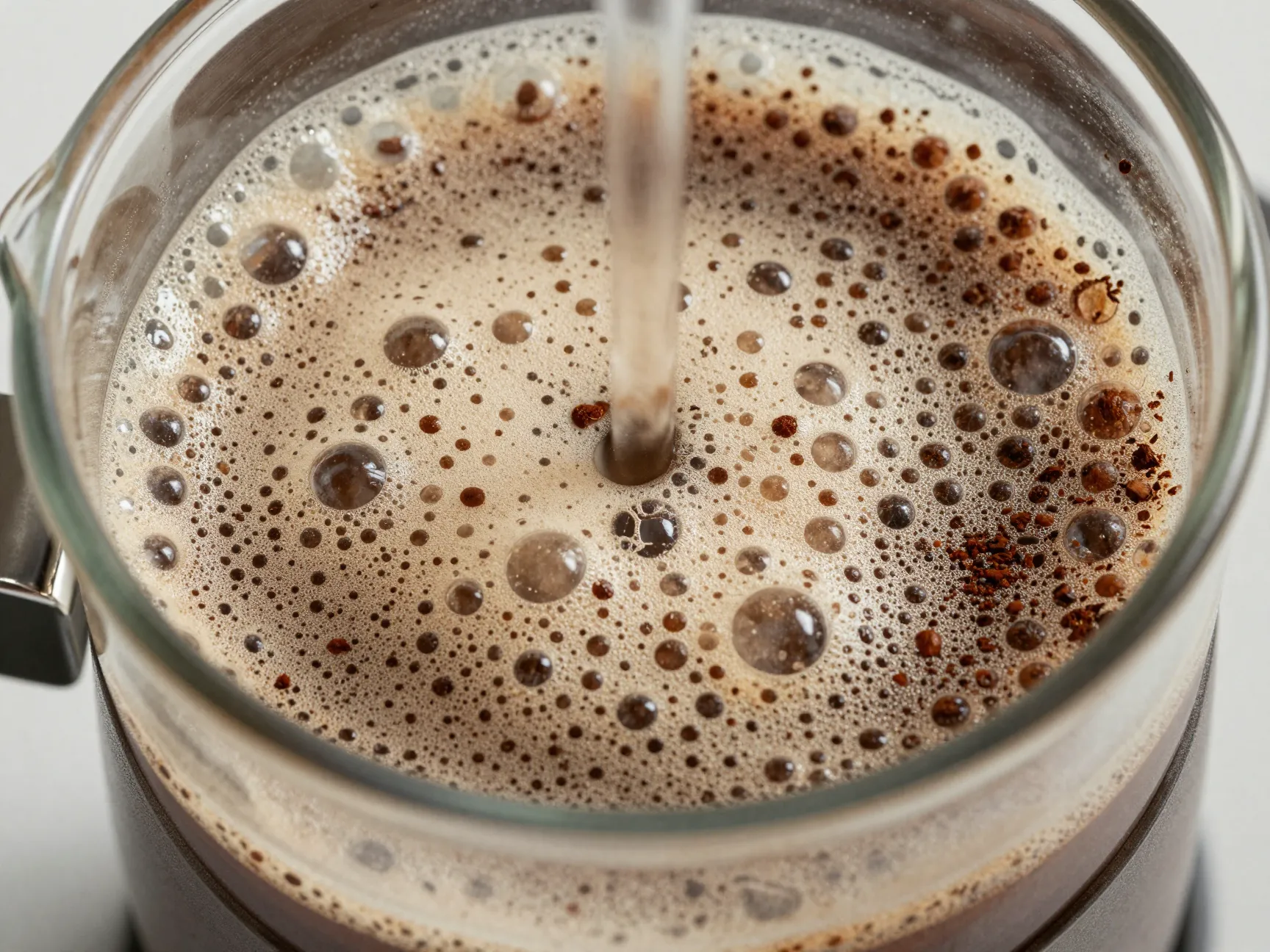
The bloom is one of the most underused techniques in home French press brewing, and skipping it is a quiet mistake that costs you real flavor. [3]
What is blooming? Fresh coffee grounds contain trapped CO2 gas from the roasting process. When hot water hits them, that gas releases rapidly. If you pour all your water at once, the escaping CO2 creates a barrier that prevents water from properly saturating the grounds — leading to uneven extraction.
The fix: Pour just the first 100ml of water over your grounds and wait 30 seconds. You’ll see the coffee “bloom” — it will foam, bubble, and puff up as the CO2 escapes. After 30 seconds, pour the remaining water and proceed with your brew. [3]
☕ The result: A more even, thorough extraction that produces noticeably richer, more complex flavor in your final cup.
This step takes 30 extra seconds and costs nothing. There’s really no reason to skip it.
6. Pressing Too Fast or Too Hard
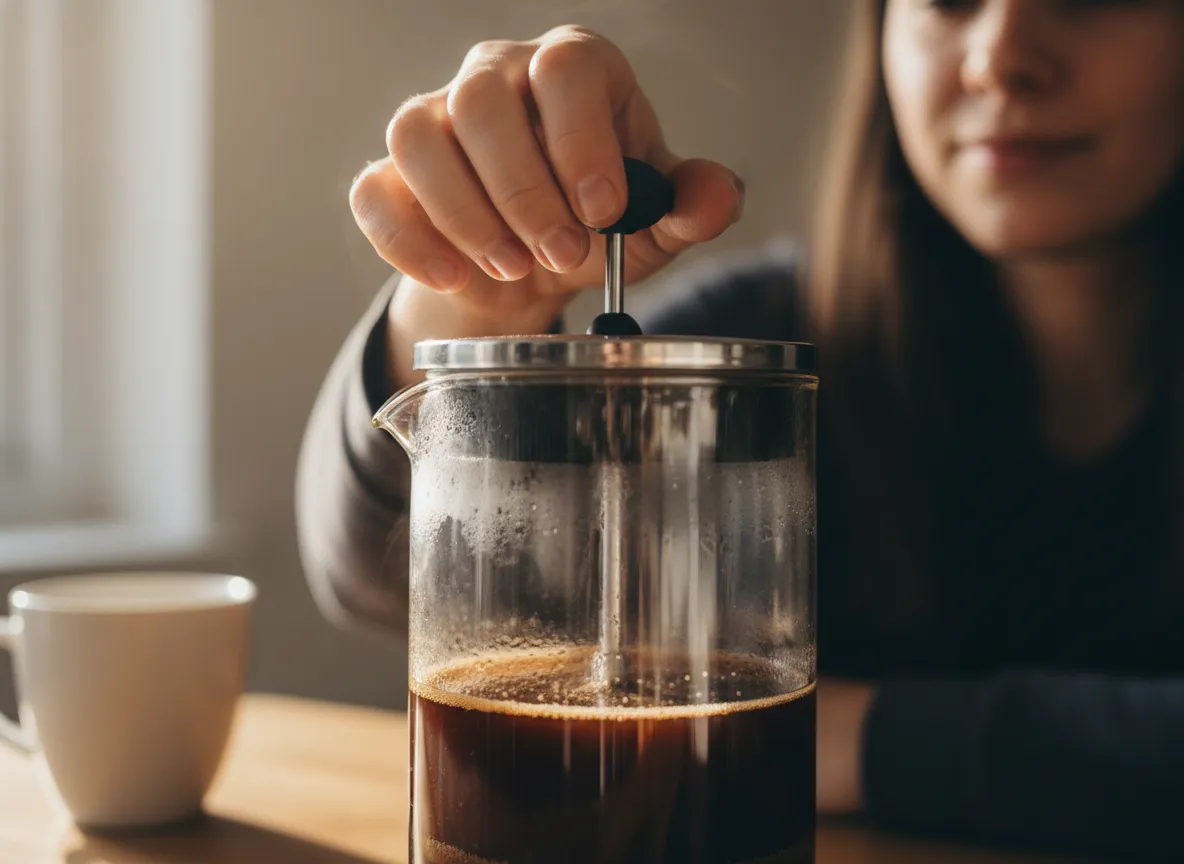
The plunge feels satisfying — but rushing it or forcing it down with pressure is a mistake that sends fine sediment shooting up through the grounds and into your coffee. [2]
What goes wrong when you plunge incorrectly:
- Forcing the plunger creates turbulence that stirs up settled grounds
- Pressing too fast can cause uneven extraction in the final seconds
- A hard, fast plunge can crack older French press glass carafes
The fix: Apply gentle, even downward pressure and take approximately 20 seconds to complete the plunge. If the plunger feels like it’s resisting strongly, your grind is likely too fine. If it drops with zero resistance, your grind may be too coarse. [2]
A smooth, steady plunge that takes about 20 seconds is the sweet spot. Think of it as a controlled, deliberate movement — not a quick push.
More French Press Mistakes That Are Easy to Overlook
The second half of the 8 common mistakes you’re making with a French press covers timing, cleanliness, and ingredient quality — areas that many brewers completely ignore.
7. Not Timing Your Brew
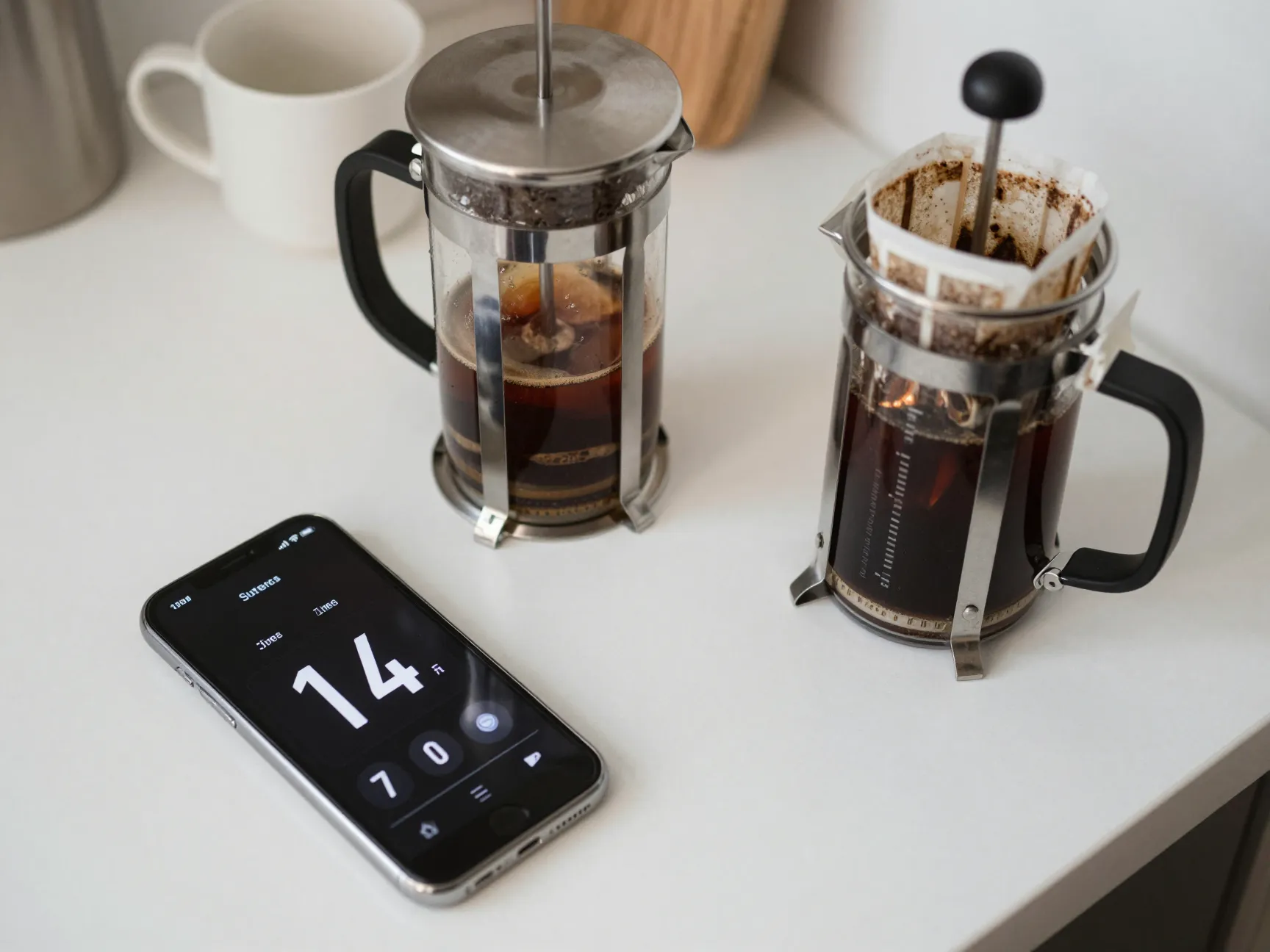
“Eyeballing” the brew time is one of the most casual mistakes French press users make. Without a timer, you’re guessing — and guessing leads to wildly inconsistent results from cup to cup. [1][3]
What happens without a timer:
- Too short (under 3 minutes) → sour, under-extracted, weak coffee
- Too long (over 5 minutes) → bitter, over-extracted, harsh coffee
The fix: Set a timer for exactly 4 minutes every single time. This is the widely tested sweet spot for French press extraction at the correct grind size and water temperature. [1][3]
Your phone’s built-in timer works perfectly. There’s no excuse for not using it.
⏱️ The 4-minute rule: Start your timer the moment you finish pouring all your water. When it goes off, plunge immediately and pour — don’t let the coffee sit in contact with the grounds after pressing.
One more thing: After plunging, pour the coffee immediately into your mug or a separate carafe. Leaving sitting on the grounds — even with the plunger pressed — continues the extraction process and turns your coffee bitter over time. [1]
8. Neglecting to Clean Your French Press Properly
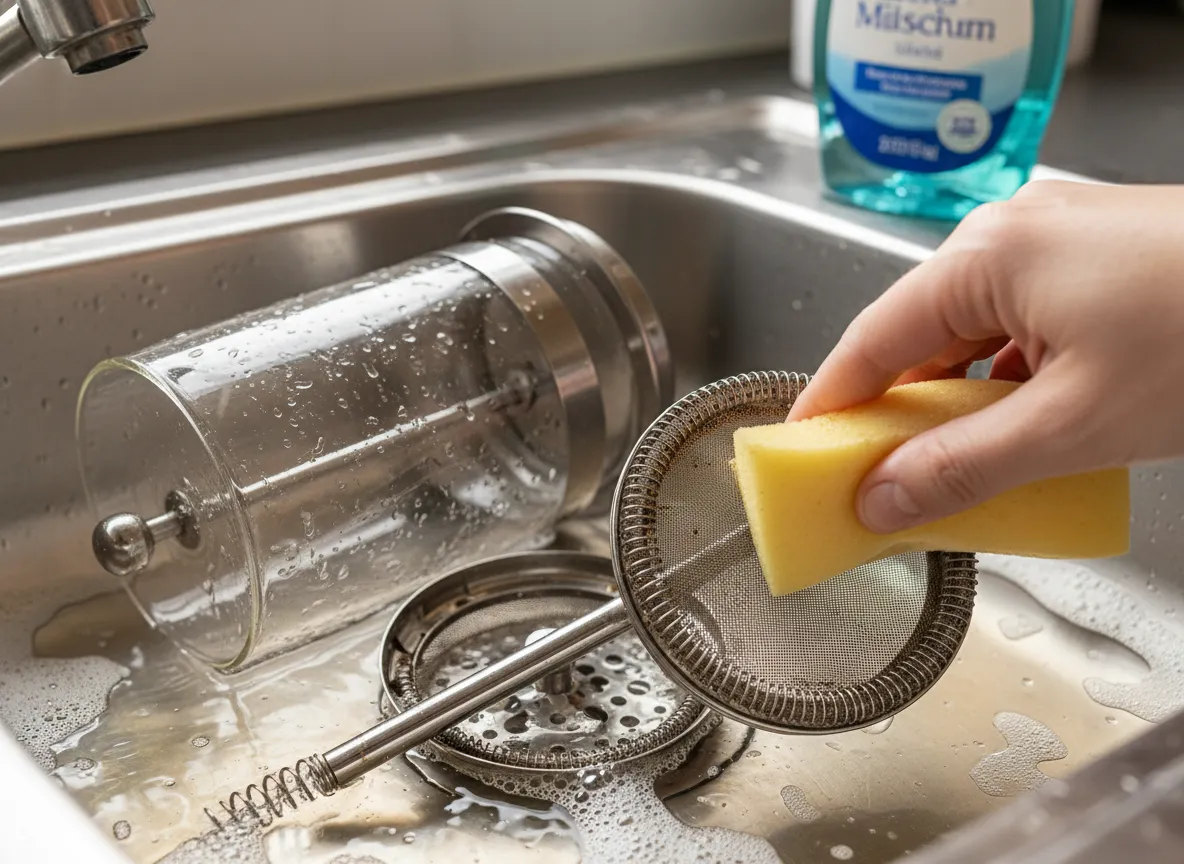
This is the mistake that quietly ruins every single brew, and most people never connect it to their disappointing coffee. Old coffee oils are rancid, and they coat the mesh filter, the glass, and the plunger assembly with each use. [1][2]
The problem with leftover coffee oils:
- They turn rancid quickly and add a stale, bitter background flavor to fresh coffee
- They build up on the mesh filter and reduce its effectiveness
- They’re invisible, so most people don’t realize they’re there
The fix — two-level cleaning protocol:
After every brew:
- Disassemble the plunger completely (unscrew the filter assembly)
- Rinse all parts with warm water
- Wash with a small amount of mild dish soap
- Rinse thoroughly and air dry
Weekly deep clean:
- Fill the carafe with warm water and 2 tablespoons of baking soda
- Let it soak for 15–20 minutes
- Scrub gently with a soft brush
- Rinse thoroughly until no baking soda smell remains [1][2]
| Cleaning Frequency | Method | Purpose |
|---|---|---|
| After every brew | Warm water + mild soap | Remove fresh oils and grounds |
| Weekly | Baking soda soak | Remove stubborn buildup and odors |
| Monthly | Full disassembly inspection | Check filter mesh for damage or clogging |
Bonus Considerations: Water Quality and Coffee Freshness
Two additional factors that don’t always make the main list but genuinely affect your cup:
Water quality: Tap water in many areas contains chlorine, minerals, or other compounds that interfere with coffee flavor. Using filtered water removes these variables and lets the coffee’s natural flavors come through clearly. [6]
Coffee freshness: Coffee is at its best within 2–4 weeks of its roast date. Older coffee loses its volatile aromatic compounds, producing a flat, dull cup regardless of how perfect your technique is. [6] Always check the roast date on your bag — not the “best by” date.
🛒 Quick tip: Buy coffee in smaller quantities more frequently rather than buying in bulk. Freshness matters more than convenience.
Putting It All Together: Your French Press Checklist
Here’s a quick reference summary of all 8 fixes in one place:
- Grind size → Coarse, like sea salt
- Grinder type → Burr grinder, not blade
- Coffee-to-water ratio → 1g coffee : 15g water
- Water temperature → 195°F–205°F (wait 30 sec after boiling)
- Bloom technique → 100ml first, wait 30 seconds
- Plunging technique → Gentle, even, ~20 seconds
- Brew time → Exactly 4 minutes, then pour immediately
- Cleaning → Soap after every brew, baking soda weekly
Conclusion
The 8 common mistakes you’re making with a French press are all completely fixable — and none of them require expensive equipment or barista-level training. What they require is attention to the details that most people skip: , water temperature, accurate ratios, proper timing, and regular cleaning.
Your actionable next steps:
- ✅ Check your current grinder — if it’s a blade grinder, consider upgrading to an entry-level burr grinder.
- ✅ Weigh your coffee and water at least once to calibrate your eye for the right ratio.
- ✅ Set a timer for your next brew — no exceptions.
- ✅ Let your kettle sit for 30 seconds after boiling before you pour.
- ✅ Disassemble and wash your French press after your very next cup.
Make these changes one at a time if needed, but start today. The difference between a mediocre French press and an exceptional one isn’t a better machine — it’s better habits. Your next cup can be dramatically better than your last one, and now you know exactly how to make that happen.
References
[1] Common French Press Mistakes How To Fix Them – https://somethingsbrewing.in/blogs/brewing-tips/common-french-press-mistakes-how-to-fix-them
[2] Common French Press Mistakes And How To Avoid Them – https://frenchpressandco.com/en-au/blogs/coffee-blog/common-french-press-mistakes-and-how-to-avoid-them
[3] Mistake Ruining French Press Coffee – https://www.foodrepublic.com/1670844/mistake-ruining-french-press-coffee/
[4] French Press Brewing Mistakes To Avoid – https://ratiocoffee.com/blogs/coffee-guides/french-press-brewing-mistakes-to-avoid
[6] Watch – https://www.youtube.com/watch?v=Opbthk_wp60