8 Clever Coffee Corner Cabinet Solutions for Organized Caffeine Bliss
Nearly 62% of American adults drink coffee every day — yet most home kitchens dedicate zero dedicated storage to the ritual that starts their morning. The result? A cluttered countertop graveyard of mismatched mugs, tangled cords, and rogue coffee pods rolling behind the toaster. The good news is that a single underused corner cabinet can completely transform your morning routine. These 8 Clever Cabinet Solutions for Organized Caffeine Bliss are designed to turn wasted corner space into a functional, beautiful caffeine command center — without a full kitchen remodel.
Disclosure: This post contains affiliate links. As an Amazon Associate, we earn from qualifying purchases, and at no extra cost to you.
Key Takeaways
- ☕ Corner cabinets are among the most underutilized spaces in the kitchen — and the most ideal for a dedicated .
- 🗂️ Smart internal organizers (lazy Susans, pull-out shelves, vertical dividers) can triple your usable corner cabinet space.
- 💡 A well-designed coffee corner cabinet keeps countertops clear while making your morning routine faster and more enjoyable.
- 🏷️ Labeling, consistent containers, and zone-based organization are the simplest upgrades with the biggest visual impact.
- 💰 Most of these solutions cost under $50 and require no professional installation.
Why Your Kitchen Corner Cabinet Is the Perfect Coffee Station
Most corner cabinets are awkward, deep, and dark — which is exactly why people stuff them with rarely-used appliances and forgotten Tupperware lids. But that same depth and corner placement makes them ideal for a . They’re typically close to the sink (for water), near an outlet (for your machine), and out of the main kitchen workflow (so you’re not blocking traffic while you brew).
💬 “A dedicated coffee zone — even a small one — reduces morning decision fatigue and keeps the rest of your kitchen cleaner.” — Interior organization expert insight via [The RTA Store Blog][1]
Converting a corner cabinet into a coffee hub means pulling everything coffee-related into one logical zone: your machine, mugs, pods or beans, filters, sweeteners, and accessories. Once everything has a home, your mornings run like clockwork.
The 8 Clever Coffee Corner Cabinet Solutions for Organized Caffeine Bliss below are ranked from foundational to advanced, so you can start simple and layer in upgrades over time.
The 8 Clever Coffee Corner Cabinet Solutions for Organized Caffeine Bliss
1. Install a Lazy Susan Turntable for Instant Accessibility
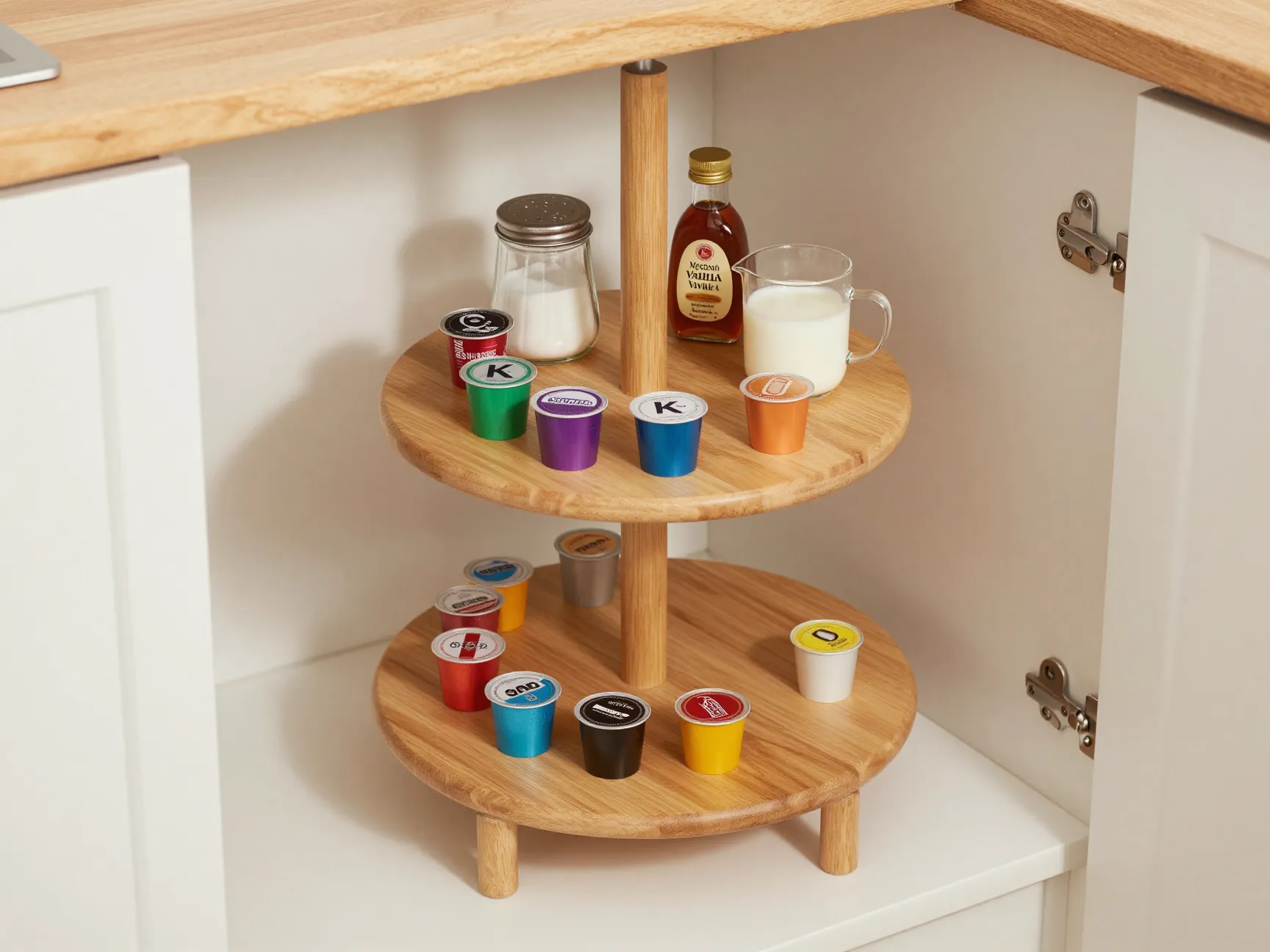
The lazy Susan is the single most impactful upgrade for any corner cabinet. A standard corner cabinet can be 36 inches deep — meaning everything at the back is essentially invisible. A two-tier rotating turntable solves this instantly.
What to store on it:
- Coffee pods (K-Cups, Nespresso capsules)
- Sweetener packets and sugar jars
- Flavored syrups (like vanilla or caramel)
- Small creamers or mini milk frother
Best options in 2026:
| Type | Diameter | Best For | Approx. Cost |
|---|---|---|---|
| Single-tier plastic | 12″ | Small cabinets, pods | $12–$18 |
| Two-tier bamboo | 11″–12″ | Jars + pods combo | $20–$30 |
| Full-cabinet turntable | 28″–32″ | Deep corner cabinets | $35–$60 |
A two-tier turntable keeps your most-used items at eye level and within arm’s reach. No more digging. No more forgotten syrups. [Pure Decor Lab notes][3] that a rotating organizer inside a coffee cabinet is one of the most recommended solutions for maximizing corner storage without adding bulk.
2. Use a Pull-Out Shelf System to Eliminate Dead Zones
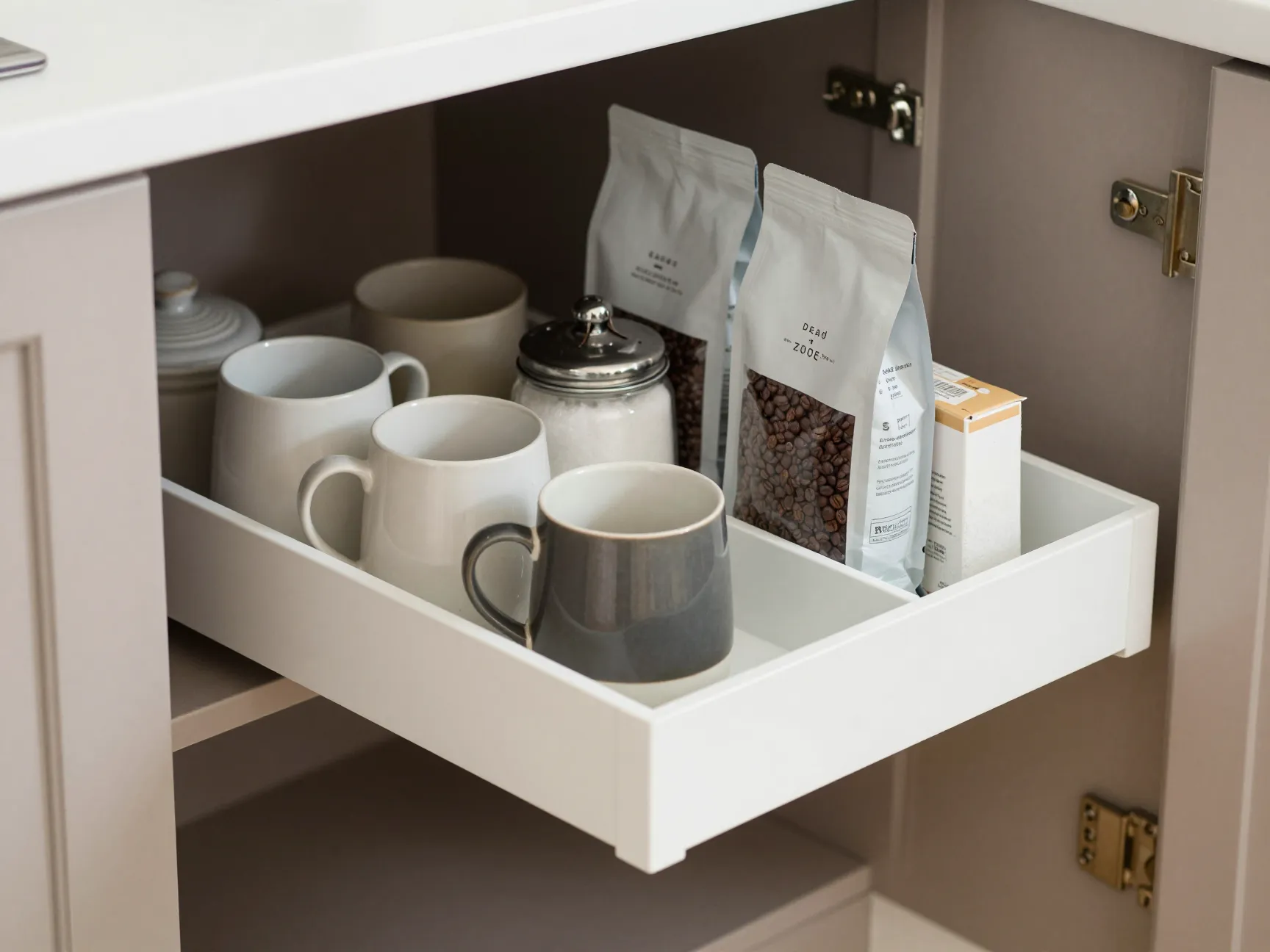
Deep corner cabinets have what organizers call “dead zones” — the back third of the shelf that nobody ever reaches. A pull-out shelf system (also called a sliding shelf or roll-out tray) solves this by bringing the entire shelf to you.
These are available as:
- Freestanding sliding trays (no installation, just slide in)
- Mounted pull-out drawers (screw into cabinet walls for stability)
- Two-tier pull-out systems (double the storage in one cabinet)
For a coffee corner cabinet, use the front zone for your daily items (pods, mugs, sugar) and the pull-out back zone for backup stock (extra bags of beans, a spare filter pack, seasonal syrups). This zone-based approach is a core principle of effective [2].
💡 Pro tip: Line your pull-out shelf with a non-slip mat to keep mugs from sliding when you open and close the shelf.
3. Mount a Pegboard Inside the Cabinet Door
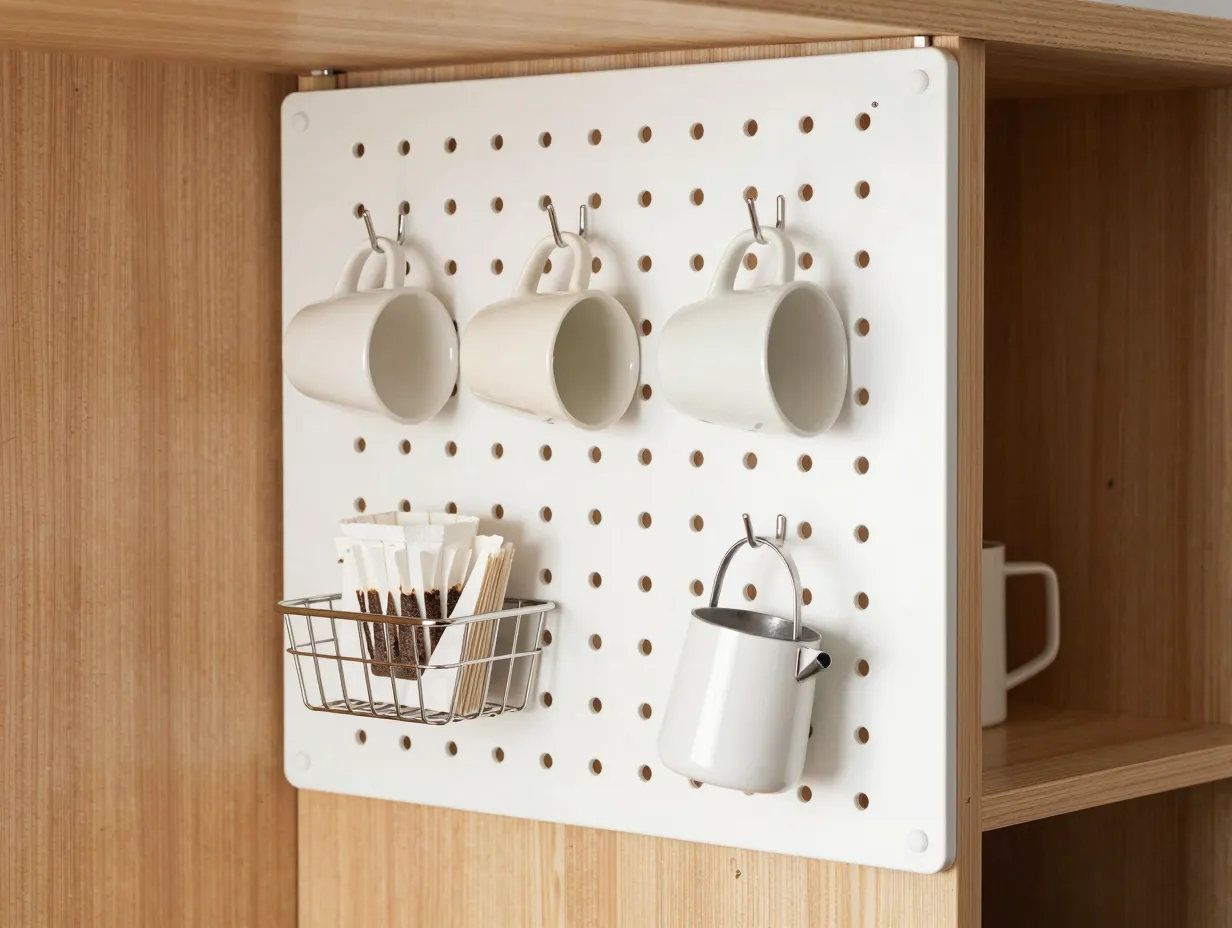
Here’s one that most people overlook: the inside of your cabinet door is prime real estate. A small pegboard panel mounted to the interior door can hold:
- Hanging mugs (with S-hooks)
- A small basket for
- A hook for a handheld milk frother
- Adhesive clips for small bags of specialty beans
This solution is especially powerful in smaller kitchens where counter and shelf space is limited. You’re essentially adding a vertical storage wall without taking up any floor or shelf space.
What you need:
- A pegboard panel cut to fit your door dimensions
- Small pegboard hooks and baskets
- Four corner mounting brackets (to hold the board away from the door surface)
- Optional: a coat of paint to match your cabinet interior
The entire project typically costs under $30 and takes about an hour. station design guides consistently highlight vertical door storage as an underused hack for small kitchens [1].
4. Add a Dedicated Mug Drawer with a Soft-Close Divider
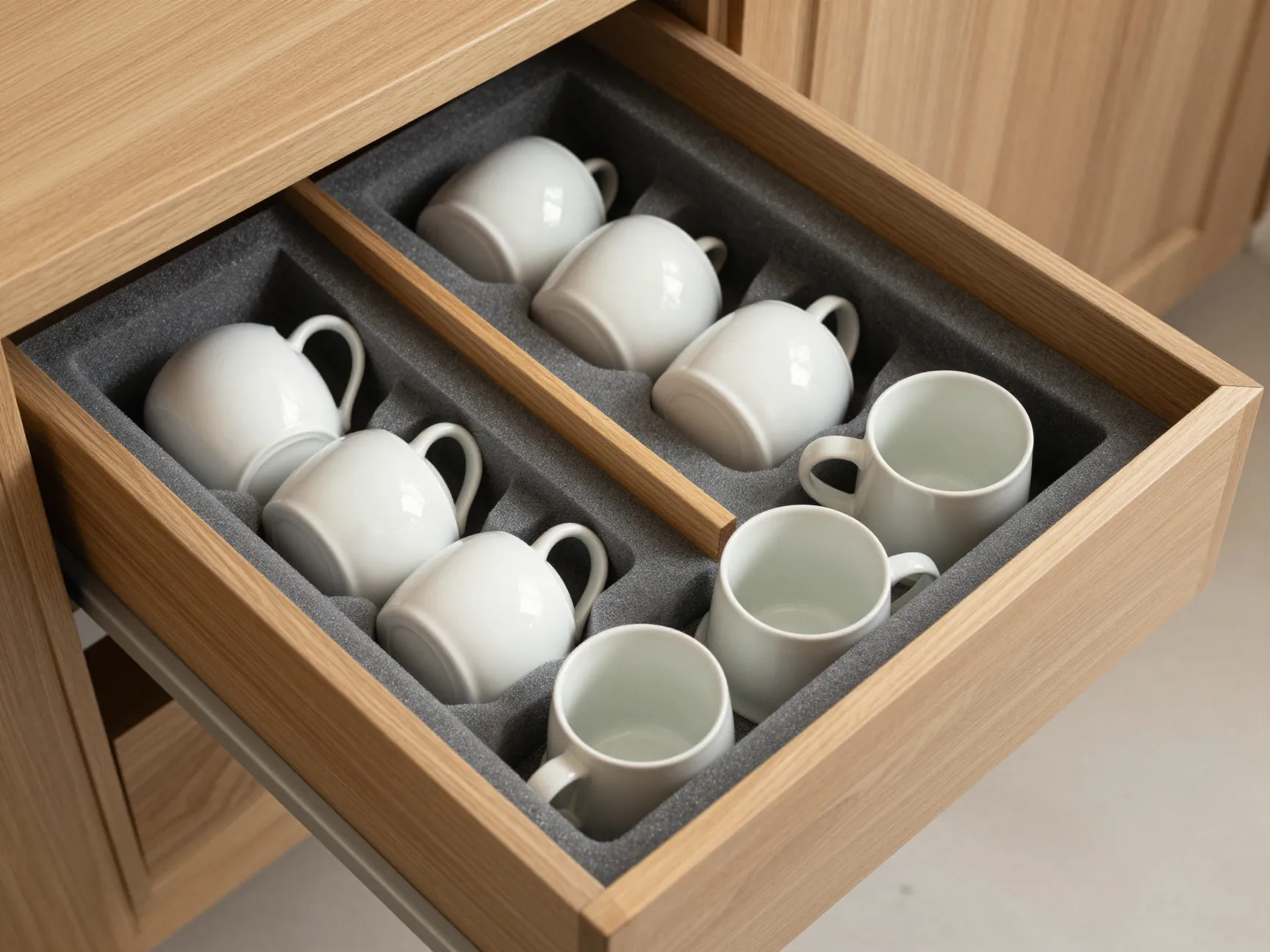
Mugs are the biggest space hogs in any coffee station. They’re bulky, they nest poorly, and they tip over constantly. The solution? Pull them off the shelf entirely and give them their own drawer.
If your corner cabinet has a lower section with a drawer (or if you can add one), line it with a customizable drawer divider system. This keeps each mug upright, separated, and easy to grab without knocking everything else over.
Drawer organization tips for mugs:
- Store mugs on their sides in rows (like files in a filing cabinet)
- Use foam drawer liners to prevent scratching
- Keep your 3–4 most-used mugs at the front
- Reserve the back row for seasonal or guest mugs
💬 “Storing mugs horizontally in a deep drawer is a game-changer — you can see every mug at a glance and grab exactly what you want.”
For households with a large mug collection, consider a two-drawer setup: one for everyday mugs, one for travel tumblers and specialty cups. SpaceAid’s organization content on Lemon8 [4] shows how drawer-based mug storage dramatically reduces visual clutter in coffee zones.
5. Create an Appliance Garage with a Roll-Up Door
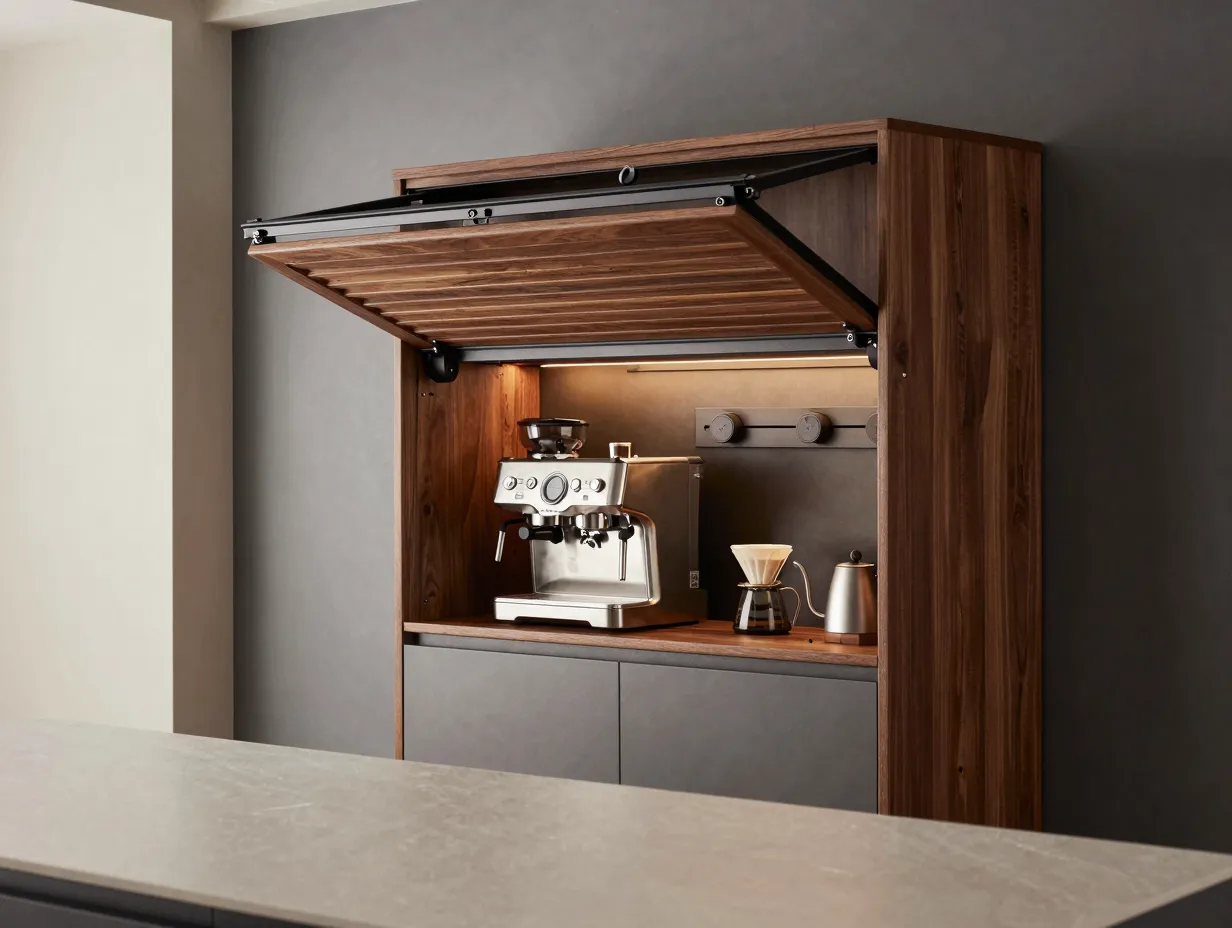
If your espresso machine, coffee grinder, or pour-over kettle lives on the counter, it’s eating valuable workspace and collecting dust. An appliance garage — a cabinet section with a roll-up or tambour door — hides bulky machines while keeping them plugged in and ready to use.
How it works:
- The roll-up door slides up and back into the cabinet when open
- Your appliance stays inside, plugged into an outlet inside the cabinet
- When you’re done brewing, roll the door down — countertop is clear
Many kitchen designers now build appliance garages into corner cabinet designs as a standard feature [2]. If you’re retrofitting, you can purchase roll-up door kits that fit inside existing cabinets for around $80–$150.
Appliance garage sizing guide:
| Appliance | Minimum Width Needed | Minimum Height Needed |
|---|---|---|
| Drip | 12″ | 14″ |
| Espresso machine | 14″–18″ | 16″–18″ |
| Coffee grinder | 8″–10″ | 14″ |
| Pour-over kettle | 8″ | 12″ |
Make sure your cabinet has an electrical outlet inside — or hire an electrician to add one. This is the single biggest investment on this list, but it delivers the most dramatic transformation.
6. Use Tiered Risers for Vertical Shelf Space
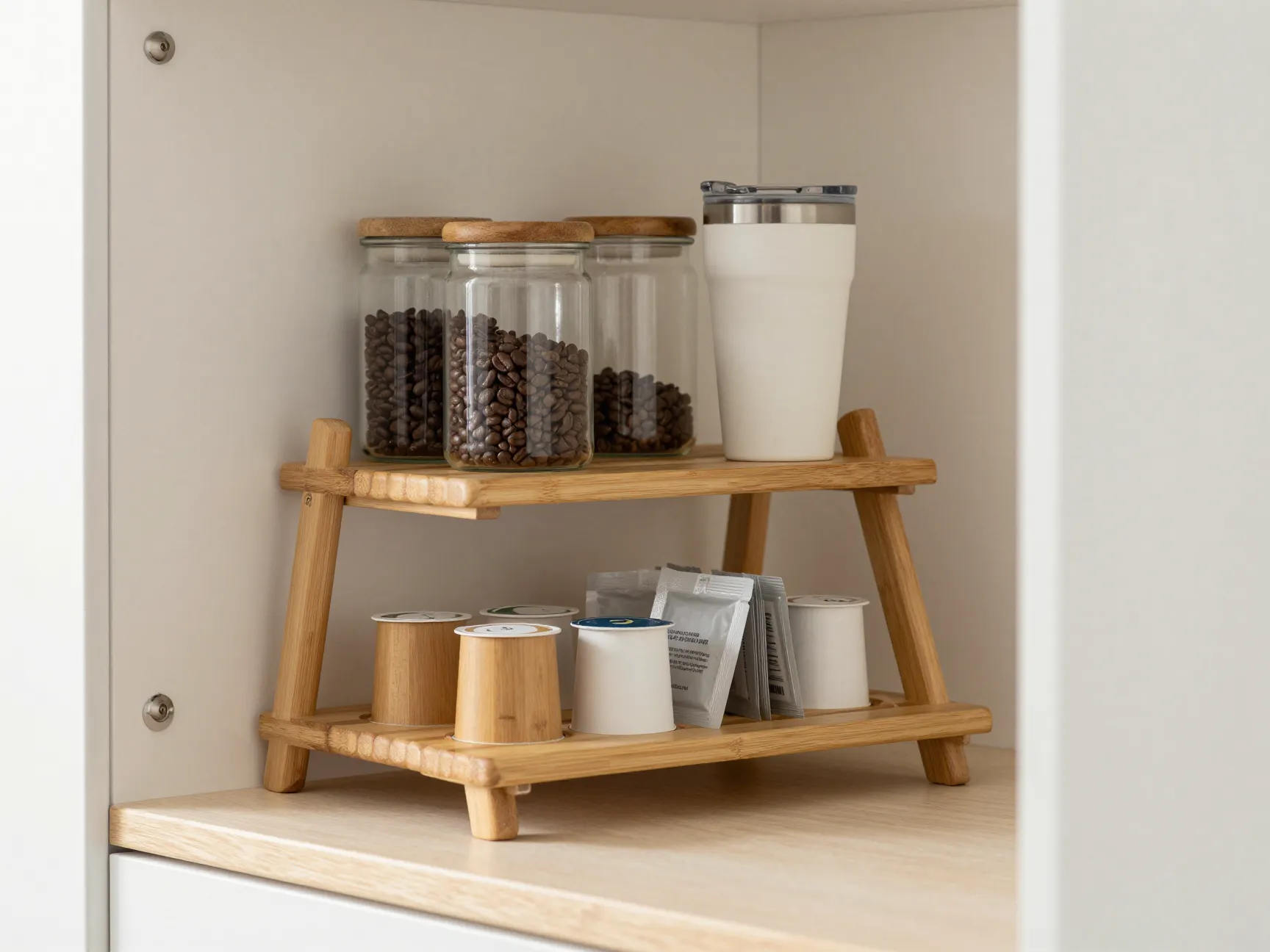
Most cabinet shelves are set at a fixed height, which means there’s a lot of wasted air space between your items and the shelf above. Tiered risers (also called shelf risers or step organizers) use that vertical space to create two levels of storage on a single shelf.
Best uses for tiered risers in a coffee cabinet:
- Front tier: daily pods, sugar packets, small jars
- Back tier: backup supplies, specialty beans, travel mugs
Bamboo and acrylic risers are the most popular options in 2026 because they’re durable, easy to clean, and look polished. A good two-tier riser typically costs $15–$25 and requires zero installation.
🌿 Sustainability note: Bamboo risers are a renewable material choice that’s both stylish and eco-conscious — a growing priority for home organization shoppers.
For a cohesive look, match your riser material to your other cabinet organizers. If you’re using bamboo lazy Susans, go with bamboo risers. Consistency in materials makes even a small cabinet feel intentional and designed [3].
7. Label Everything with a Consistent System
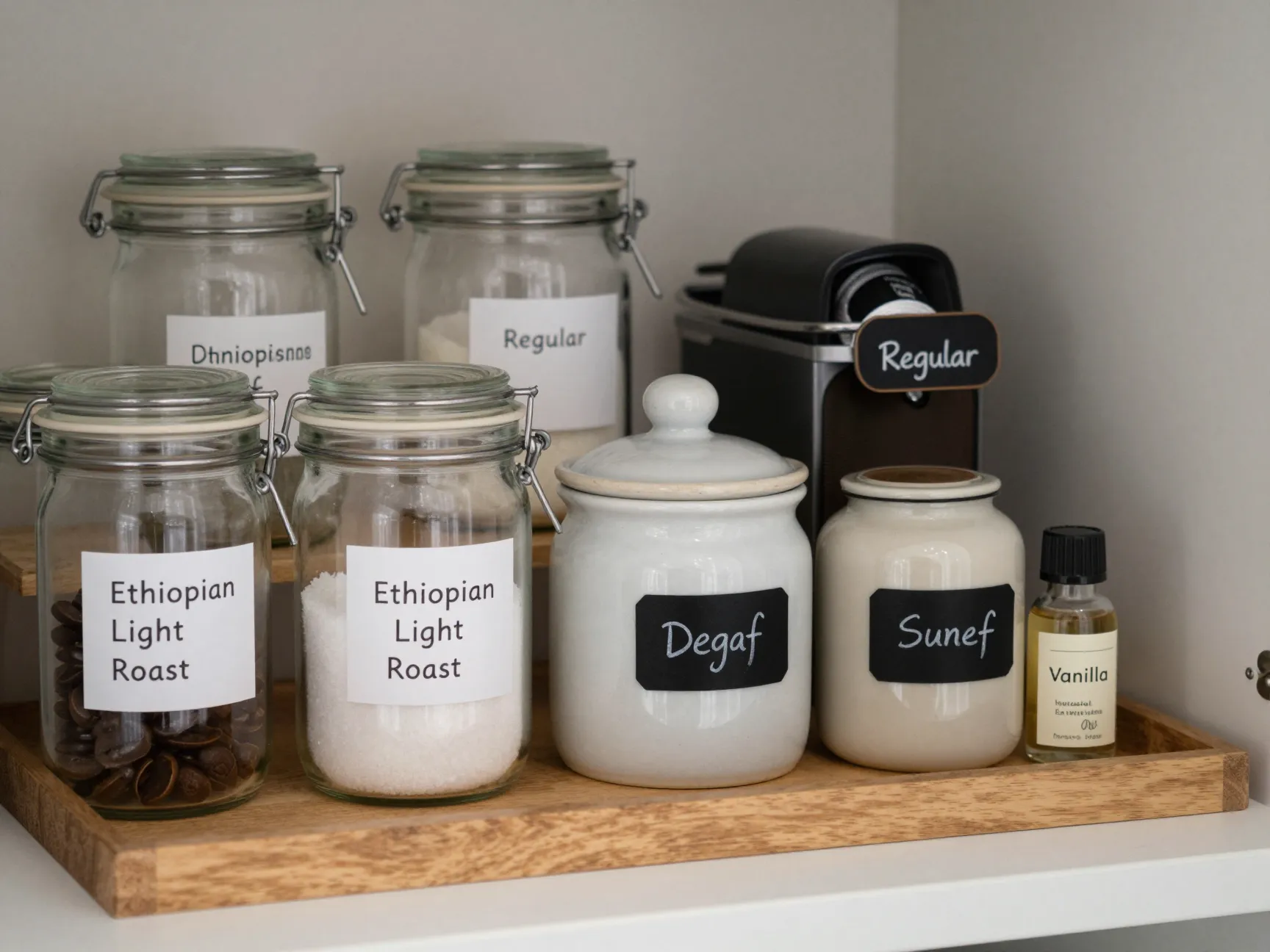
Organization without labeling is just tidying. Labels are what transform a clean cabinet into a system that stays clean — because everyone in the household knows exactly where things go.
Labeling options for a coffee corner cabinet:
- Chalkboard labels — Reusable, stylish, easy to update when you switch coffee brands
- Printed adhesive labels — Clean, professional look; use a label maker for consistency
- Embossed leather tags — Premium feel; great for open-shelf displays
- Magnetic labels — Ideal for metal containers or tins
What to label:
- Coffee bean varieties (origin, roast level)
- Pod bins (regular, decaf, flavored)
- Sweetener jars (sugar, stevia, monk fruit)
- Syrup bottles (flavor name)
- Drawer sections (everyday mugs, travel mugs)
A consistent labeling system also helps guests find what they need without asking — a small but meaningful hospitality detail. bar design guides consistently list clear labeling as one of the top habits of people who maintain organized coffee stations long-term [2].
8. Design a Dedicated Coffee “Zone” with Matching Containers
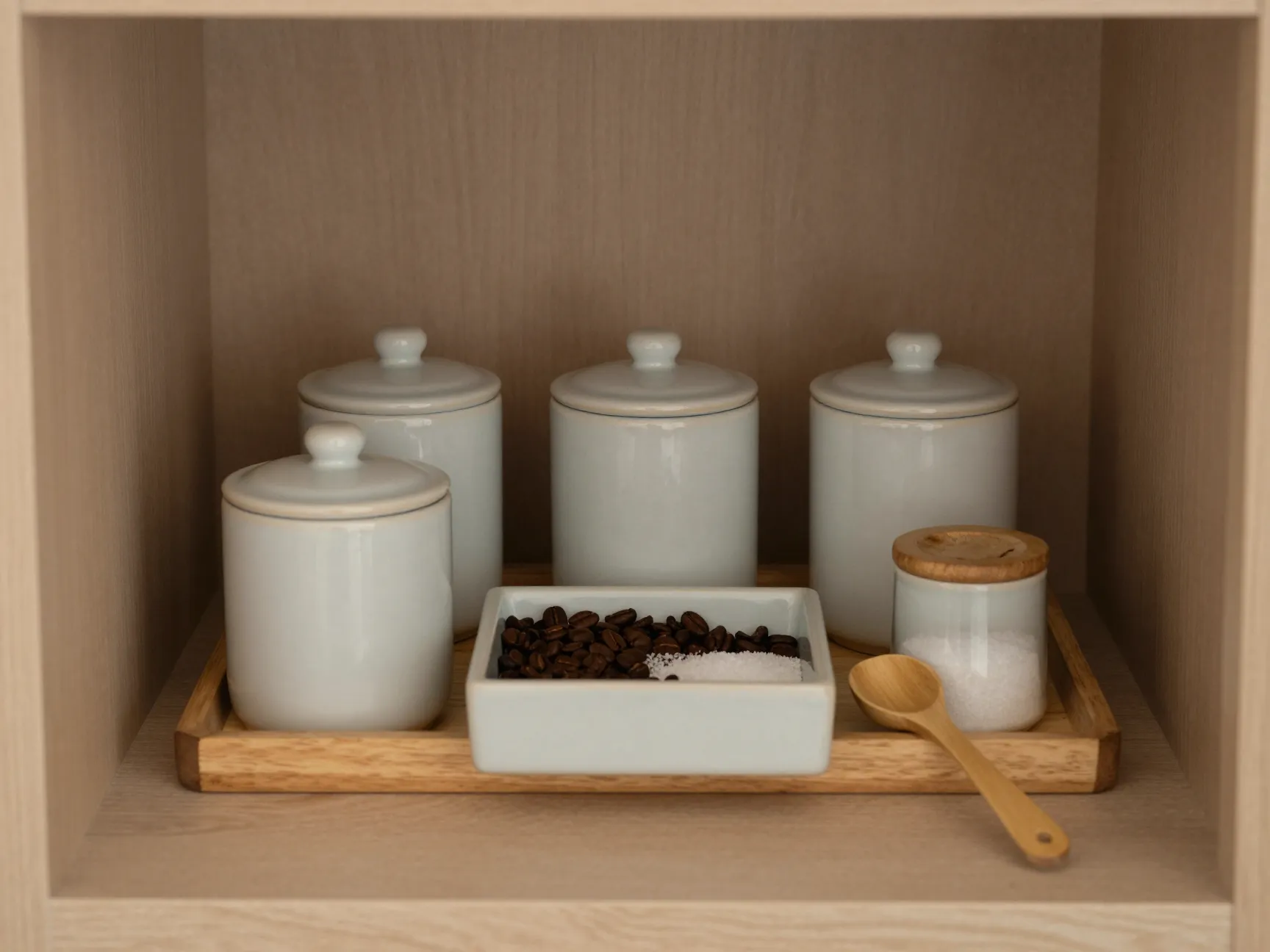
The final and most visually impactful solution is to unify your entire coffee corner cabinet with a matching container system. This means decanting your , pods, sugar, and accessories into coordinated containers that look intentional rather than collected.
A complete matching container set for a coffee cabinet typically includes:
- 1–2 airtight canisters for whole beans or ground coffee
- A pod holder or drawer insert for K-Cups/Nespresso
- Small glass or ceramic jars for sugar, sweetener, and salt (yes, a pinch of salt in coffee is a real thing)
- A small tray or riser to group items visually
Popular container materials in 2026:
| Material | Pros | Cons |
|---|---|---|
| Glass | Airtight, visible contents, elegant | Heavy, breakable |
| Ceramic | Beautiful, blocks light (good for beans) | Opaque, can’t see contents |
| Durable, modern look | Can dent, limited visibility | |
| BPA-free plastic | Lightweight, affordable | Less premium aesthetic |
💬 “Matching containers are the visual anchor of any organized coffee station — they signal that the space was designed, not just assembled.” — [Pure Decor Lab][3]
Pair your containers with a small tray or cutting board to define the “coffee zone” visually. This creates a clear boundary that makes the cabinet feel curated, even if the rest of your kitchen is still a work in progress.
Quick-Start Checklist: Build Your Coffee Corner Cabinet Today
Use this checklist to get started without feeling overwhelmed:
- [ ] ☕ Clear out your corner cabinet completely
- [ ] 📏 Measure interior dimensions (width, depth, height per shelf)
- [ ] 🔄 Install a lazy Susan turntable (Solution 1 — start here)
- [ ] 📦 Add a tiered riser to your main shelf (Solution 6)
- [ ] 🏷️ Label all containers and zones (Solution 7)
- [ ] 🎨 Choose a matching container set (Solution 8)
- [ ] 🔧 Plan advanced upgrades (pull-out shelves, appliance garage) for Phase 2
Common Mistakes to Avoid
Even with the best intentions, coffee station organization can go sideways. Here are the most common pitfalls:
❌ Overloading the cabinet — More storage solutions don’t always mean more storage. Leave breathing room so you can actually see and access what’s inside.
❌ Ignoring the outlet situation — If your coffee machine needs to be plugged in, plan for cord management before you organize. A cord running out of a closed cabinet door defeats the whole purpose.
❌ Buying organizers before measuring — Always measure your cabinet interior first. A lazy Susan that’s 2 inches too wide is useless.
❌ Mixing too many materials — Bamboo, acrylic, wire, and wicker all in one cabinet looks chaotic. Pick two materials max and stick with them.
❌ Forgetting maintenance — Even the most organized cabinet needs a quarterly reset. Set a calendar reminder to declutter, wipe down shelves, and check for expired products.
Conclusion: Your Caffeine Bliss Starts in the Corner
The 8 Clever Coffee Corner Cabinet Solutions for Organized Caffeine Bliss covered in this guide prove that you don’t need a bigger kitchen or a bigger budget to create a coffee station you’ll love. You just need a plan.
Start with the foundational upgrades — a lazy Susan, a tiered riser, and a labeling system — and you’ll see an immediate difference in how your mornings feel. Then layer in the more advanced solutions (pull-out shelves, an appliance garage, matching containers) as your budget and motivation allow.
Your actionable next steps:
- This week: Clear your corner cabinet and take measurements.
- This weekend: Order a lazy Susan turntable and a set of matching containers.
- This month: Implement labeling and add a tiered riser system.
- This quarter: Plan your appliance garage or pull-out shelf upgrade.
A well-organized coffee corner cabinet isn’t just about aesthetics — it’s about starting every day with less friction and more joy. That’s a return on investment that pays off every single morning. ☕
References
[1] Creative Coffee Station Ideas To Perk Up Your Space – https://blog.thertastore.com/creative-coffee-station-ideas-to-perk-up-your-space/
[2] Home Coffee And Designs – https://nerotapware.com.au/design-hub/home-coffee-bar-ideas-and-designs
[3] Coffee Bar Cabinet Ideas – https://puredecorlab.com/coffee-bar-cabinet-ideas/
[4] lemon8-app – https://www.lemon8-app.com/spaceaid_official/7463379209181200902?region=us