
Flat White vs Cafe Latte: 8 Key Differences You Need to Taste
Only 6 ounces of liquid separates two of the world’s most ordered — yet that small gap creates a completely different experience in your cup. The debate around vs Cafe Latte: 8 Key Differences You Need to Taste is one that baristas, coffee enthusiasts, and casual drinkers have been having for decades. Both drinks are espresso-based, both use steamed milk, and both look deceptively similar on a café menu. But order the wrong one and you might end up with a drink that’s too milky, too strong, or just not what you were craving. In 2026, with culture growing faster than ever, knowing exactly what sets these two drinks apart isn’t just trivia — it’s how you get your perfect cup every single time.
Disclosure: This post contains affiliate links. As an Amazon Associate, we earn from qualifying purchases, and at no extra cost to you.

Key Takeaways ☕
- A flat white is smaller and stronger — typically 5–6 oz with a double espresso shot, compared to a latte’s 8–16 oz with often just a single shot.
- Microfoam is the defining difference — flat whites use thin, fully integrated foam (2–3mm), while lattes have a thicker, airier foam layer (~1cm) sitting on top.
- Flavor intensity varies significantly — flat whites deliver bold, roast-forward espresso flavor; lattes are creamier and milk-dominant.
- Lattes are better for flavored syrups — their higher milk content balances added sweetness more effectively.
- Caffeine and calories differ — a flat white packs roughly 128–136mg of caffeine in a smaller, lower-calorie serving.
What Are These Two Drinks, Really?
Before diving into the Flat White vs Cafe Latte: 8 Key Differences You Need to Taste, it helps to understand where each drink comes from.
The cafe latte (Italian for “milk coffee“) has roots in Italian and became a global staple through American coffee chains in the 1980s and 1990s. It’s designed to be approachable — a gentle introduction to espresso for people who prefer a milkier, softer drink.
The flat white, on the other hand, originated in Australia and New Zealand in the 1980s. It was created as a response to the overly frothy cappuccino — a way to get a stronger, cleaner espresso-milk drink without all the foam. It’s the choice of coffee drinkers who want to taste their espresso, not just hint at it.
💬 “The flat white is what happens when a coffee lover gets tired of milk getting in the way of the espresso.” — Common sentiment among specialty baristas
Both drinks share the same core ingredients: espresso and steamed milk. Everything else — size, ratio, foam, flavor — is where they diverge.
Flat White vs Cafe Latte: 8 Key Differences You Need to Taste
Let’s break down every meaningful difference between these two drinks, one by one.
1. Espresso-to-Milk Ratio

The ratio of espresso to milk is the most fundamental difference between a flat white and a latte.
A flat white uses approximately a 1:2 or 1:3 ratio of espresso to milk. A cafe latte leans much further toward milk, sitting at a 1:3 to 1:5 ratio — sometimes even higher in larger sizes. In practical terms, a flat white contains roughly 50% as much milk as a latte [1][2][4].
| Drink | Espresso-to-Milk Ratio | Milk Volume |
|---|---|---|
| Flat White | 1:2 to 1:3 | Lower |
| Cafe Latte | 1:3 to 1:5 | Higher |
This ratio is what drives nearly every other difference on this list. More milk means a softer flavor, a larger cup, and a different foam structure. Less milk means a bolder, more concentrated drink.
2. Serving Size

Cup size is one of the easiest ways to tell these two drinks apart before you even take a sip.
A flat white is served in a 5–6 ounce (150–180ml) cup — roughly the size of a small ceramic tulip cup at a specialty café. A cafe latte, by contrast, ranges from 8–16 ounces (240–480ml), and many coffee chains serve them even larger [2].
That size difference isn’t just aesthetic. It changes how long the drink stays warm, how much caffeine you’re consuming per sip, and how filling the drink feels. If you’re used to a large latte and you order a flat white expecting the same volume, you’ll be surprised by how quickly it disappears.
🔑 Quick tip: If you see a drink served in a small, wide ceramic cup at a café, it’s almost certainly a flat white.
3. Number of Espresso Shots

This is where the flat white quietly wins the caffeine race — despite being the smaller drink.
A flat white typically uses a double shot of espresso, while a cafe latte often uses just a single shot [1]. Some larger lattes (12oz or 16oz) do include a double shot, but the standard preparation at most cafés starts with one.
This means a flat white delivers more espresso in a smaller package. The result is a drink that feels more intense and concentrated — which is exactly the point.
💡 Did you know? Because of its double shot in a small cup, a flat white can actually contain more caffeine per ounce than a latte, even though the total volume is much smaller.
4. Foam Texture and Thickness

Ask any trained barista and they’ll tell you: the foam is everything.
A flat white uses microfoam — milk that has been steamed to a silky, velvety consistency with tiny, uniform bubbles fully integrated throughout the drink. The foam layer is just 2–3mm thick, and it blends seamlessly into the espresso rather than sitting on top [2].
A cafe latte has a more distinct foam layer of approximately 1cm thick, with a lighter, airier texture that sits visibly on the surface [2]. The foam in a latte is intentional — it creates that classic layered look and adds a creamy mouthfeel at the top of each sip.
| Feature | Flat White | Cafe Latte |
|---|---|---|
| Foam Type | Microfoam (velvety) | Lighter, airier foam |
| Foam Thickness | 2–3mm | ~1cm |
| Foam Integration | Fully blended | Sits on top |
This difference in foam also affects how looks. Flat whites are actually a favorite canvas for skilled baristas because the thin, integrated microfoam allows for more precise and detailed designs.
5. Flavor Profile
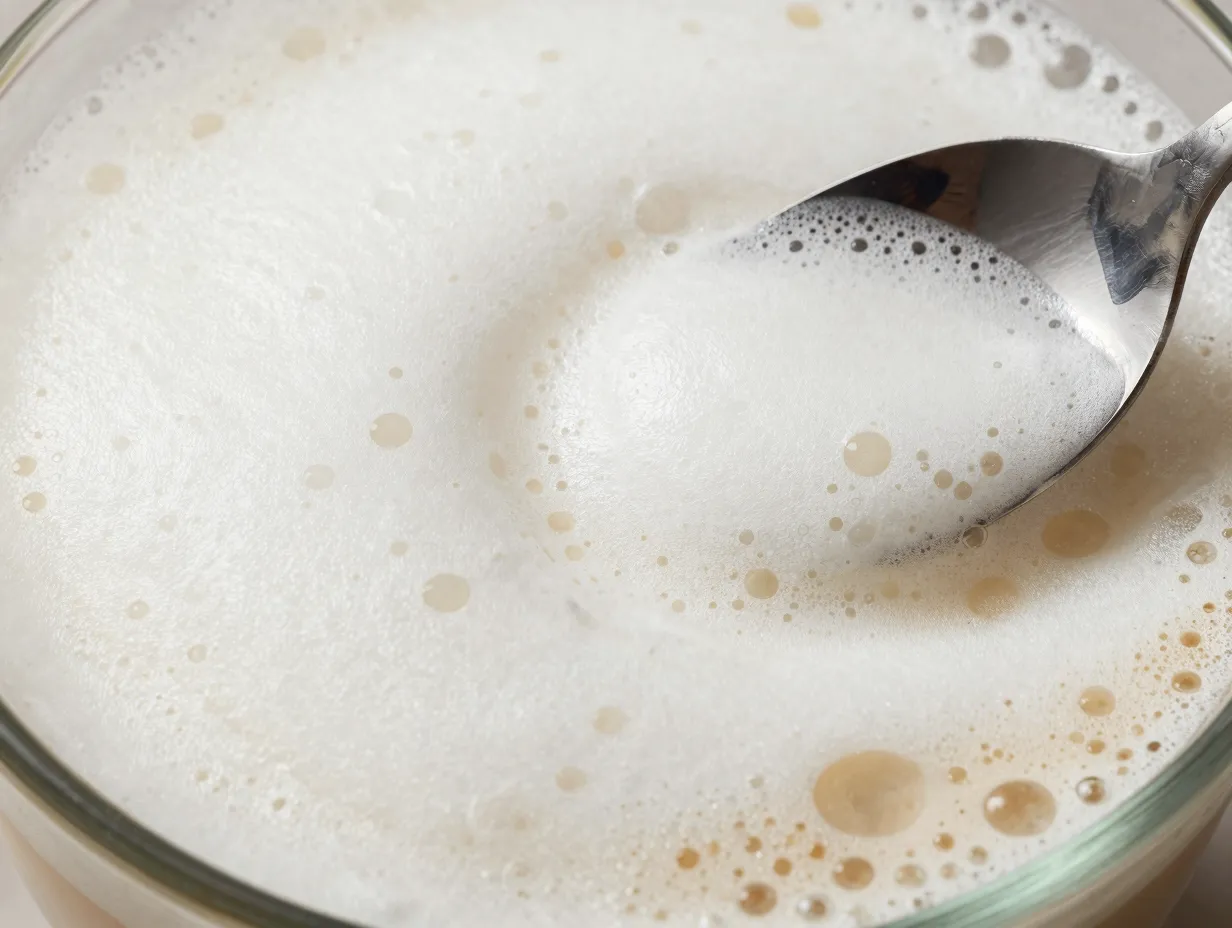
This is the difference you’ll feel most immediately on your palate.
A flat white delivers a stronger, bolder espresso flavor with pronounced roast notes. Because there’s less milk to soften the espresso, the natural bitterness, acidity, and complexity of the coffee bean shine through [1][2].
A cafe latte offers a milder, creamier taste with milk-dominant sweetness and a softer espresso presence [1][2]. The espresso is still there, but it plays a supporting role rather than taking center stage.
🎯 Who should order which?
- Love the taste of coffee itself? → Flat white
- Prefer a smoother, gentler drink? → Cafe latte
- New to ? → Cafe latte is the more approachable starting point
The flavor difference also means that the quality of the espresso matters much more in a flat white. With less milk to hide behind, any flaws in the shot — over-extraction, stale beans, poor grind — will be immediately noticeable.
6. Caffeine Content

Both drinks use espresso, but the caffeine numbers tell an interesting story.
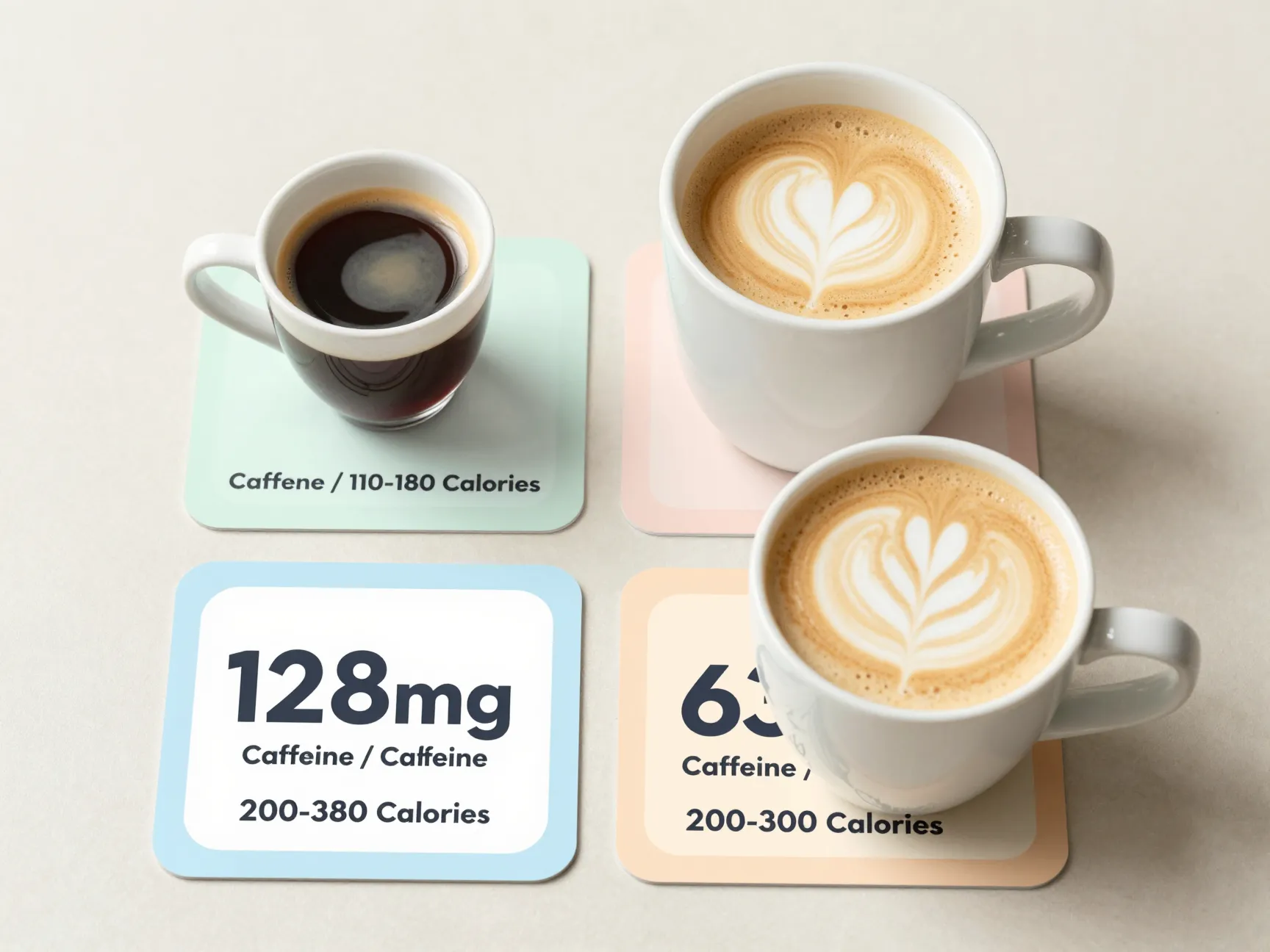
A standard flat white (5–6oz with whole milk) contains approximately 128–136mg of caffeine from its double shot [5]. A standard single-shot latte typically contains around 63–75mg of caffeine — though a double-shot latte would bring it closer to the flat white’s level.
| Drink | Shots | Approximate Caffeine |
|---|---|---|
| Flat White (5–6oz) | Double | 128–136mg |
| Cafe Latte (8oz, single shot) | Single | 63–75mg |
| Cafe Latte (12oz, double shot) | Double | 128–136mg |
The key takeaway here is that a flat white packs more caffeine into a smaller, lower-calorie package than a standard single-shot latte. If you’re watching your calorie intake but still want a solid , the flat white has a clear advantage.
7. Caloric Content
Fewer ounces of milk means fewer calories — it’s simple math.
A flat white in a standard 5–6oz serving with whole milk contains around 110–180 calories [5]. A cafe latte in a larger 12–16oz serving with whole milk can easily reach 200–300+ calories, depending on the milk type and size.
🥛 Milk type matters too:
- Whole milk → highest calories, creamiest texture
- 2% milk → moderate calories, slightly thinner
- Oat milk → similar calories to whole milk, naturally sweeter
- Almond milk → lower calories, nuttier flavor
If you’re choosing between the two purely on caloric grounds, the flat white wins by default — mostly because it’s simply a smaller drink. That said, swapping to a lower-fat milk in a latte can close that gap significantly.
8. Suitability for Flavored Syrups and Add-Ins
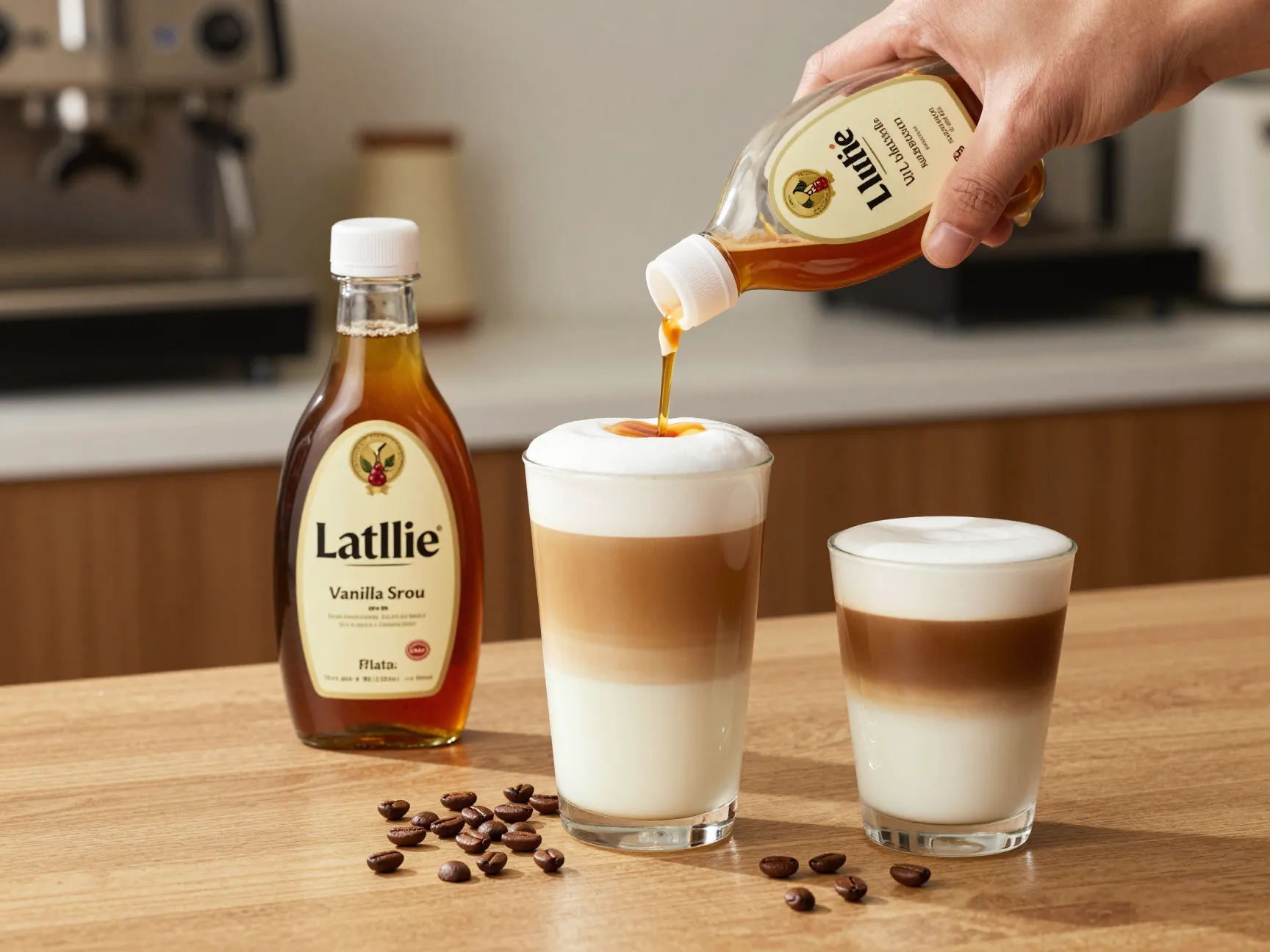
This last difference is one that coffee shop menus make very obvious — but most people never think about why.
Cafe lattes are far better suited for flavored syrups like vanilla, caramel, hazelnut, or seasonal specials. The higher milk content acts as a buffer, balancing the sweetness of the syrup without overwhelming the drink [3][4]. A 12oz with two pumps of syrup tastes harmonious because there’s enough milk to absorb and integrate the flavor.
Add the same amount of syrup to a flat white and the result is often cloyingly sweet or unbalanced — the smaller volume and stronger espresso don’t leave much room for added flavors [3][4].
💬 “Flat whites are for purists. Lattes are for customizers.” — A useful way to think about the two drinks
This is also why most coffee chains’ seasonal and signature drinks are built on a latte base rather than a flat white. The latte’s larger, milkier canvas is simply more versatile for creative flavor combinations.
A Full Side-by-Side Comparison
Here’s a complete reference table summarizing all 8 differences:
| Feature | Flat White | Cafe Latte |
|---|---|---|
| Espresso-to-Milk Ratio | 1:2 to 1:3 | 1:3 to 1:5 |
| Serving Size | 5–6 oz (150–180ml) | 8–16 oz (240–480ml) |
| Espresso Shots | Double (standard) | Single (standard) |
| Foam Thickness | 2–3mm microfoam | ~1cm airy foam |
| Flavor Profile | Bold, roast-forward | Mild, creamy, milk-dominant |
| Caffeine (standard) | 128–136mg | 63–75mg (single shot) |
| Calories (whole milk) | 110–180 | 200–300+ |
| Best for Syrups? | ❌ Not ideal | ✅ Yes |
Which One Should You Order?
Now that you know the full breakdown of Flat White vs Cafe Latte: 8 Key Differences You Need to Taste, the choice comes down to what you actually want from your coffee experience.
Choose a flat white if you:
- Want a stronger, more espresso-forward drink
- Prefer a smaller, more concentrated cup
- Care about the quality and origin of the coffee itself
- Are watching your calorie intake but still want a caffeine boost
- Appreciate fine microfoam and precise latte art
Choose a cafe latte if you:
- Prefer a milder, creamier drink
- Want a larger cup to sip over time
- Like adding flavored syrups or customizing your drink
- Are newer to espresso-based coffee
- Enjoy the classic layered look of a frothy top
There’s no wrong answer here. Both drinks are excellent when made well. The “right” choice is simply the one that matches your mood, your palate, and your morning (or afternoon) needs.
How to Make Each Drink at Home
You don’t need a professional espresso machine to approximate both drinks at home, though a decent helps significantly.
For a flat white:
- Pull a double shot of espresso into a small 5–6oz cup.
- Steam whole milk to approximately 60–65°C (140–150°F), aiming for a silky, glossy texture with minimal large bubbles.
- Pour the milk slowly over the espresso, keeping the foam integrated rather than piling it on top.
For a cafe latte:
- Pull a single or double shot of espresso into a larger 8–12oz cup.
- Steam milk to the same temperature, but allow slightly more air to create a thicker foam layer.
- Pour the milk over the espresso, letting the foam settle on top naturally.
🔑 Pro tip: The key to a great flat white at home is the milk steaming technique. Aim for microfoam that looks like wet paint — smooth, shiny, and pourable.
Common Myths Debunked
Myth 1: “A flat white is just a small latte.”
Not quite. The difference isn’t just size — it’s the ratio, the foam technique, and the number of espresso shots. A small latte is still made with latte proportions. A flat white is a distinct preparation [6].
Myth 2: “Lattes have more caffeine because they’re bigger.”
Actually, a standard single-shot latte has less caffeine than a flat white, despite being larger. The flat white’s double shot more than compensates for its smaller size [1][5].
Myth 3: “Flat whites are an Australian invention, so they’re not widely available.”
Flat whites are now on the menu at major coffee chains globally, including Starbucks and Costa, and are standard at virtually every specialty café in 2026.
Myth 4: “The foam difference doesn’t really matter.”
The foam texture dramatically affects mouthfeel, temperature consistency, and how the drink tastes from first sip to last [7].
Conclusion: Your Perfect Cup Starts With Knowing the Difference
The gap between a flat white and a cafe latte is small in ingredients but significant in experience. After exploring Flat White vs Cafe Latte: 8 Key Differences You Need to Taste, the takeaway is clear: these are two drinks built for different coffee moments.
The flat white is for when you want your espresso to lead — bold, concentrated, and precise. The latte is for when you want comfort, volume, and versatility. Neither is better in an absolute sense. Both are worth ordering, worth making at home, and worth understanding deeply.
Here are your actionable next steps:
- Order both drinks back-to-back at a quality specialty café to taste the differences firsthand — no article can replace direct experience.
- Ask your barista about their espresso-to-milk ratio and foam technique — a good barista will love the question.
- Experiment at home with milk steaming to understand how foam texture changes the drink.
- Try a flat white with single-origin espresso to fully appreciate how the smaller milk volume lets the coffee’s flavor shine.
- Use a latte as your base the next time you want to try a flavored syrup or seasonal special.
The best coffee drink is always the one you understand well enough to order — or make — exactly the way you like it. ☕
References
[1] Difference Between Latte And Flat White – https://lansecafe.com.au/blogs/news/difference-between-latte-and-flat-white
[2] Flat White Vs Latte The Complete Guide To Coffees Most Popular Milk Drinks – https://www.everydaypeoplecoffeeandtea.com/blogs/news/flat-white-vs-latte-the-complete-guide-to-coffees-most-popular-milk-drinks
[3] Flat White Vs Latte – https://greenbrrew.com/blogs/lifestyle/flat-white-vs-latte
[4] Latte Vs Flat White Every Difference You Need To Know – https://coffeebros.com/blogs/coffee/latte-vs-flat-white-every-difference-you-need-to-know
[5] Beginners Guide To The Difference Between Flat White Latte And Cappuccino – https://flinderslanecafe.com.au/blogs/news/beginners-guide-to-the-difference-between-flat-white-latte-and-cappuccino
[6] The Ultimate Guide To Choosing Between A Flat White And A Latte – https://kiboko.coffee/blogs/news/the-ultimate-guide-to-choosing-between-a-flat-white-and-a-latte
[7] Flat White Vs Latte Vs Cappuccino – https://www.arlafoods.co.uk/brands/arla-cravendale/milky-inspiration/flat-white-vs-latte-vs-cappuccino/