
Flat White Coffee vs Latte: 8 Side-by-Side Comparisons
Only 6% of coffee drinkers can correctly identify the difference between a and a latte when both are placed in front of them — yet these two drinks dominate café menus worldwide. If you’ve ever stared at an ordering board wondering which one to choose, you’re not alone.
Disclosure: This post contains affiliate links. As an Amazon Associate, we earn from qualifying purchases, and at no extra cost to you.
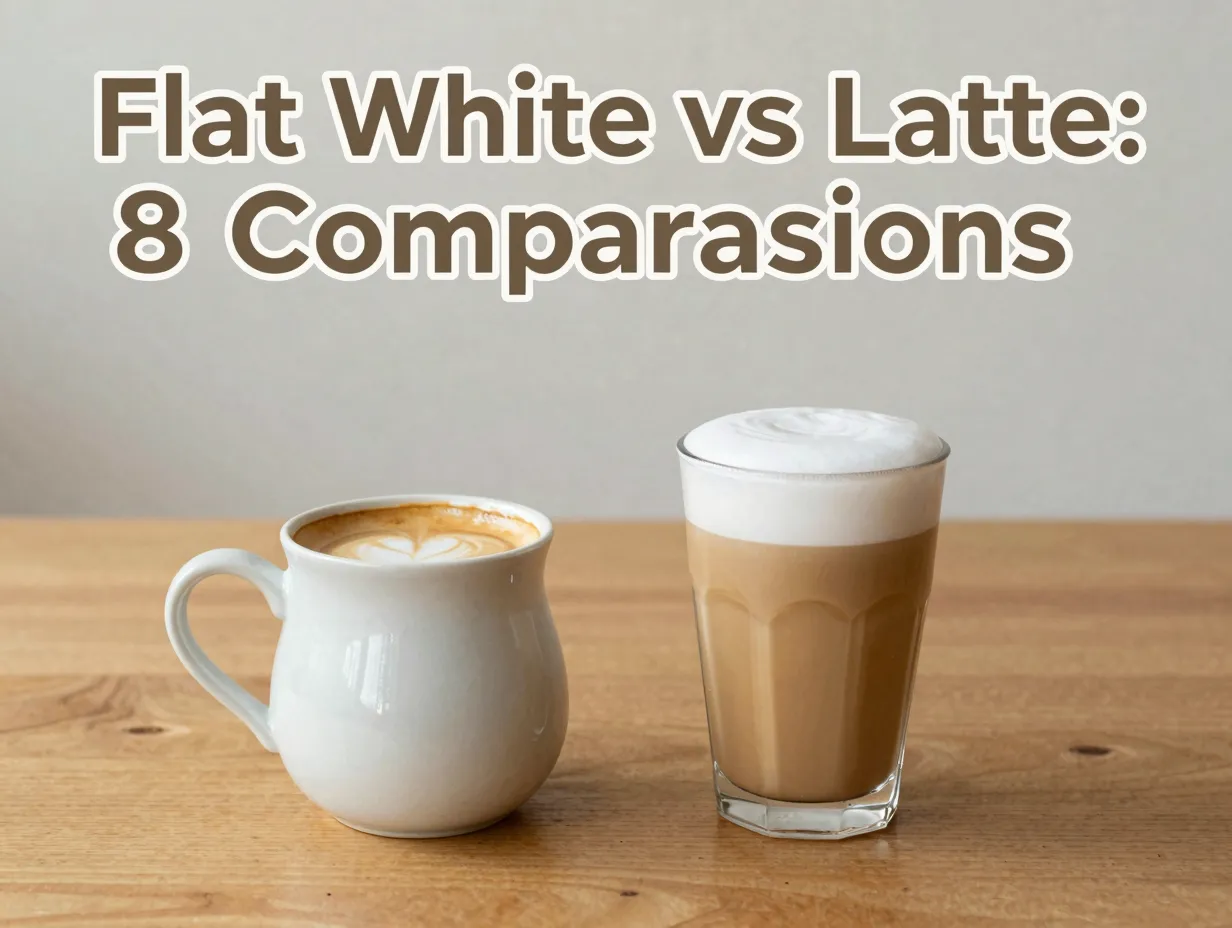
This guide on Flat White Coffee vs Latte: 8 Side-by-Side Comparisons breaks down every meaningful difference between these two beloved . From cup size and to caffeine content and best use cases, I’ll walk you through exactly what sets them apart — so you can order with total confidence in 2026.
Key Takeaways
- ☕ A flat white is smaller and stronger — typically 5–6 oz with a higher espresso-to-milk ratio.
- 🥛 A latte is larger and milder — usually 8–16 oz with more milk and a softer coffee flavor.
- 🫧 Foam texture is a key differentiator: flat whites use silky microfoam, while lattes have a thicker, airier foam layer.
- ⚡ Flat whites generally contain slightly more caffeine (≈136 mg) than standard lattes (≈128 mg).
- 🎯 Your choice should come down to how strong you like your coffee and how long you want to enjoy it.
What Are Flat Whites and Lattes, Anyway?
Before diving into the Flat White Coffee vs Latte: 8 Side-by-Side Comparisons, it helps to know the basics of each drink.
A flat white originated in Australia and New Zealand in the 1980s. It’s built on a double shot of espresso topped with a small amount of velvety, fully integrated microfoam. The result is a compact, intense, creamy drink that puts espresso front and center [2].
A latte — short for , Italian for “” — is one of the most popular espresso drinks in the world. It uses one or two shots of espresso combined with a generous pour of steamed milk and a distinct layer of foam on top. It’s smooth, approachable, and endlessly customizable [3].
Both drinks use espresso and steamed milk. But the way those ingredients are combined — and in what proportions — creates two very different drinking experiences.
Flat White Coffee vs Latte: 8 Side-by-Side Comparisons
1. Serving Size 📏

Flat white: 5–6 oz (150–180 ml)
Latte: 8–16 oz (240–480 ml), often larger
This is the most immediately obvious difference. Pick up a flat white and a latte at any café, and the size gap is hard to miss. A flat white is served in a smaller, tulip-shaped ceramic cup. A latte typically arrives in a tall glass or a larger mug [2].
Why does size matter? Smaller volume means every sip is more concentrated. Larger volume means you’re getting a longer, more leisurely drink.
The size difference isn’t just aesthetic — it directly shapes the milk-to-coffee ratio, the flavor intensity, and even how quickly the drink cools down [3].
| Drink | Typical Size |
|---|---|
| Flat White | 5–6 oz (150–180 ml) |
| Latte | 8–16 oz (240–480 ml) |
2. Milk-to-Espresso Ratio 🥛
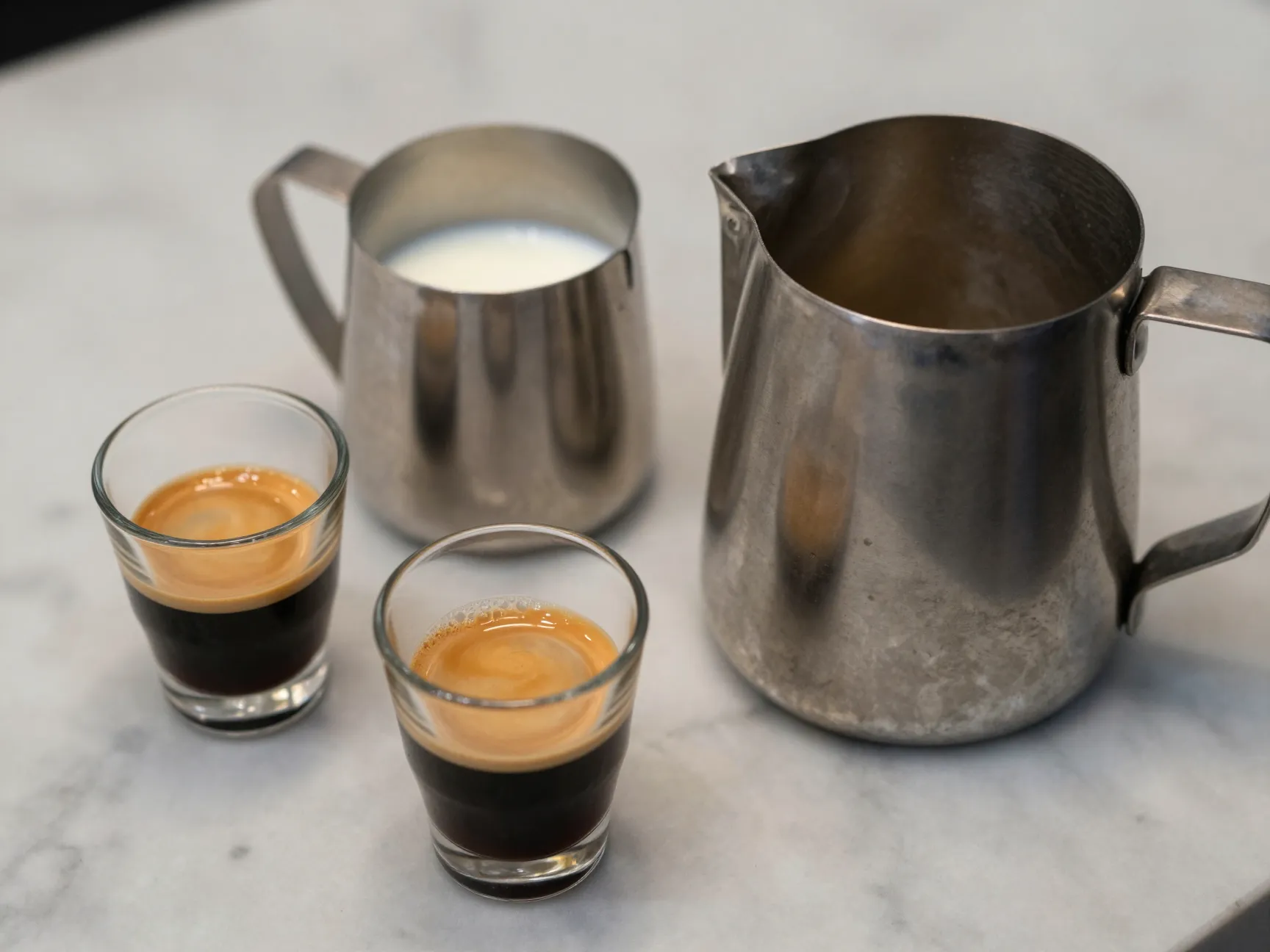
Flat white: ~1:2 to 1:3 (espresso to milk)
Latte: ~1:3 to 1:5 (espresso to milk)
The ratio is where the personality of each drink really lives. A flat white uses a double shot of espresso with relatively little milk, keeping the ratio tight and the coffee flavor dominant. A latte uses more milk relative to espresso, creating a softer, more balanced taste [2].
Think of it this way:
- A flat white is like a bold conversation — direct, expressive, and coffee-forward.
- A latte is like a comfortable chat — easygoing, smooth, and welcoming.
This ratio difference is also why experienced baristas say a flat white demands higher-quality espresso. With less milk to soften the edges, any bitterness or sourness in the shot is far more noticeable [1].
3. Foam Texture 🫧
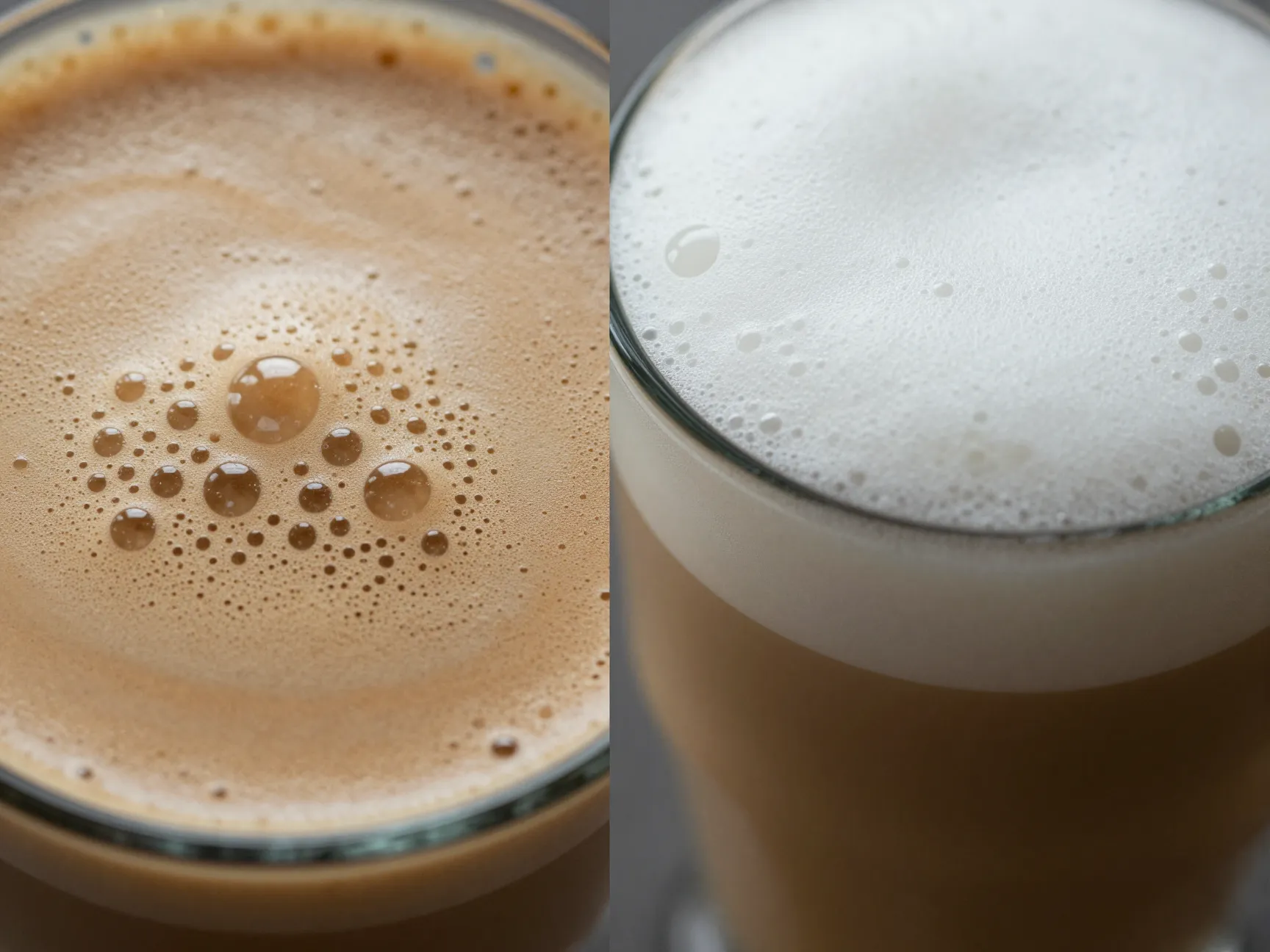
Flat white: Velvety microfoam, 2–3 mm thick, fully integrated
Latte: Distinct foam layer, ~1 cm thick, lighter and airier
Foam texture is arguably the most technical difference between these two drinks — and it’s one that skilled baristas take very seriously.
A flat white uses microfoam: milk that has been steamed to a glossy, paint-like consistency with tiny, uniform bubbles. This microfoam is folded throughout the entire drink rather than sitting on top. The result is a silky, seamless texture from first sip to last [2].
A latte has a more defined foam layer on top — about 1 cm thick. The foam is lighter and airier, with larger bubbles. It sits visibly above the steamed milk rather than blending into it [2].
💡 Pro tip: If you see beautiful on your drink, that’s a sign the barista steamed the milk well. Both drinks can showcase latte art, but the microfoam of a flat white actually makes it slightly easier to achieve fine, detailed designs.
4. Flavor Profile ☕
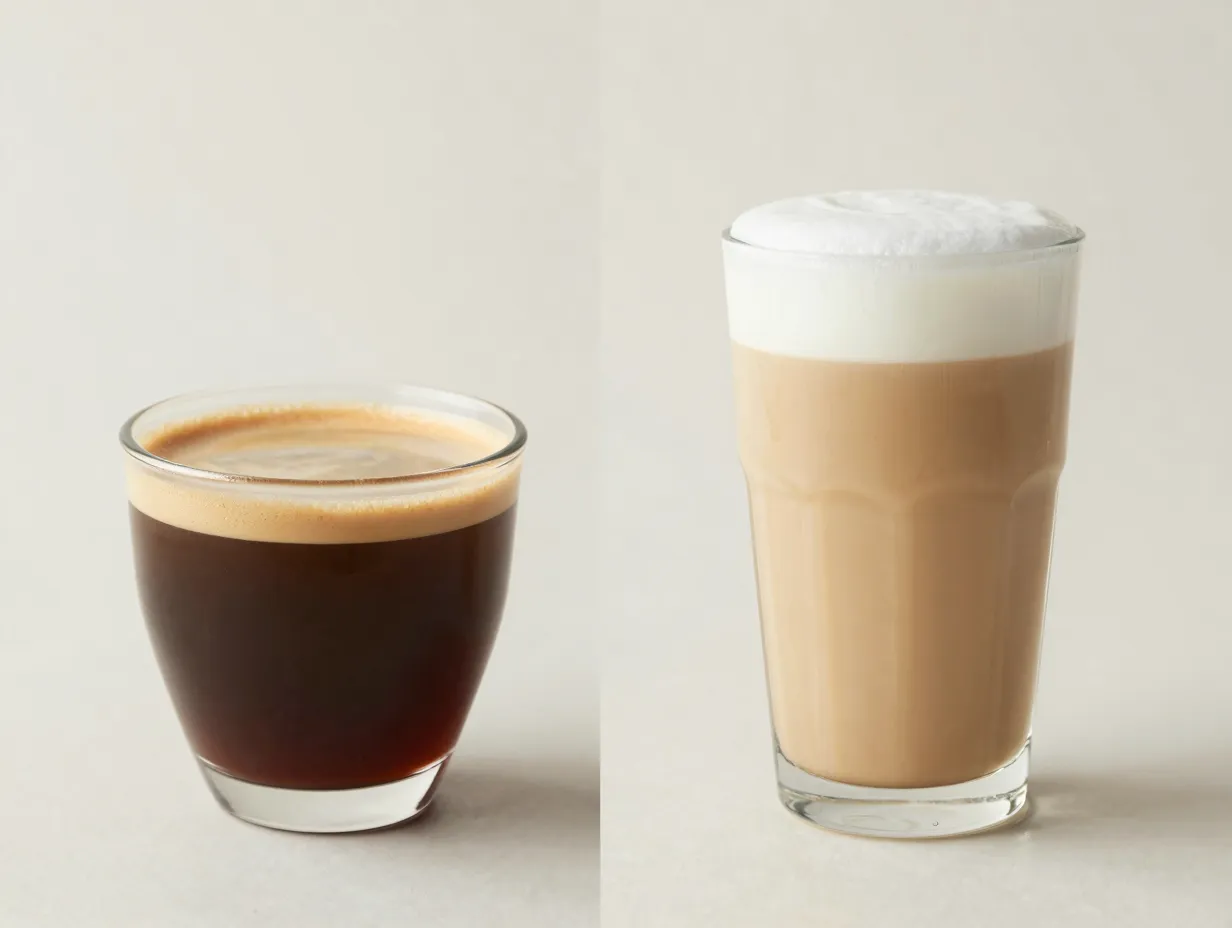
Flat white: Bold, strong, espresso-forward
Latte: Mild, creamy, milk-forward
This comparison comes down to what you want your coffee to taste like.
A flat white delivers a stronger, bolder espresso flavor. Because there’s less milk to dilute the shot, the roasty, complex notes of the espresso shine through clearly. You’ll taste the coffee first, with the milk adding creaminess rather than sweetness [2].
A latte offers a milder, sweeter taste. The higher milk content softens the espresso’s intensity, bringing the natural sweetness of steamed milk to the foreground. The coffee flavor is still present, but it plays a supporting role [2].
| Flavor Dimension | Flat White | Latte |
|---|---|---|
| Espresso Intensity | High | Medium-Low |
| Milk Sweetness | Subtle | Prominent |
| Overall Balance | Coffee-forward | Milk-forward |
| Bitterness | More noticeable | Softened |
5. Caffeine Content ⚡

Flat white: ~136 mg of caffeine
Latte: ~128 mg of caffeine
Here’s a fact that surprises many people: despite being smaller, a flat white typically contains more caffeine than a standard latte [6].
How? It comes down to the espresso base. A flat white almost always uses a double shot of espresso. Many cafés serve lattes with a single shot (especially in smaller sizes), which means less caffeine overall.
That said, caffeine content varies based on:
- ✅ Number of used
- ✅ The coffee bean variety and roast level
- ✅ Extraction time and grind size
- ✅ Cup size ordered
If you order a large 16 oz latte with two shots, the caffeine content will be comparable to or higher than a flat white. But in a standard, default order at most cafés, the flat white edges ahead [6].
6. Caloric Content 🔢
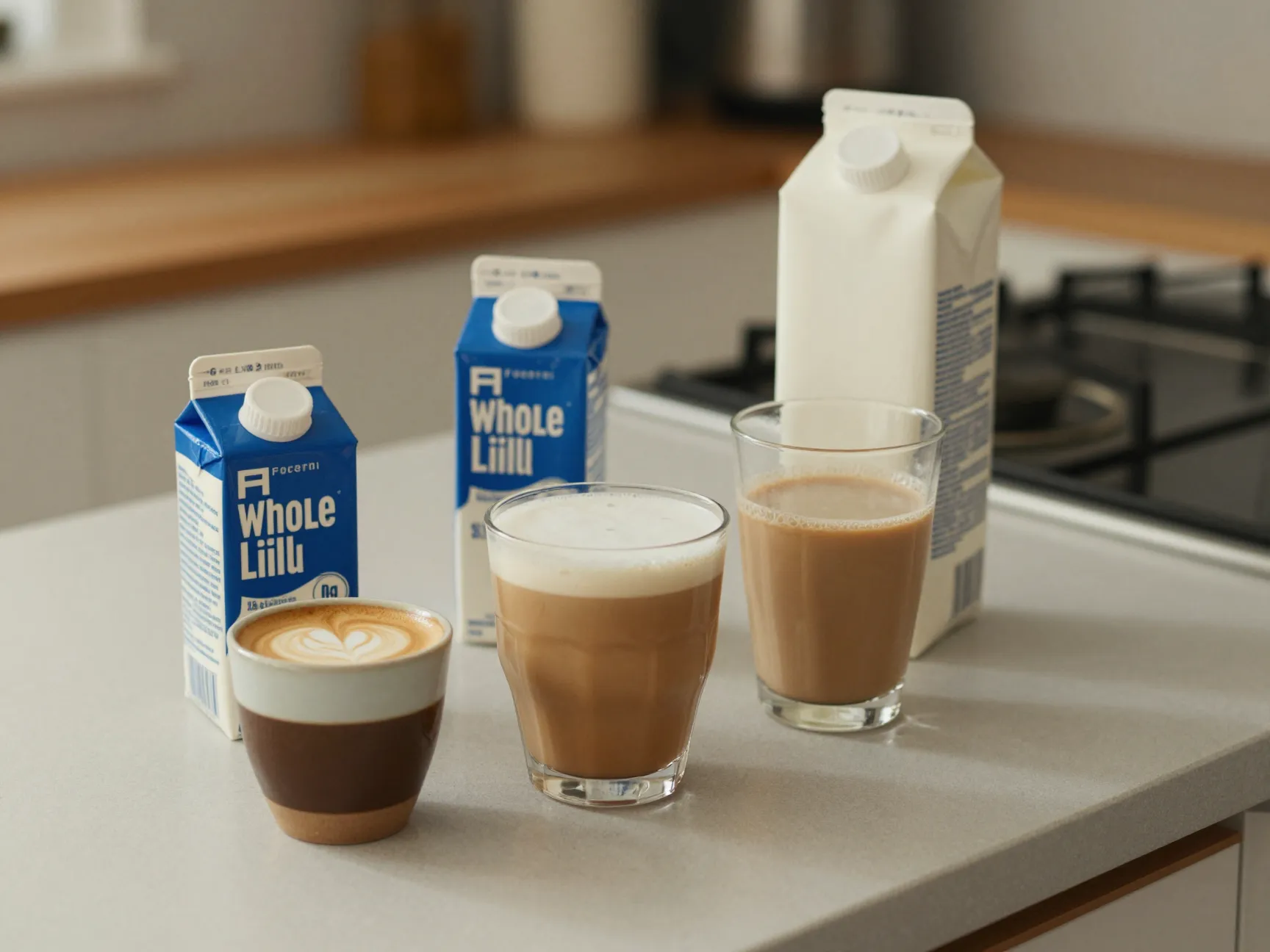
Flat white (6 oz, whole milk): ~120–130 calories
Latte (12 oz, whole milk): ~190–220 calories
Calorie counts reflect the size difference more than anything else. A flat white’s smaller volume means less milk and therefore fewer calories. A latte’s larger serving naturally brings more fat, carbohydrates, and protein [2].
Here’s a quick nutritional breakdown:
| Nutrient | Flat White (6 oz) | Latte (12 oz) |
|---|---|---|
| Calories | 120–130 | 190–220 |
| Fat | 6–7g | 11–12g |
| Carbohydrates | 9–10g | 18–19g |
| Protein | 6–7g | 12–13g |
Important note: These numbers assume whole milk and no added syrups or sweeteners. Switching to oat milk, almond milk, or skim milk will change these figures significantly. Adding flavored syrups to a latte — which is very common — can push the calorie count well above 300 [2].
If you’re watching your calorie intake, a flat white is the more efficient choice: more caffeine and coffee flavor for fewer calories.
7. Mouthfeel and Texture 👄
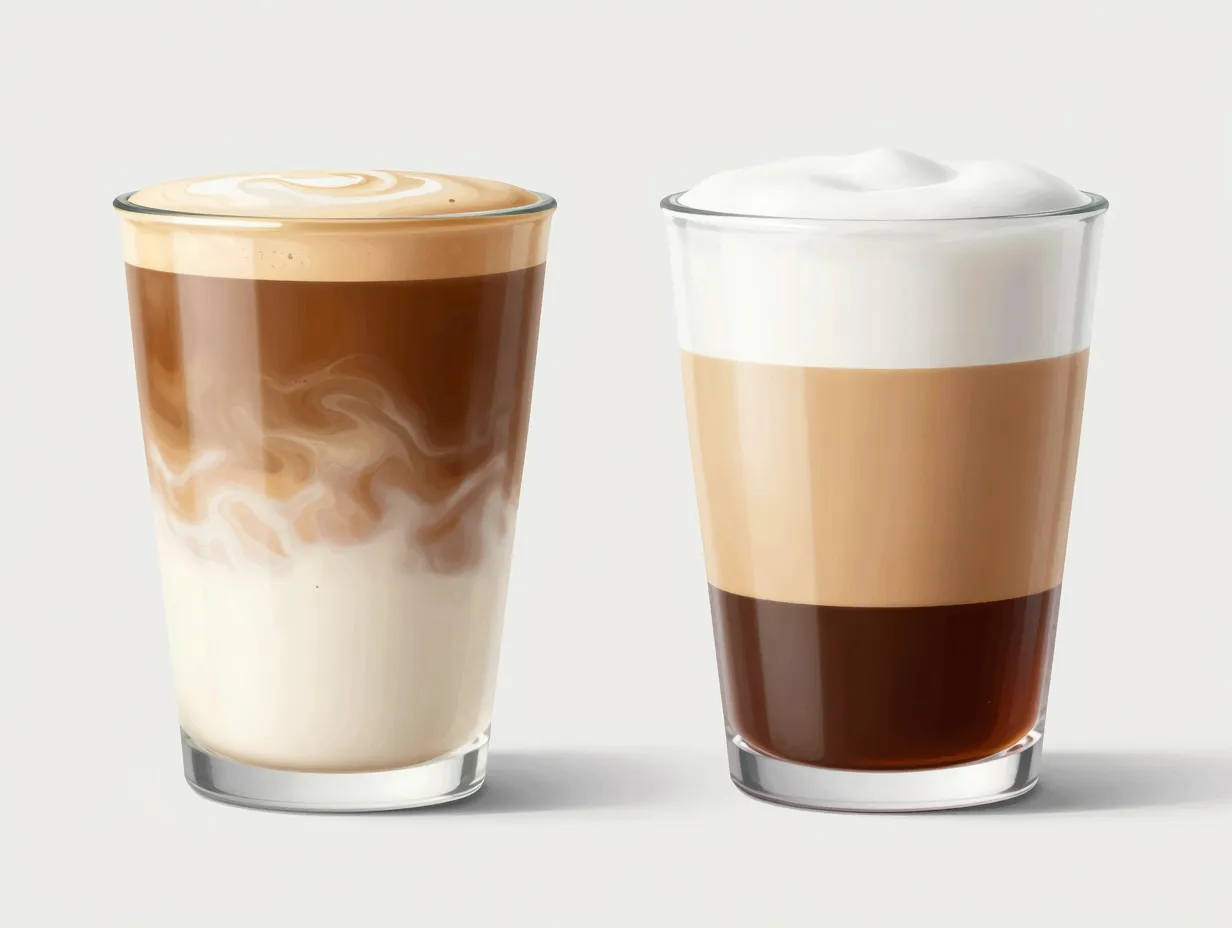
Flat white: Creamy, velvety, espresso-rich
Latte: Milky, smooth, lighter body
Mouthfeel is the sensory experience of drinking — how the liquid feels as it moves across your tongue and throat. It’s often overlooked, but it’s a big part of why people develop strong preferences for one drink over the other.
A flat white feels like drinking espresso wrapped in cream. The microfoam is so well integrated that the entire drink has a consistent, velvety body. Every sip delivers the same rich, smooth texture [4].
A latte feels like drinking a milky coffee. It’s lighter in body, softer on the palate, and more fluid. The foam layer on top adds a brief creamy sensation at the start of each sip before transitioning to the steamed milk below [4].
“A flat white has an even mix of liquid milk and smooth velvet foam that feels like drinking an espresso with a creamy texture. A latte is milky with a little foam on top and feels like drinking a milky coffee.” — [Peter J Thomson][4]
For people who love the sensation of a rich, full-bodied drink, the flat white wins. For those who prefer something lighter and more drinkable, the latte is the better fit.
8. Beverage Duration and Best Use Cases 🕐

Flat white: Best for a quick, focused coffee moment
Latte: Best for a long, leisurely café session
The final comparison in this Flat White Coffee vs Latte: 8 Side-by-Side Comparisons guide is about lifestyle fit.
A flat white, at around 6 oz, cools down quickly and is designed to be enjoyed in a short window — 10 to 15 minutes at most. It’s the drink of choice for someone who wants a precise, high-quality coffee experience without a lot of fuss [3].
A latte, ranging from 10 to 20 oz, stays warm longer and is built for sipping over the course of an hour. It’s the ideal companion for working at a café, catching up with a friend, or enjoying a slow weekend morning [3].
Best use cases at a glance:
- 🎯 Choose a flat white if you:
- Love strong, bold espresso flavor
- Want a quick coffee hit
- Are watching your calorie intake
- Prefer a smaller, more intense drink
- Value the craft of high-quality espresso
- 🎯 Choose a latte if you:
- Prefer a milder, creamier coffee
- Want to add flavored syrups or sweeteners
- Are new to espresso-based drinks
- Plan to sip slowly over a long period
- Want a more filling, satisfying drink [2][3]
Which One Should You Order? A Quick Decision Guide
Still unsure? Use this simple decision framework:
Ask yourself three questions:
- How strong do I like my coffee?
- Very strong → Flat white
- Mild to medium → Latte
- How long do I want to enjoy this drink?
- 10–15 minutes → Flat white
- 30–60+ minutes → Latte
- Am I adding syrups or flavors?
- No, I want pure coffee → Flat white
- Yes, I like flavored drinks → Latte
There’s no wrong answer. Both drinks are crafted with care, and both have earned their place at the top of café menus around the world.
Common Misconceptions About Flat Whites and Lattes
A few myths keep circulating about these two drinks. Let’s clear them up quickly.
Myth 1: “A flat white is just a small latte.”
Not quite. The difference isn’t only size — it’s the milk-to-espresso ratio, the type of foam, and the intended flavor profile. A flat white is engineered to be coffee-forward; a small latte is simply a latte in a smaller cup [1][5].
Myth 2: “Lattes have more caffeine because they’re bigger.”
As we covered in comparison #5, this isn’t necessarily true. The number of espresso shots matters more than the drink’s volume. A standard flat white with a double shot often has more caffeine than a standard single-shot latte [6].
Myth 3: “You can’t make latte art on a flat white.”
Skilled baristas make stunning latte art on flat whites regularly. In fact, the tight microfoam of a flat white can make certain designs easier to execute [7].
How to Make Each Drink at Home ☕
You don’t need a professional espresso machine to enjoy either of these drinks at home. Here’s a simple overview:
To make a flat white:
- Pull a double espresso shot (about 2 oz) into a 5–6 oz cup.
- Steam whole milk to about 140–150°F, creating smooth, glossy microfoam.
- Pour the steamed milk gently over the espresso, keeping the foam integrated.
- Aim for a thin, even layer of microfoam across the top.
To make a latte:
- Pull one or two espresso shots into a larger 10–12 oz cup or glass.
- Steam milk to 150–160°F, creating a slightly thicker foam layer.
- Pour steamed milk over the espresso, then spoon the foam on top.
- Add flavored syrups before the milk if desired.
The key difference in technique is in the milk steaming. Flat white microfoam requires more precision — you want the milk to look like wet paint, not bubbly foam [4][5].
Conclusion: Making the Right Choice for You
After walking through this Flat White Coffee vs Latte: 8 Side-by-Side Comparisons guide, the choice really comes down to one core question: do you want your coffee to taste like coffee, or do you want it to taste like a creamy, comforting drink with coffee in it?
If the answer is the former, the flat white is your drink. It’s compact, intense, and built for people who respect what a good espresso can do.
If the answer is the latter, the latte is your match. It’s versatile, approachable, and endlessly customizable — perfect for long mornings and leisurely afternoons.
Actionable next steps:
- Next time you’re at a café, order the drink you don’t usually choose. Give yourself a genuine side-by-side comparison with fresh eyes.
- Ask your barista about the espresso they’re using. A high-quality bean makes the flat white experience dramatically better.
- Try making both at home using the steps above. Understanding the process deepens your appreciation of the craft.
- Experiment with milk alternatives — oat milk, in particular, produces excellent microfoam and pairs beautifully with both drinks.
Whether you’re a flat white devotee or a latte loyalist, the best cup is always the one you enjoy most. ☕
References
[1] Difference Between Latte And Flat White – https://lansecafe.com.au/blogs/news/difference-between-latte-and-flat-white
[2] Flat White Vs Latte The Complete Guide To Coffees Most Popular – https://www.everydaypeoplecoffeeandtea.com/blogs/news/flat-white-vs-latte-the-complete-guide-to-coffees-most-popular-milk-drinks
[3] Latte Vs Flat White Every Difference You Need To Know – https://coffeebros.com/blogs/coffee/latte-vs-flat-white-every-difference-you-need-to-know
[4] Flat White Vs Latte – https://www.peterjthomson.com/coffee/flat-white-vs-latte/
[5] Flat White Vs Latte – https://coffeekev.com/flat-white-vs-latte/
[6] Flat White Vs Latte – https://drinkduel.com/compare/flat-white-vs-latte/
[7] Flat White Vs Latte – https://drinkwhisper.com/flat-white-vs-latte/