8 Genius Coffee Bar Ideas for Small Spaces That Maximize Every Inch
Nearly 73% of American adults drink coffee every day — yet most small-home dwellers are still brewing their morning cup on a cluttered countertop with nowhere to put the beans, the frother, or the extra mugs. That’s a daily frustration that doesn’t have to exist. The 8 Genius Ideas for That Maximize Every Inch covered in this guide prove that you don’t need a sprawling kitchen or a dedicated room to build a you’ll actually love using. Whether you rent a studio apartment or own a compact home, these ideas will help you carve out a purposeful, beautiful — no renovation required.
Disclosure: This post contains affiliate links. As an Amazon Associate, we earn from qualifying purchases, and at no extra cost to you.
Key Takeaways
- Vertical space is your best friend. Floating shelves and wall-mounted utility racks free up precious countertop real estate.
- Unused corners and awkward nooks are prime real estate for a station.
- Multi-functional furniture — like wine racks and glass cabinets — doubles storage while looking intentional.
- Pantry and closet conversions hide clutter and create a dedicated, out-of-sight coffee zone.
- You don’t need to spend a lot. Most of these ideas use affordable, off-the-shelf products and simple DIY installs.
Why Small-Space Coffee Bars Are Worth the Effort
Before diving into the specific ideas, let’s talk about why this matters. A dedicated — even a tiny one — changes your morning routine. When everything has a place, you stop wasting time hunting for filters or knocking over bottles of creamer. You also free up the rest of your kitchen counter for actual cooking.
“A designated isn’t a luxury — it’s a small-space strategy that brings order to your entire kitchen.”
Beyond function, a well-styled coffee bar adds personality to your home. It’s one of the easiest spots to express your aesthetic, whether that’s rustic farmhouse, sleek minimalist, or cozy maximalist. And in 2026, with more people working from home than ever before, having a beautiful at arm’s reach is practically a productivity tool.
The 8 Genius Coffee Bar Ideas for Small Spaces That Maximize Every Inch
Here’s a closer look at each idea, including what makes it work, how to execute it, and what to watch out for.
1. The Corner Countertop Setup
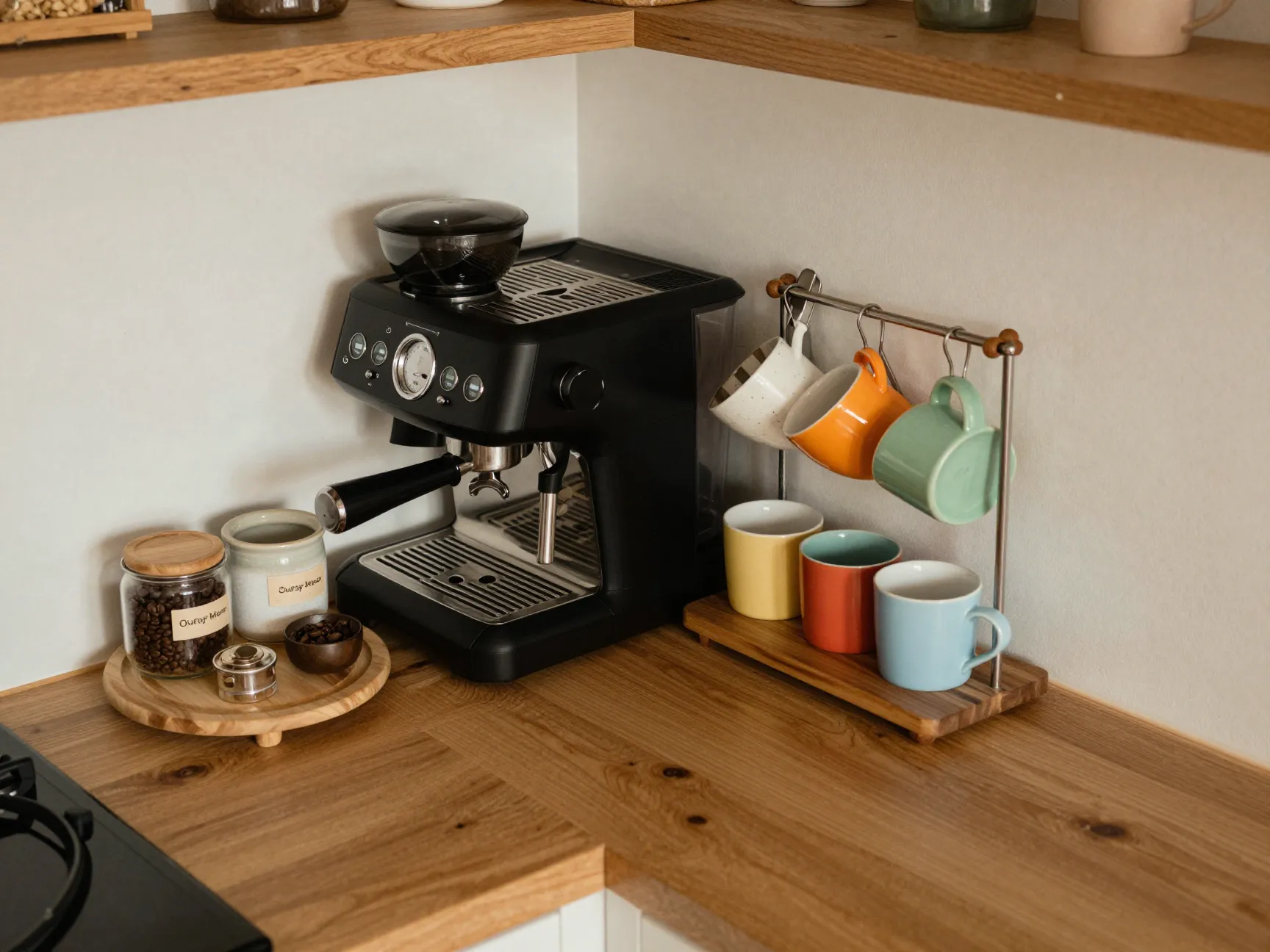
One of the most overlooked spots in any kitchen is the corner of the countertop. That awkward L-shaped dead zone where nothing seems to fit? It’s actually perfect for a compact coffee station [2].
How to make it work:
- Place your or in the corner itself, where the counter meets the wall at an angle.
- Add cute labeled canisters for , sugar, and stirring spoons right next to the machine.
- Install a mug bar rail (similar to a pot rack) on the wall above the corner to hang your favorite cups. This keeps mugs accessible without taking up shelf or cabinet space.
- Use a small lazy Susan beneath the machine to rotate and access accessories easily.
Best for: Renters and homeowners with an L-shaped or galley kitchen layout.
Watch out for: Outlet placement. Make sure your corner has a nearby outlet, or use a power strip tucked neatly behind the machine.
| Item Needed | Estimated Cost |
|---|---|
| Mug bar rail (wall-mounted) | $15–$40 |
| Ceramic canisters (set of 3) | $20–$50 |
| Lazy Susan turntable | $10–$25 |
| Total setup cost | $45–$115 |
2. The Floating Shelf Conversion
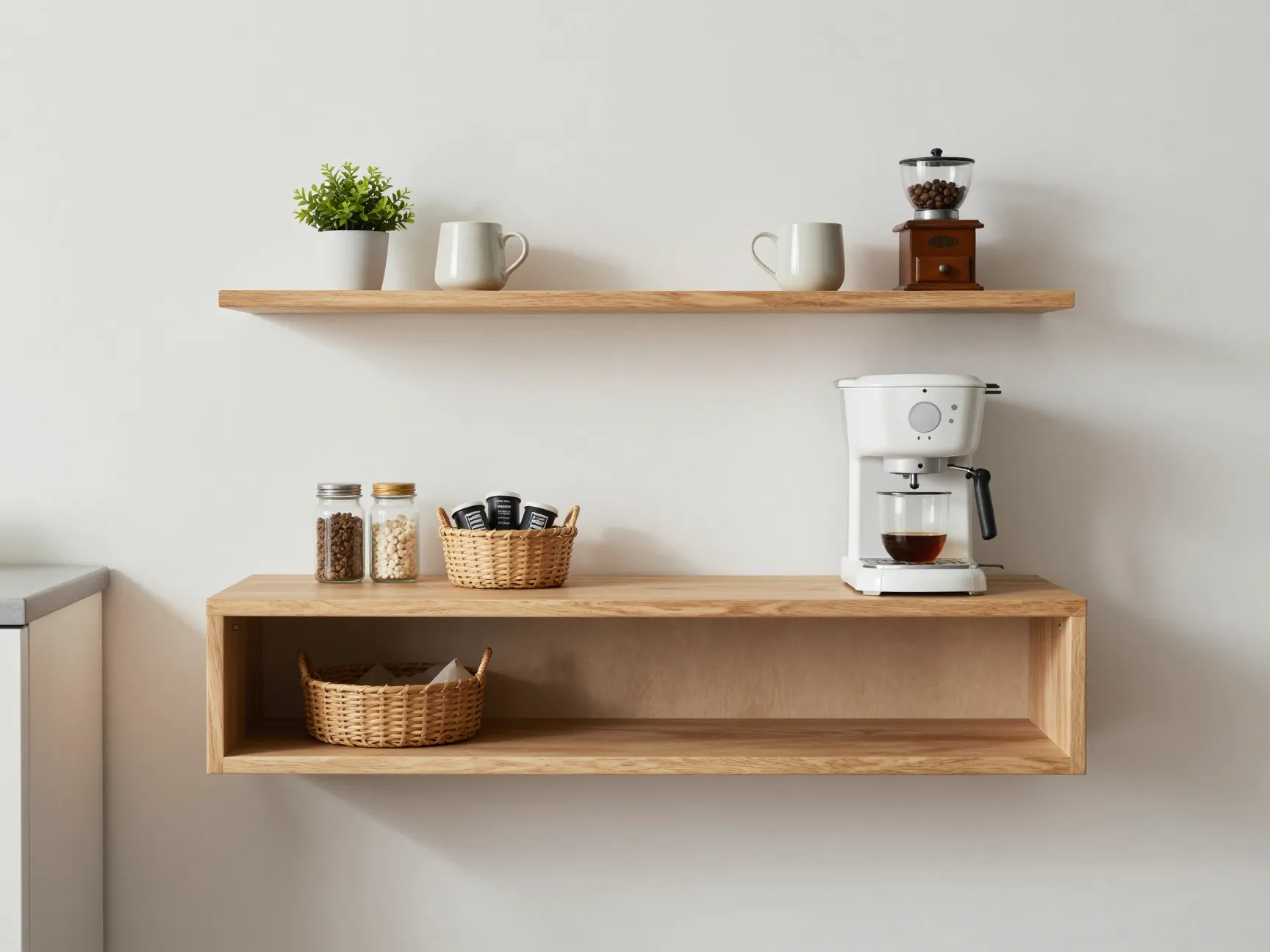
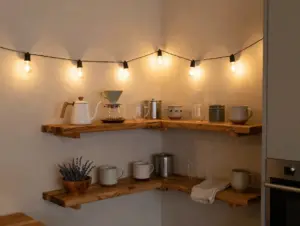
A single floating shelf can transform a blank wall into a fully functional coffee station [2]. This is one of the most budget-friendly and renter-friendly options on this list.
How to make it work:
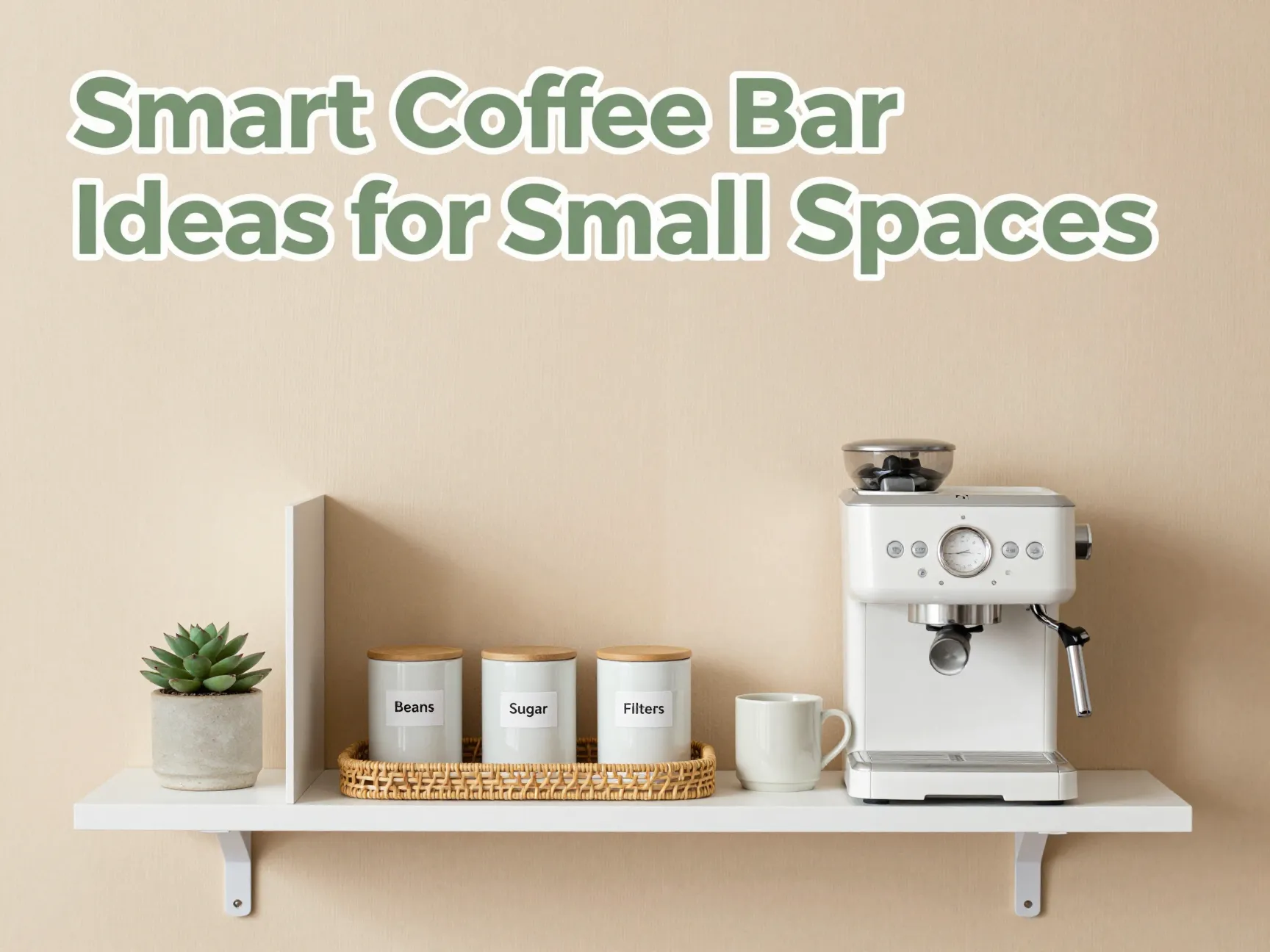
- Choose a shelf that’s at least 24 inches wide and 10 inches deep to hold a standard .
- Mount it at counter height (roughly 36 inches from the floor) so you can comfortably use your machine.
- Use the wall space above the shelf for a second, smaller shelf to store mugs, a small plant, or a coffee bean grinder.
- Add a small basket or drawer organizer on the shelf itself for pods, filters, and sweeteners.
Pro tip 💡: Floating shelves come in every style imaginable — from raw wood to glossy white laminate. Match yours to your existing kitchen aesthetic for a cohesive look.
Best for: Apartments, studios, and small kitchens with limited counter space but open wall space.
This approach works especially well in kitchens where every inch of counter is spoken for. The shelf essentially creates new counter space out of thin air [2].
3. The Pantry or Closet Conversion
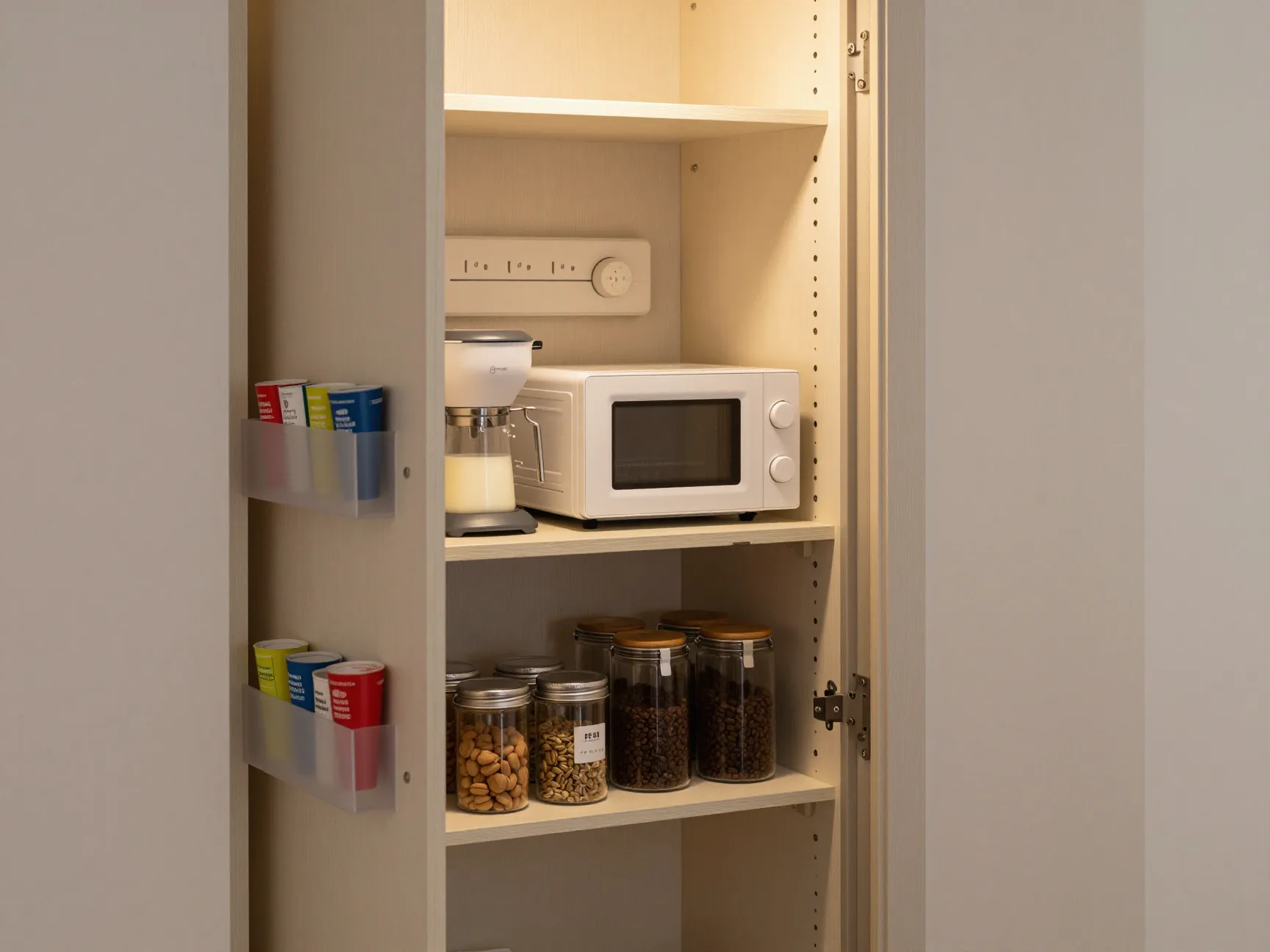
Got a pantry with a little extra room? Or a spare closet near the kitchen? Converting that space into a hidden coffee bar is one of the smartest moves you can make in a small home [2].
How to make it work:
- Clear one shelf (or an entire section) of your pantry for coffee bar use.
- Store your coffee maker, milk frother, and even small appliances like a mini microwave or air fryer inside.
- Add a small power strip inside the pantry so everything can plug in without cords snaking out the door.
- Use the inside of the pantry door for a mounted organizer to hold pods, filters, or sweeteners.
The big advantage here: Everything is hidden. When guests come over, you simply close the door. Your kitchen looks clean and clutter-free, but your full coffee setup is just steps away [2].
“A closet coffee bar is the ultimate small-space hack — it gives you all the function of a dedicated coffee room without using a single square foot of visible floor space.”
Best for: Homeowners or renters with a pantry or hallway closet adjacent to the kitchen.
Watch out for: Ventilation. If you’re using a coffee maker that produces steam, make sure the closet has some airflow to prevent moisture buildup.
4. Utility Shelving on Open Kitchen Walls
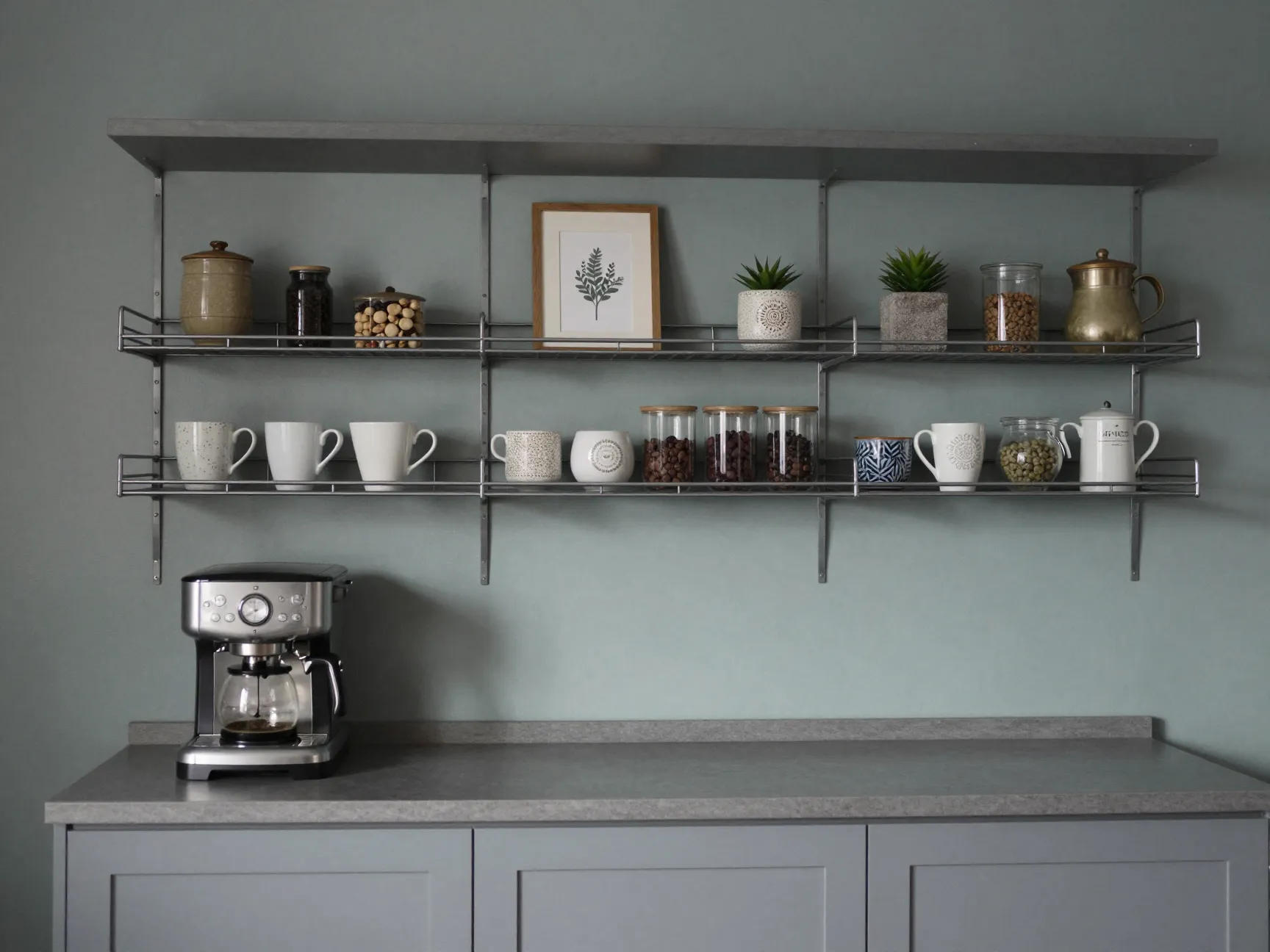
Open kitchen walls — those blank stretches between cabinets or above a backsplash — are prime vertical storage territory. Installing utility shelving on these walls is one of the most versatile options in the 8 Genius Coffee for Small Spaces That Maximize Every Inch playbook [2].
How to make it work:
- Choose a wire, metal, or wooden utility shelf system that spans the width of your available wall space.
- Dedicate the lowest shelf to your coffee maker and daily-use items.
- Use upper shelves for mugs, extra beans, and decorative elements like small plants or framed prints.
- Paint the shelves (or the wall behind them) to match your kitchen’s color palette for a pulled-together look.
Why utility shelving works so well:
✅ It’s modular — you can add or remove shelves as your needs change.
✅ It works with any design style, from industrial to Scandinavian.
✅ It maximizes vertical inches that would otherwise go completely unused.
✅ It’s relatively affordable and widely available at home improvement stores.
Best for: Kitchens with open wall space between upper and lower cabinets, or kitchens without upper cabinets at all.
5. Multi-Functional Furniture as a Coffee Bar
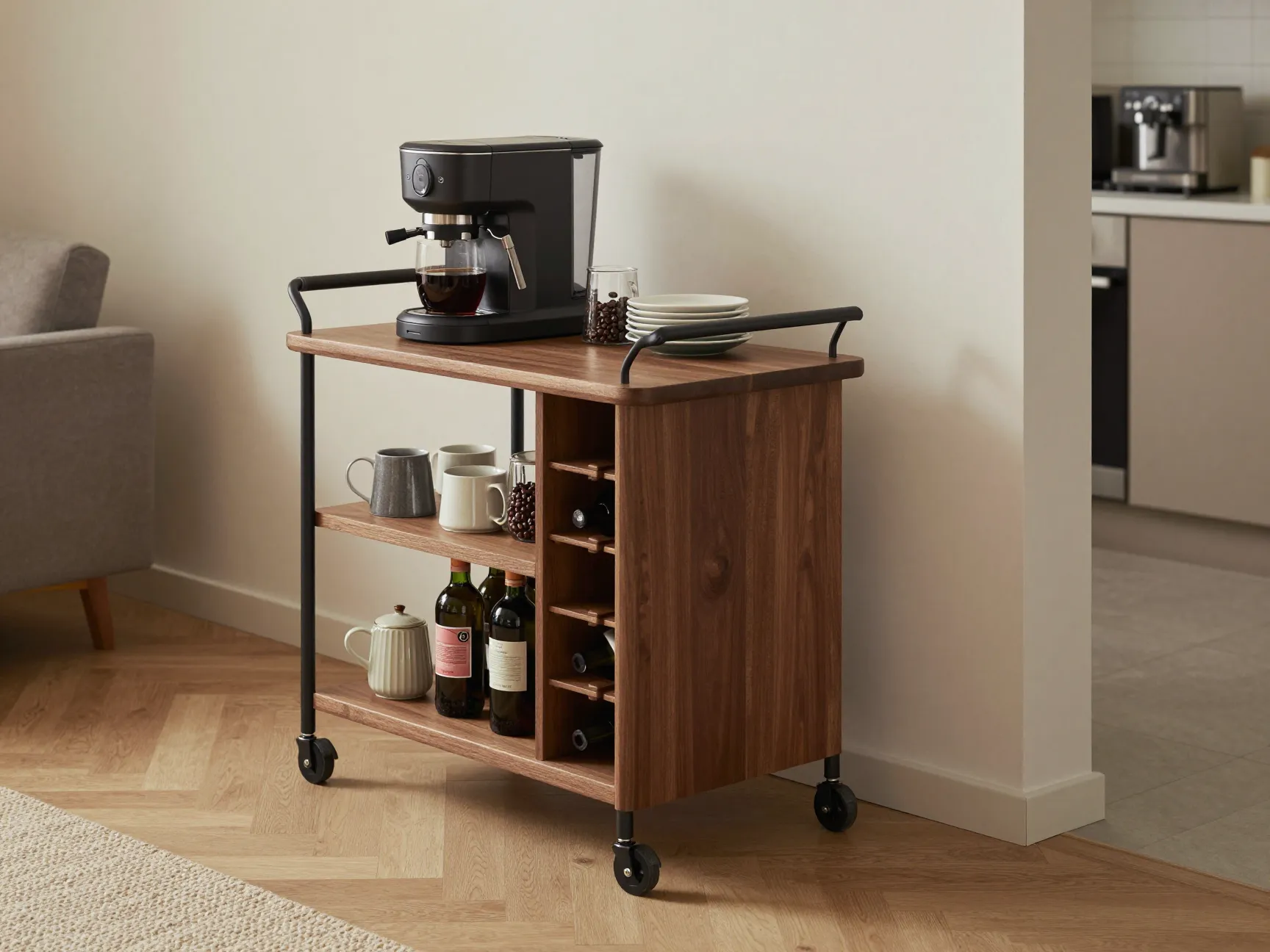
In a small apartment or studio, every piece of furniture needs to pull double duty. A freestanding wine rack, bar cart, or sideboard can serve as both a coffee station and additional storage — without taking up much floor space [2].
How to make it work:
- Use a slim bar cart (on wheels for flexibility) to hold your coffee maker on top, with lower shelves for mugs, beans, and accessories.
- A freestanding wine rack can store in the bottle slots and hold your machine on the flat top surface.
- A narrow sideboard or console table works beautifully as a coffee bar surface, with drawers below for hidden storage.
Real-world example: In small apartments where kitchen counter space is extremely limited, a bar cart coffee station can be rolled into the kitchen when in use and tucked against a wall when not needed [2]. This flexibility is invaluable in studio living.
| Furniture Type | Best Feature | Price Range |
|---|---|---|
| Bar cart (wheeled) | Portable, flexible placement | $60–$200 |
| Wine rack (freestanding) | Pod storage in bottle slots | $40–$150 |
| Narrow sideboard | Drawer storage, stable surface | $100–$400 |
| Console table | Sleek, minimal footprint | $80–$300 |
Best for: Studio apartments, open-plan living spaces, and anyone who needs flexibility in their layout.
6. The Awkward Nook Coffee Station
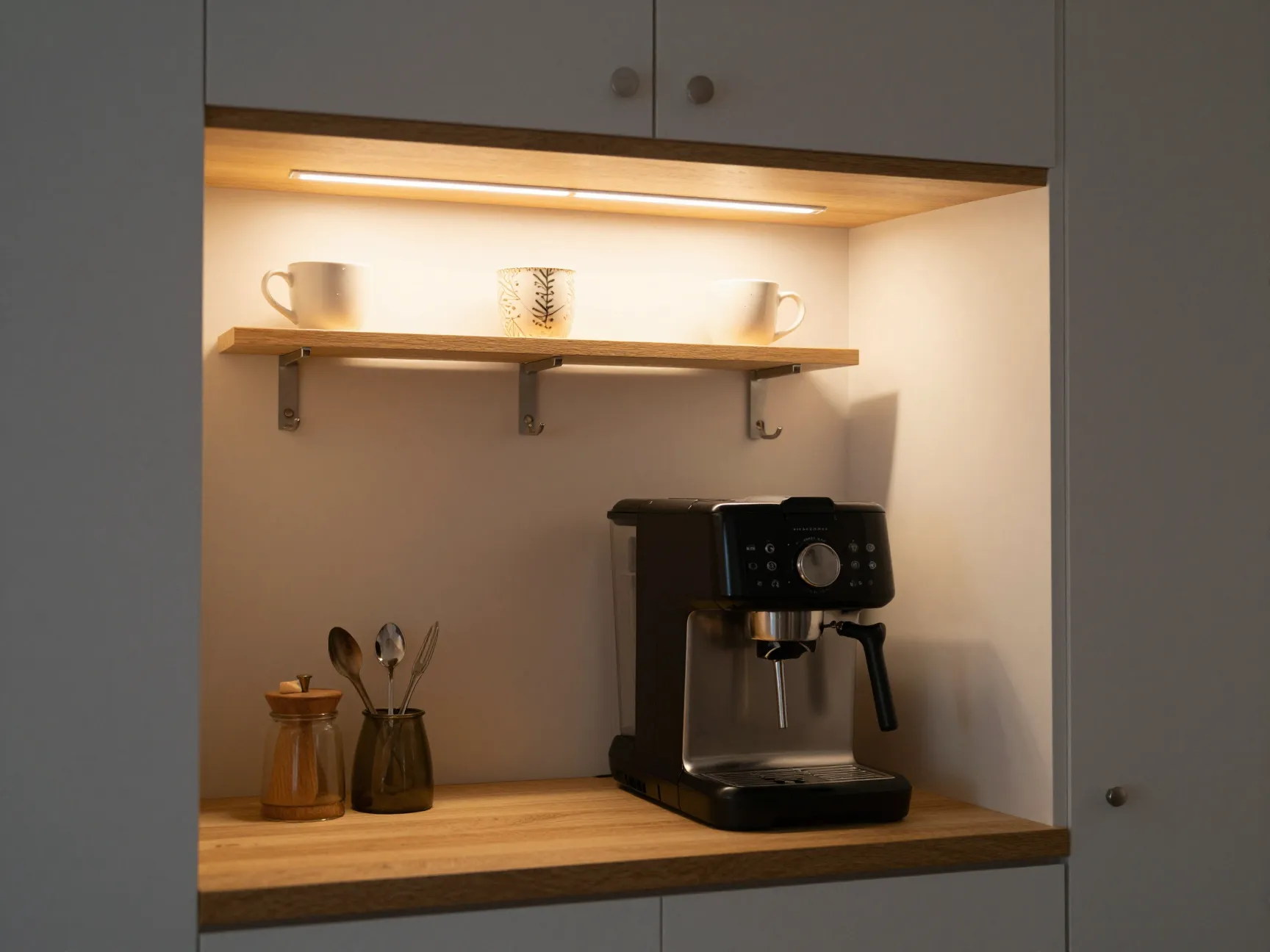
Every kitchen has at least one awkward spot — an odd alcove, a shallow recess between cabinets, or a dead-end corner that’s too small for a full appliance but too big to ignore. These spots are perfect for a designated coffee bar [2].
How to make it work:
- Measure the nook carefully and choose a coffee maker that fits the width and height constraints.
- Install one or two floating shelves above the nook’s countertop space to hold mugs, spoons, and small accessories.
- Use the walls of the nook for hooks, magnetic strips (for metal accessories), or small pegboards.
- Add under-shelf lighting (battery-powered LED strips work great) to make the nook feel intentional rather than like an afterthought.
The psychology of nooks: When you fill an awkward space with purpose, the whole kitchen feels more organized and thoughtful. A coffee nook signals to anyone who enters that this kitchen is well-planned — even if it’s tiny.
Best for: Older homes with quirky layouts, galley kitchens, and any kitchen with an unexplained gap or recess.
7. The Glass Cabinet Display Station
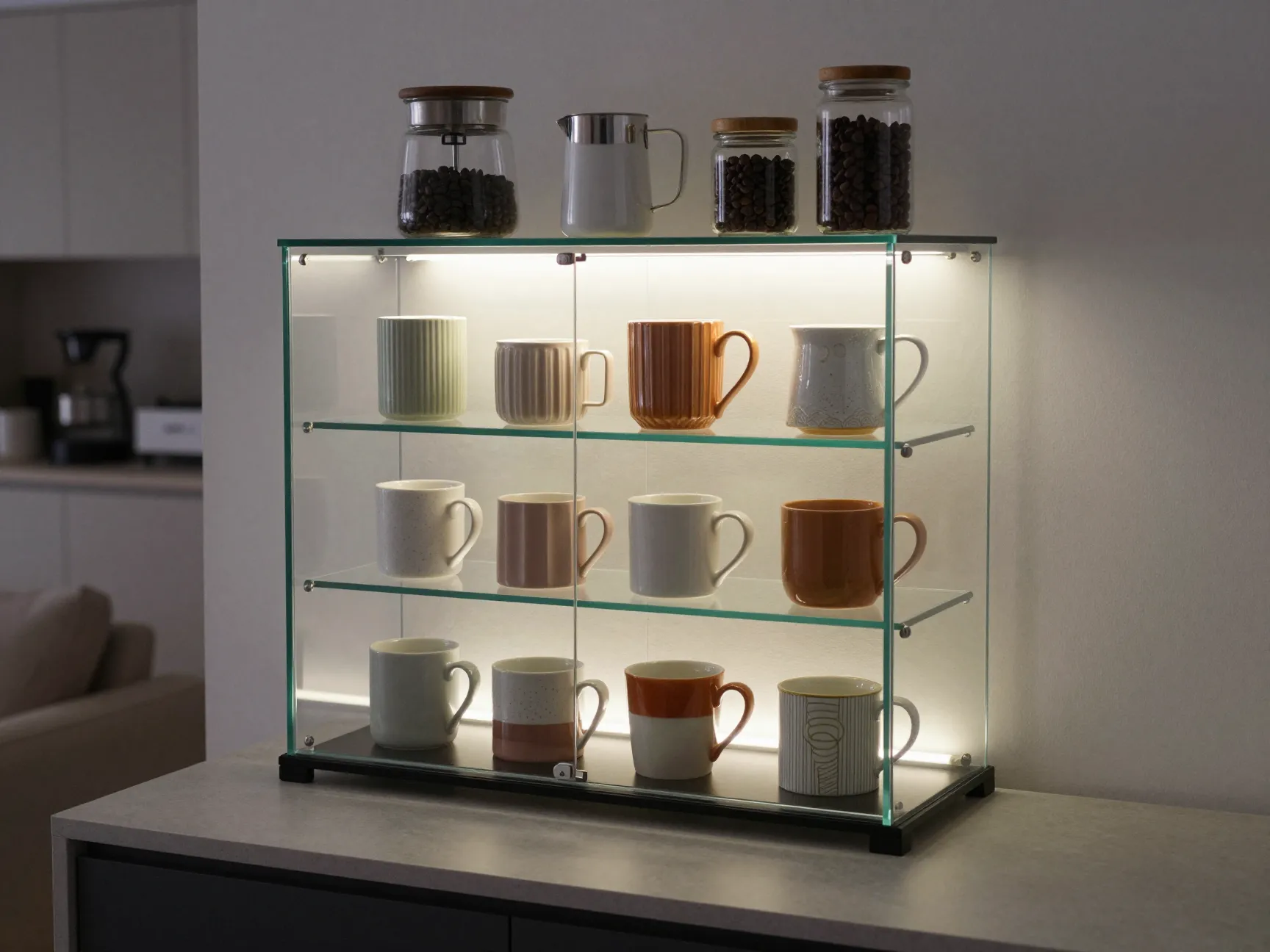
If you want your coffee bar to feel like a feature rather than a utility zone, a small glass cabinet is the way [2]. This approach combines open display with enclosed storage — the best of both worlds.
How to make it work:
- Place a small glass-front cabinet (wall-mounted or freestanding) in or near your kitchen.
- Use the interior shelves to showcase your favorite mugs — mix colors, patterns, and sizes for a curated look.
- Display your coffee maker, milk frother, and a small jar of coffee beans on top of the cabinet.
- Add a small LED light strip inside the cabinet to illuminate your mug collection and make it a true focal point.
Why this works in small spaces: A glass cabinet creates the illusion of openness while still containing clutter. Because you can see through the glass, the cabinet doesn’t visually “block” the space the way a solid cabinet would [2].
“A glass cabinet coffee station turns your mug collection into art — and makes even the smallest kitchen feel intentional and designed.”
Style tip 🎨: Choose mugs in a cohesive color palette (all neutrals, all one accent color, or a deliberate rainbow) to make the display look curated rather than random.
Best for: Design-conscious homeowners and renters who want their coffee bar to double as a decorative focal point.
8. The Beverage Center Combo Approach
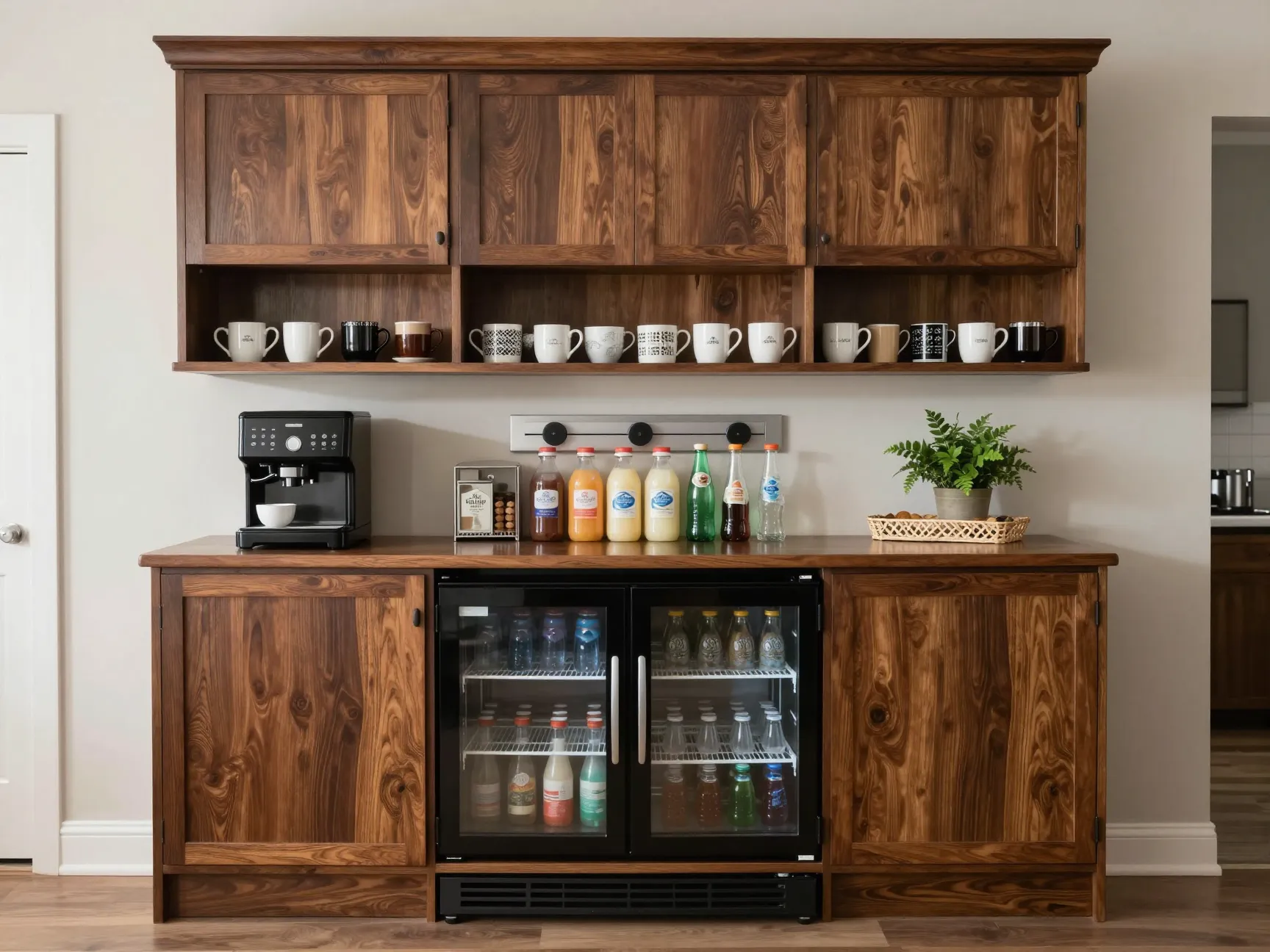
The most feature-rich option in this list, the beverage center combo approach combines an upper cabinet with floating shelves below — and optionally, a compact beverage fridge at the base [3]. This creates a fully self-contained coffee (and dry bar) station that handles everything from your morning espresso to your evening cocktail.
How to make it work:
- Install or repurpose an upper cabinet (with doors) for hidden storage of pods, filters, syrups, and backup supplies.
- Add one or two floating shelves below the cabinet for easy access to daily-use items like your coffee maker and mugs.
- Place a compact beverage fridge at counter height beneath the shelves to store , creamer, sparkling water, and beverages for entertaining.
- Use the space between the fridge and the shelves as your active prep zone.
The dual-function advantage: This setup works as a coffee bar in the morning and a dry bar in the evening. For small-space dwellers who love to entertain, this is a game-changer [3].
What you’ll need:
- Upper cabinet (existing or new, approx. 30″W × 12″D)
- Two floating shelves (12″–16″ deep)
- Compact beverage fridge (24″ wide or under-counter size)
- Power strip with surge protection
- Decorative accessories (tray, plant, small chalkboard sign)
Best for: Homeowners with a dedicated wall space (at least 30 inches wide) who want a permanent, polished coffee and bar station.
How to Choose the Right Idea for Your Space
Not every idea will work for every home. Here’s a quick decision guide to help you pick the best fit:
| Your Situation | Best Option |
|---|---|
| Renter with no wall-drilling allowed | Multi-functional furniture (bar cart) |
| Open wall space available | Utility shelving or floating shelf |
| Pantry or closet nearby | Pantry conversion |
| Love a design-forward look | Glass cabinet display |
| Want coffee + bar functionality | Beverage center combo |
| Have an awkward nook | Nook coffee station |
| Corner countertop available | Corner setup with mug rail |
| Tiny studio, need flexibility | Bar cart or corner setup |
Tips for Styling Any Small Coffee Bar
Regardless of which idea you choose, these styling principles will make your coffee station look polished and intentional:
Keep it cohesive. Choose two or three colors and stick to them across your canisters, mugs, and accessories. Matching tones create visual calm in a .
Edit ruthlessly. Only keep items you use daily on display. Store backup supplies (extra pods, filters, extra beans) out of sight.
Add one living element. A small potted herb, succulent, or trailing plant adds life and warmth to any coffee station.
Use a tray. Placing your coffee maker and canisters on a decorative tray instantly makes the setup look intentional — and makes cleaning easier.
Label everything. Labeled canisters look organized and save you time in the morning rush.
Light it up 💡. Under-shelf LED strips or a small lamp near your coffee station make it feel cozy and inviting, especially on early mornings.
Common Mistakes to Avoid
Even the best small-space coffee bar ideas can go wrong. Watch out for these pitfalls:
- Overcrowding the surface. If your coffee station feels cluttered, it defeats the purpose. Keep only what you use daily within reach.
- Ignoring outlet placement. Always plan your coffee bar around existing outlets — running long cords across a kitchen is both ugly and unsafe.
- Choosing oversized appliances. In small spaces, compact versions of your favorite machines (, frothers, grinders) are almost always the better choice.
- Forgetting about drainage. If you’re using a machine that needs to be emptied or descaled regularly, make sure it’s accessible — not tucked into an impossible-to-reach corner.
- Skipping the planning phase. Measure twice, buy once. Know your exact dimensions before purchasing shelves, furniture, or appliances.
Conclusion
The 8 Genius Coffee Bar Ideas for Small Spaces That Maximize Every Inch covered in this guide show that a beautiful, functional coffee station is within reach — no matter how small your kitchen or apartment may be. From a simple corner countertop setup to a full beverage center combo with a built-in fridge, there’s an option here for every budget, skill level, and aesthetic preference.
Your actionable next steps:
- Measure your available space — counter corners, open walls, pantry shelves, and awkward nooks.
- Pick one idea from this list that fits your space and lifestyle best.
- Set a budget using the cost estimates provided in each section.
- Shop for the key pieces — shelves, canisters, a mug rail, or a bar cart — before buying anything else.
- Style it intentionally using the tips above: a tray, cohesive colors, one plant, and good lighting.
- Enjoy your morning routine. A dedicated coffee station isn’t just about aesthetics — it’s about starting every day with a little more ease and a lot more joy. ☕
Small spaces don’t limit your lifestyle. They just ask you to be more creative with it.
References
[1] Coffee Bar Ideas For Small Spaces – https://tivolidesigngroup.com/coffee-bar-ideas-for-small-spaces/
[2] Coffee Bar Ideas Small Spaces 37356853 – https://www.apartmenttherapy.com/coffee-bar-ideas-small-spaces-37356853
[3] Best Bar Ideas For Small Spaces – https://marissacalhome.com/best-kitchen-coffee-bar-ideas-for-small-spaces/
[4] Watch – https://www.youtube.com/watch?v=Y9kkiYGoohs